-
by sayum
24 August 2026 3:22 PM







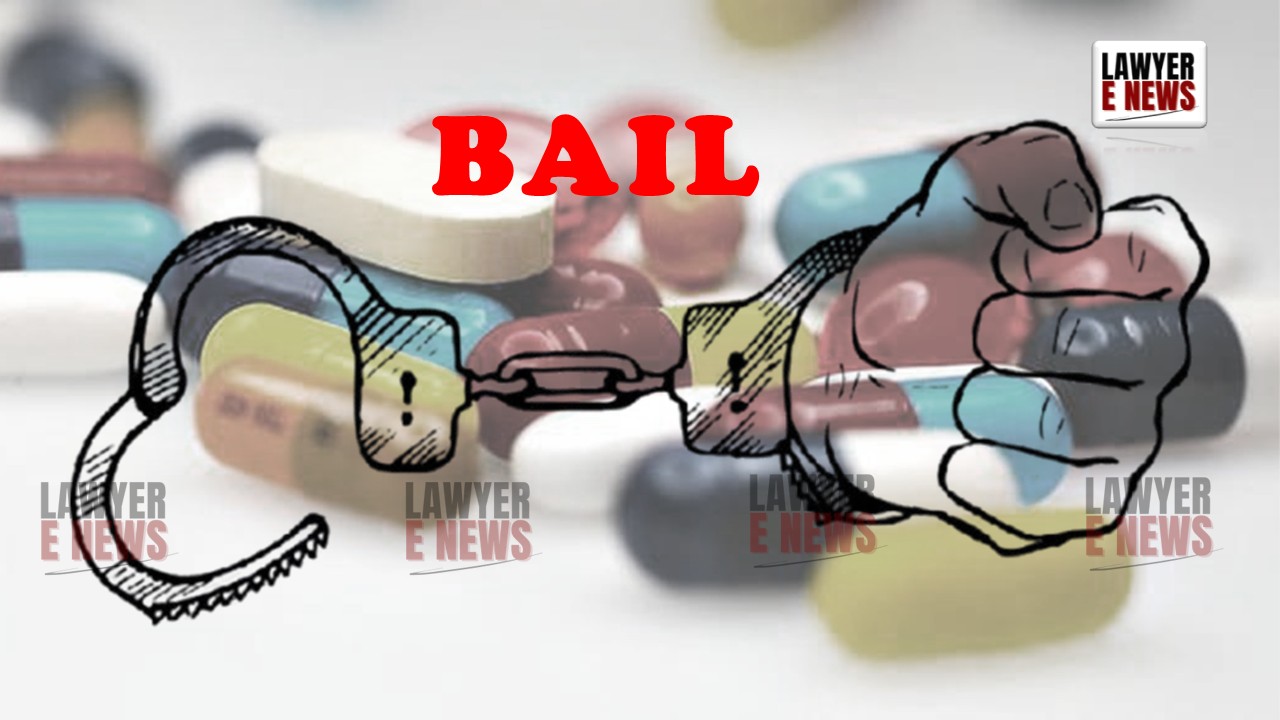
“Recovery Above Non-Commercial Quantity Attracts Statutory Embargo – Conscious Possession Can’t Be Disputed Merely Because Contraband Was Thrown Before Arrest”, In a decision reinforcing the strict mandate of the NDPS Act, 1985, the Punjab and Haryana High Court dismissed a bail petition filed under Section 483 of the Bharatiya Nagrik Suraksha Sanhita, 2023, in a case involving the recovery of 258 grams of heroin — a quantity greater than the threshold for non-commercial quantity — observing that the twin conditions under Section 37 of the NDPS Act were not satisfied.
Justice Sumeet Goel held that: “It is not in dispute that the alleged recovery from the petitioner is 258 grams of heroin, which is greater than non-commercial quantity and, therefore, attracts the rigours of Section 37 of the NDPS Act.”
The Court noted that at the bail stage, the judge is not required to conduct a mini-trial, and the only permissible judicial exercise is to evaluate whether there are reasonable grounds to believe that the accused is not guilty and is not likely to commit any offence while on bail — both of which were found lacking in the present case.
“Mere Delay or Completion of Investigation Is No Ground to Override Section 37”
Dismissing arguments regarding prolonged custody and delay in trial, the Court categorically observed:
“Merely because the investigation is complete or that the trial may take time, cannot be a ground for regular bail in cases under Section 37 NDPS Act.”
The petitioner had been in custody since 13.04.2025, and argued that continued incarceration served no useful purpose. However, the Court, relying on a host of precedents including Union of India v. Namdeo Ashruba Nakade and Union of India v. Vigin K. Varghese, held that bail could not be granted when the seriousness of allegations, statutory embargo, and prima facie material weigh heavily against the accused.
“Throwing the Contraband Before Arrest Does Not Negate Conscious Possession”
The defence had submitted that heroin was not recovered from the petitioner’s physical possession, but from a polythene packet allegedly thrown by him on seeing the police.
Rejecting this argument, the Court observed: “The argument that recovery was effected from a polythene allegedly thrown by the petitioner does not, at this stage, negate the prosecution case of conscious possession, especially when specific secret information preceded the apprehension.”
The Court reaffirmed that the recovery was not accidental, and the circumstances surrounding the incident supported a prima facie case of the petitioner’s involvement in the narcotics trade.
“Section 27-A Challenge Not Tenable at Bail Stage – Pleas of Procedural Irregularities Must Wait for Trial”
The petitioner further contended that Section 27-A of the NDPS Act (which relates to financing illicit traffic and harbouring offenders) had been wrongly invoked, and that procedural safeguards under the NDPS Act had not been complied with.
However, the Court held such contentions to be premature at the bail stage:
“The argument that Section 27-A of the NDPS Act has been wrongly invoked cannot be accepted at this stage. The material collected by the investigating agency, including the secret information and the recovery, prima facie suggests that the petitioner was involved in the offence.”
It further noted: “The plea regarding non-compliance of mandatory provisions is a mixed question of law and fact, which cannot be conclusively determined at the stage of bail.”
“Criminal Antecedents Are Relevant – Prior NDPS Involvement Weighs Against Bail”
The Court found that the petitioner was involved in multiple criminal and NDPS cases, and held that criminal antecedents are a relevant consideration while evaluating the likelihood of re-offending — one of the twin conditions under Section 37 NDPS Act.
Citing the authoritative ratio laid down in Jaswinder Singh @ Kala v. State of Punjab, the Court reiterated that:
“The twin conditions contained in Section 37(1)(b) of NDPS Act are cumulative in nature and not alternative — both conditions are required to be satisfied for a bail plea to be successful.”
“Bail Not a Matter of Right — Especially in Drug Offences with National Implications”
The High Court heavily relied on recent Supreme Court pronouncements that emphasised the widespread impact of narcotics on youth and national security. Quoting from Union of India v. Namdeo Ashruba Nakade, the Court referred to the UNODC 2025 report and the growing prevalence of drug abuse in India:
“Substance abuse not only affects individuals, families, and communities but also undermines various aspects of health including physical, social, political, cultural foundations, and mental well-being.”
The judgment highlighted the Court’s constitutional responsibility under Article 47, which mandates the State to work towards eradicating intoxicating substances, except for medicinal purposes.
No Reasonable Grounds to Believe Innocence — Bail Denied
Justice Sumeet Goel concluded that the statutory requirements for granting bail under Section 37 NDPS Act were not met, stating:
“This Court is unable to record satisfaction that there are reasonable grounds for believing that the petitioner is not guilty and that he is not likely to commit any offence while on bail.”
“In view of the seriousness of the allegations coupled with the nature of the offence, the role attributed to the petitioner, and the statutory bar under the NDPS Act, this Court is of the considered opinion that the petitioner is not entitled to the concession of regular bail.”
The petition was accordingly dismissed, with the Court clarifying that none of the observations would impact the merits of the trial proceedings.
Date of Decision: 27 January 2026