-
by sayum
24 August 2026 3:22 PM







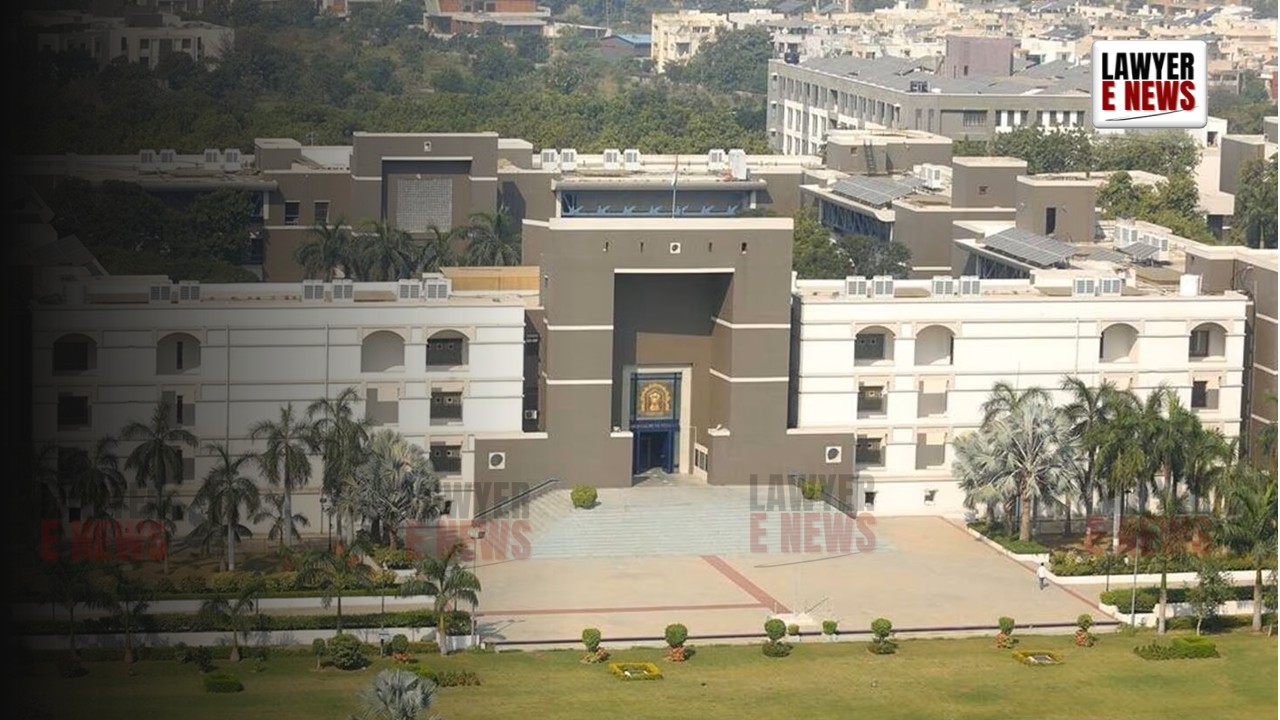
“Doctrine of Election Under Section 167 MV Act Not Attracted Where Employer and Tortfeasor Are Different” – In a landmark judgment, the Gujarat High Court clarified the scope of Section 167 of the Motor Vehicles Act, 1988, ruling that claimants who receive compensation under the Workmen’s Compensation Act are not barred from pursuing a separate claim under the MV Act when the tortfeasor is different from the employer.
“Where Parties and Liabilities Are Different, Bar Under Section 167 MV Act Has No Application”
The case arose from a tragic road accident on May 19, 2013, in which Sunil Samharu Yadav, a tempo driver employed for transporting yarn, died after being hit by a rashly driven dumper truck. The deceased’s dependents were awarded ₹12,12,400/- with 9% interest by the Motor Accident Claims Tribunal, Navsari, under Section 166 of the MV Act.
Challenging the award, L&T Insurance Company, the insurer of the dumper, argued that the claimants had already received ₹8,39,680/- from the employer under the Workmen’s Compensation Act, 1923, and were therefore barred from filing a second claim under the MV Act by virtue of Section 167.
However, the Court dismissed this contention, holding:
“The proceedings before the Commissioner, Workmen’s Compensation were initiated against the employer... while the proceedings under Section 166 of the MV Act were filed against the tortfeasors. Therefore, there is no nexus between the sets of parties before both forums.” [Para 13]
Citing consistent precedents from High Courts and the Supreme Court, the Court reaffirmed that Section 167 applies only when the employer and tortfeasor are the same entity. Where the tortious liability under the MV Act and statutory liability under the Workmen’s Compensation Act are invoked against different parties, doctrine of election does not bar multiple remedies.
“If the claimants have already claimed compensation from the employer... they cannot claim compensation under the MV Act from the same employer and insurer; however, they can claim compensation from tortfeasors other than the employer and his insurer.” [Para 25]
Insurer Failed to Prove Fake Driving Licence or Owner’s Knowledge – Hence Liable
The insurer also contended that the driver of the dumper truck held a fake licence, amounting to breach of policy conditions under Section 149(2) MV Act. To establish this, the insurer relied on oral testimony of its legal officer and an unverified investigation report under RTI.
However, the Court found that the insurer failed to summon the RTO or produce any authenticated document to prove the licence was fake. The Tribunal’s findings were upheld:
“In absence of any positive, cogent evidence and merely relying upon oral evidence... it cannot be believed that licence of the driver was fake.” [Para 26]
Even assuming the licence was fake, the Court emphasized that:
“The insurance company could not prove that the factum of fake licence was within the knowledge of the owner... Hence, the insurer failed to prove fundamental breach of policy.” [Para 28]
This approach aligns with the Supreme Court's ruling in Hind Samachar Ltd. v. National Insurance Co. Ltd., (2025 INSC 1204), which reiterated that burden lies on the insurer to prove breach and also owner’s knowledge or willful disregard.
No Ground for Interference in Just Award of ₹12.12 Lakhs with 9% Interest
The High Court concluded that the Motor Accident Claims Tribunal had correctly appreciated the evidence, and there was no perversity or legal infirmity in awarding the compensation. The appeal was therefore dismissed:
“Thus, in view of above discussion, the captioned appeal is devoid of merits and hence stands dismissed.” [Para 29]
The Court also directed the Tribunal to disburse the compensation amount to the claimants after verification, and disposed of the connected civil application seeking withdrawal of amount.
High Court Affirms Independent Remedies Under MV Act and WC Act
This judgment is a definitive pronouncement on the interplay between Section 167 of the Motor Vehicles Act and the Workmen’s Compensation Act. It reaffirms that claimants are not precluded from pursuing claims under both laws when the parties involved are different, thereby safeguarding their right to full and fair compensation. It also imposes a high evidentiary threshold on insurers alleging fake licences, preventing casual exoneration from liability.
Date of Decision: 19 January 2026