-
by sayum
27 August 2026 3:32 PM







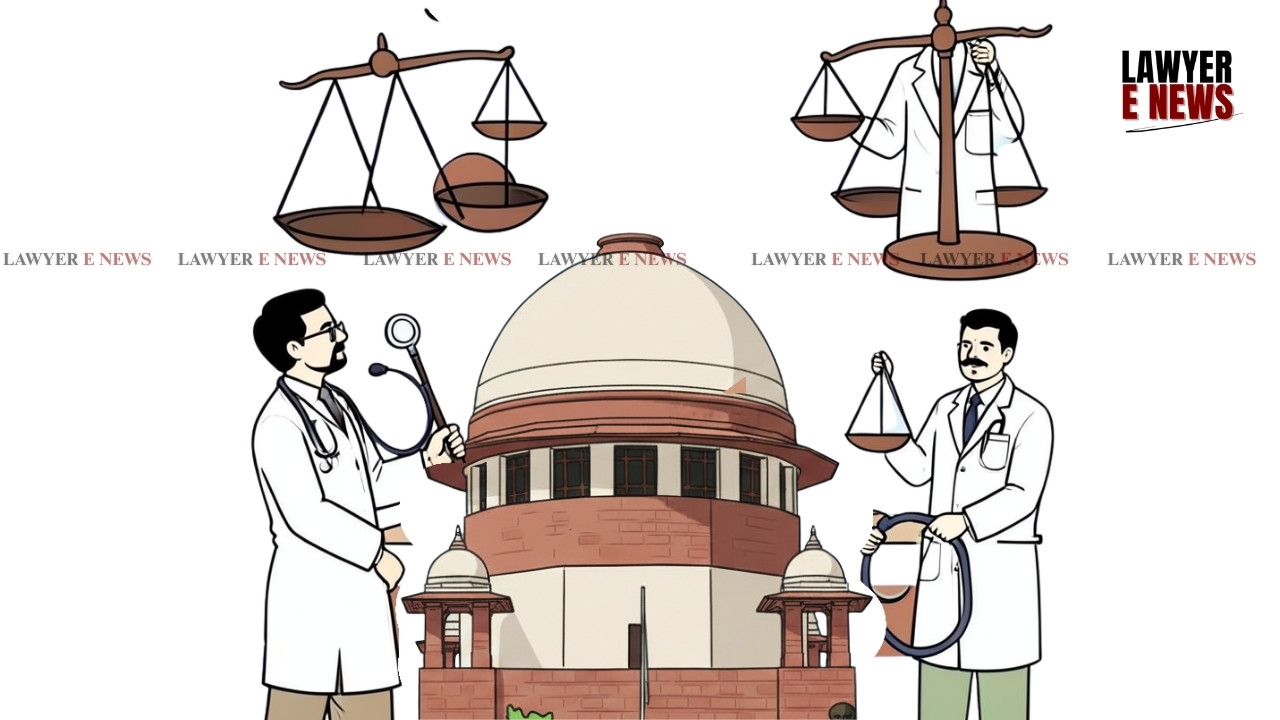
“[A] medical practitioner cannot be said to meet the standard of reasonable care if they administer an intervention that lacks credible scientific evidence of safety and efficacy... such a treatment cannot be defended as an exercise of due care and reasonable judgment.” — In a seminal ruling Supreme Court of India, comprising Justice J.B. Pardiwala and Justice R. Mahadevan, has declared the administration of Stem Cell Therapy (SCT) for Autism Spectrum Disorder (ASD) as a routine clinical service to be professional misconduct and a violation of the standard of care.
End of the Road for Commercial Stem Cell Clinics for Autism
In a judgment that will reshape the landscape of experimental medical treatments in India, the Supreme Court has categorically held that Stem Cell Therapy for ASD is not a “sound and relevant medical practice.” The Court allowed the Writ Petition filed by Yash Charitable Trust, observing that the rampant promotion of SCT as a "cure" for autism exploits the vulnerabilities of parents. The Bench ruled that until credible scientific evidence emerges, SCT for ASD can only be administered within a monitored clinical trial or research setting, and never as a commercial, routine healthcare service.
“To lead patients and their guardians to put faith in treatments wherein this substructure [of empirical analysis] itself is absent is, in our view, wholly unethical and against the tenets of medical jurisprudence on ‘informed consent’.”
The ‘Bolam Test’ and Standard of Care
The Court conducted an exhaustive analysis of medical negligence jurisprudence, referencing landmark precedents like Indian Medical Association v. V.P. Shantha and Jacob Mathew v. State of Punjab. The Bench clarified that while a doctor is not expected to possess the highest expert skill, they must exercise the skill of an "ordinary competent practitioner."
The Court held that because authoritative bodies like the ICMR and the Ethics & Medical Registration Board (EMRB) of the NMC have explicitly stated that SCT is not recommended for ASD due to lack of evidence, any doctor disregarding these guidelines fails the test of reasonableness. The Court noted that the "standard of care" is judged in light of knowledge available at the time. Since current medical consensus views SCT for ASD as experimental, offering it as a paid therapeutic service constitutes negligence.
Patient Autonomy Cannot Validate Unproven Treatments
A significant portion of the judgment addressed the Respondent's argument regarding "Patient Autonomy" and the "Right to Choose." The Court firmly rejected the notion that parents can demand unproven treatments for their children under the guise of informed consent.
The Bench relied on Samira Kohli v. Dr. Prabha Manchandra, ruling that valid consent requires "adequate information" about risks and benefits. Since the efficacy of SCT for ASD is scientifically unproven, doctors literally cannot provide adequate information to form the basis of valid consent. The Court observed that "choice" cannot mature into "consent" when based on a therapeutic misconception—the mistaken belief by patients that an experimental procedure is for their direct therapeutic benefit rather than research.
“Consent does not confer on a patient the right to demand that a particular form of treatment be administered... patient autonomy cannot be stretched to seek an entitlement to subject oneself to a clinical procedure that is scientifically unvalidated.”
Immediate Directions and Interim Relief
While the judgment effectively shuts down clinics offering SCT for ASD as a commercial product, the Court acknowledged the plight of patients currently undergoing such treatment. To prevent abrupt discontinuation that might harm patients, the Court directed the Secretary, MoHFW, in consultation with AIIMS and the NMC, to devise a solution within four weeks to re-route existing patients to institutions conducting authorized clinical trials, ensuring their care continues under a regulatory umbrella.
Date of Decision: 30th January, 2026