-
by sayum
24 August 2026 3:22 PM







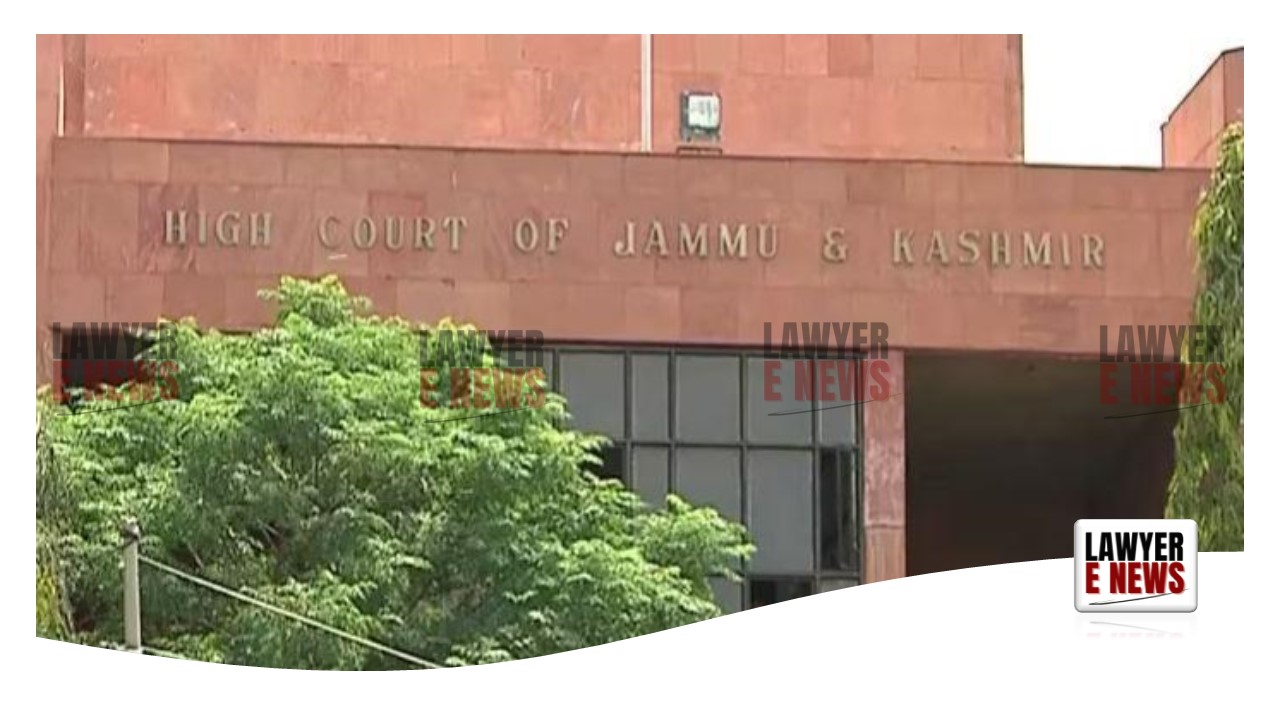
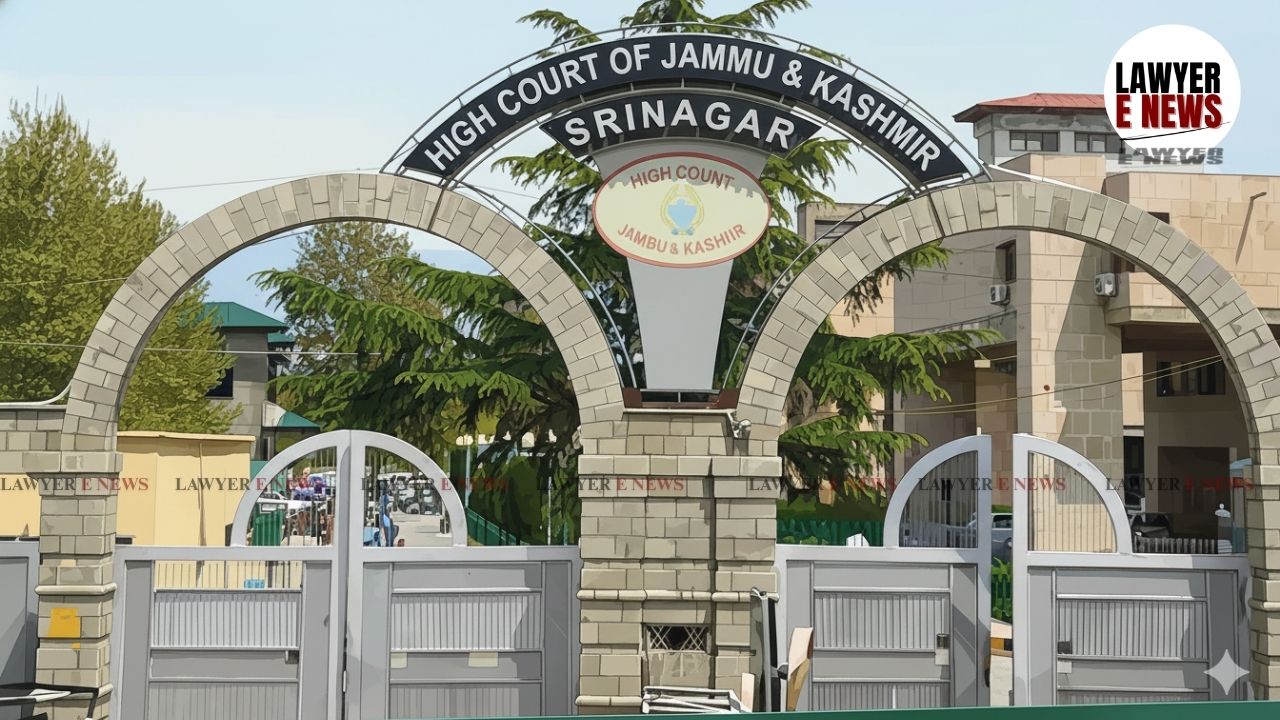
“Committee should interfere only when the conscience is shocked by the magnitude of the fee proposed” — High Court of Jammu & Kashmir and Ladakh upholding the constitutional validity of statutory amendments empowering a Fee Fixation and Regulation Committee (FFRC) to regulate fees of private unaided schools — but with a strong caveat: the autonomy of such institutions under Article 19(1)(g) must be respected and the government cannot dominate the fee determination process.
Crucially, the Court struck down Section 20A(2) of the J&K School Education Act, 2002 (as amended), which allowed a serving or retired government officer of the rank of Financial Commissioner to be appointed as Chairperson of the FFRC. The Bench, comprising Justice Sanjeev Kumar and Justice Sanjay Parihar, directed that “the Chairperson shall be a retired High Court Judge nominated by the Chief Justice of the High Court of J&K and Ladakh,” aligning the statutory mechanism with the binding precedent laid down by the Supreme Court in Islamic Academy of Education v. State of Karnataka, AIR 2003 SC 3724.
Court Clarifies: Reasonable Surplus is Not Profiteering, But Commercialisation is Forbidden
The case stemmed from a challenge mounted by various private schools in Jammu & Kashmir, contesting the amendments to the J&K School Education Act, 2002 (as adopted post-reorganisation under S.O. 3466(E) dated 05.10.2020) and the 2022 Rules framed under it. These amendments empowered the FFRC to fix, determine, and regulate school fees — including transport fees.
The petitioners argued that such regulation infringed upon their constitutional right to administer private educational institutions autonomously, especially in light of the law laid down in T.M.A. Pai Foundation v. State of Karnataka (2002) 8 SCC 481, P.A. Inamdar v. State of Maharashtra (2005) 6 SCC 537, and Modern School v. Union of India (2004) 5 SCC 583. They particularly opposed the appointment of executive officers as FFRC heads, the inconsistent functioning of the Committee, and the inclusion of transport fees within the regulated fee structure.
Rejecting the argument that the amendments as a whole were unconstitutional, the Court ruled that “the statutory framework aimed at preventing commercialisation and undue profiteering in education does not per se violate the law laid down in T.M.A. Pai Foundation and its progeny.” However, it clarified that “education is not a trade or business, but an occupation” and that “private unaided schools are entitled to generate reasonable surplus for growth and development — what is prohibited is commercialisation and profiteering.”
Court Cautions Against Overreach: Scrutiny Should Be Limited and Rational
In what is perhaps the most impactful doctrinal advancement made by the Court, it defined the contours of acceptable regulatory interference. It observed:
“The FFRC needs to devise some rational mode to pick up only a few cases, particularly pertaining to big educational institutions established in urban areas, for in-depth scrutiny… It is only where the conscience of the FFRC is shocked by the nature and magnitude of the fee proposed that it should interfere; otherwise, it should ordinarily accept the fee structure.”
The Court expressed concern that the absence of clear statutory yardsticks could result in arbitrary scrutiny. Accordingly, it called on the FFRC to develop mechanisms, including classification of schools by location and infrastructure, to guide its actions.
Chairperson Clause Declared Ultra Vires: Executive Cannot Head a Quasi-Judicial Committee
The most notable legal holding in the judgment was the invalidation of Section 20A(2), which permitted appointment of a Financial Commissioner or equivalent officer as Chairperson of the FFRC. The Court ruled this provision unconstitutional and inconsistent with binding Supreme Court precedent. Citing Islamic Academy of Education and Modern School, the Court held:
“Sub-section (2) of Section 20A is admittedly not in consonance with the judgment passed by the Supreme Court and, therefore, cannot be allowed to remain on the statute book… This direction could not have been tweaked, much less twisted, to carve out a role for a retired person who has held the office of Financial Commissioner.”
The Court directed that the law be amended forthwith to ensure that the FFRC is headed by a retired High Court Judge nominated by the Chief Justice, preserving its quasi-judicial independence and credibility.
Transport Fee: Not Inherently Part of Fee Regulation, But Committee Can Frame Guidelines
The FFRC’s orders increasing transport fees by 12% (Order No. 01-FFRC of 2022) and 14% (Order No. 09-FFRC of 2022) were also challenged by the petitioners. While the Court refrained from quashing the orders, it made a critical legal distinction:
“Transport facility is not mandatory for recognition or affiliation of private schools… Transport fee ordinarily should not form part of regulated school fee.”
However, since the law (Section 20E) does include transport fees within its ambit, the Court allowed the FFRC to regulate transport charges but insisted that this must be done in consultation with expert agencies.
Directing the FFRC to immediately constitute a Committee comprising senior officials from the Transport and Consumer Affairs departments, the Court instructed the formulation of guidelines to fix and revise transport fees, based on economic and policy factors like fuel prices, insurance, and road taxes. Until then, the existing FFRC order dated 06.10.2022 will continue to operate.
Government Told to Revisit Fee Rules, Respect Autonomy of Rural Schools
The Court also used the opportunity to send a strong message to the Government of J&K. Noting the collapse of public education in the UT and the vital role played by private schools — particularly in rural areas — the Court urged a sensitive and modern regulatory approach:
“It is high time the Government also recognises the right of a person who has made huge investments in terms of money and time to raise a private educational institution without any support from the Government to derive reasonable profits… Genuine private schools, particularly those established by uneducated youth in rural areas, are not to be stifled by undue and uncalled-for interference on the pretext of fee determination.”
The Government was directed to revisit the J&K Private Schools (Fixation, Determination and Regulation of Fee) Rules, 2022, and to develop a “uniform yardstick” that balances autonomy with accountability.
The Court also clarified that only the FFRC has jurisdiction to deal with complaints related to fee overcharging and transport fees, effectively excluding the domain of other State or UT authorities in this matter.
In disposing of the writ petition, the High Court of Jammu & Kashmir and Ladakh upheld the overall constitutional validity of Sections 20A–20J of the J&K School Education Act, 2002 (as amended), and the Fee Regulation Rules, 2022, but with important constitutional guardrails to protect institutional autonomy. The key takeaway is that while private schools must comply with legitimate regulatory oversight to prevent commercialisation, they cannot be stripped of their right to propose their fee structures or be subjected to arbitrary executive dominance. The Court’s insistence on judicial leadership of the FFRC and rational scrutiny frameworks ensures a fair balance between regulation and autonomy.
Date of Decision: 28.01.2026