-
by sayum
24 August 2026 3:22 PM







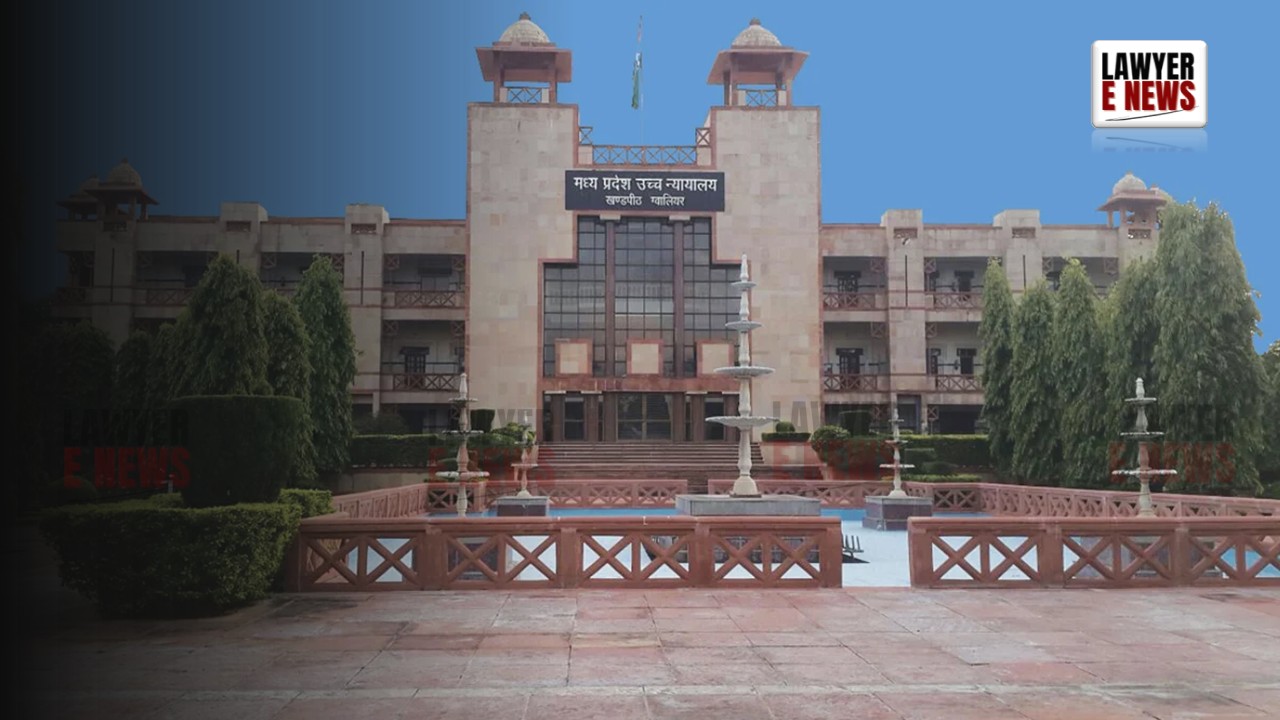
“An appeal cannot be thrown out solely for non-joinder; opportunity to rectify must be given” — In a significant ruling Madhya Pradesh High Court quashed the revisional order of the Additional Collector, Ashoknagar, which had dismissed a mutation appeal for non-joinder of necessary parties. Justice Amit Seth, presiding over the matter, held that “non-joinder of a necessary party is a curable defect and cannot by itself be a ground to terminate proceedings without affording an opportunity to cure it.”
The case, which arises under the Madhya Pradesh Land Revenue Code, 1959, dealt with mutation proceedings initiated on the basis of a disputed Will. The Court’s decision marks a critical reaffirmation of procedural fairness, particularly when administrative authorities exercise quasi-judicial powers in land disputes.
Mutation Granted on Disputed Will, Challenge Dismissed for Technicality
The dispute originated when Respondents 1 to 3 obtained a mutation order from the Tehsildar, Mungawali, under Sections 109 and 110 of the M.P. Land Revenue Code, 1959, based on a Will allegedly executed by one Smt. Ramkunwar Bai for land in Village Pandau. The petitioners, legal heirs and claimants to the property, challenged the mutation order, questioning the authenticity of the Will.
Although the Tehsildar allowed the mutation on April 30, 2011, the petitioners preferred a statutory appeal under Section 44(1) before the SDO. During the pendency of that appeal, Respondents 1 to 3 raised a procedural objection, invoking Order 7 Rule 11 CPC, contending that all 14 non-applicants before the Tehsildar had not been impleaded as respondents in the appeal.
The SDO rejected this objection on December 13, 2011, finding no merit in it, and posted the case for final hearing. However, instead of contesting the appeal on merits, Respondents 1 to 3 filed a revision petition under Section 50 of the Land Revenue Code before the Additional Collector, Ashoknagar.
In a controversial order dated March 26, 2012, the revisional authority accepted the plea of non-joinder and summarily dismissed the appeal — not for lack of merit — but merely because all necessary parties had not been impleaded.
Procedural Objection Cannot Override Substantive Justice
The High Court, exercising its writ jurisdiction under Articles 226 and 227 of the Constitution, intervened to correct what it termed as a “procedural illegality.” Justice Amit Seth emphasized that even if there was a defect of non-joinder, the revisional authority was bound to allow an opportunity for curing it, instead of terminating the appeal at a preliminary stage.
In doing so, the Court heavily relied on two Supreme Court rulings:
Kuldeep Kumar Dubey & Others v. Ramesh Chandra Goyal, (2015) 3 SCC 525, where it was held:
“Such irregularity could have been corrected by the Court under Order 1 Rule 10 and can be corrected even at this stage unless the defendant is in any manner prejudiced.”
Prem Lala Nahata v. Chandi Prasad Sikaria, (2007) 2 SCC 551, which clarified:
“A suit bad for misjoinder of parties or of causes of action is not barred by any law within the meaning of Order 7 Rule 11(d) CPC. The Code permits continuation and even adjudication despite such procedural defects.”
Justice Seth noted that: “An opportunity ought to have been granted to the petitioners to implead the remaining parties as per the objection taken by the respondents. The first appeal was yet to be decided on merits. The revisional authority’s decision to dismiss it outright is contrary to settled legal principles.”
Mutation on Disputed Will: Court Avoids Comment Pending Merits Before SDO
Though the petitioners also raised the broader issue of whether a Tehsildar could entertain a mutation application based on a Will that was under dispute, the High Court chose to refrain from deciding that issue in this writ petition. It observed that:
“Since the scope is restricted only to the decision on the pending first appeal before the SDO on merits and to the correctness of the revisional order, this Court refrains itself from commenting upon the validity of the Will.”
The argument was based on the Full Bench decision in Anand Choudhary v. State of M.P., 2025 (1) MPLJ 646, which had held that revenue authorities like Tehsildars cannot adjudicate on the genuineness of a Will if its validity is contested.
Orders Passed: Appeal Restored, Petitioners Permitted to Implead Parties
Accordingly, the Court allowed the writ petition and set aside the revisional order dated March 26, 2012. It directed that the first appeal be restored before the SDO, Mungawali, subject to the petitioners filing a certified copy of the High Court’s order within one month.
Further, the Court permitted the petitioners to file an application for impleading the left-out respondents, and directed the SDO to:
“Consider and decide the appeal on merits after hearing all concerned parties.”
The Madhya Pradesh High Court’s ruling is a stern reminder to administrative authorities exercising appellate or revisional jurisdiction that technicalities should not override justice. Dismissing appeals for curable defects like non-joinder — without granting an opportunity to rectify — amounts to denying fair hearing. The decision reinforces the procedural safeguards embedded in the CPC and aligns with the Supreme Court’s emphasis on substantial justice over hyper-technical objections.
Date of Decision: January 27, 2026