-
by sayum
24 August 2026 3:22 PM








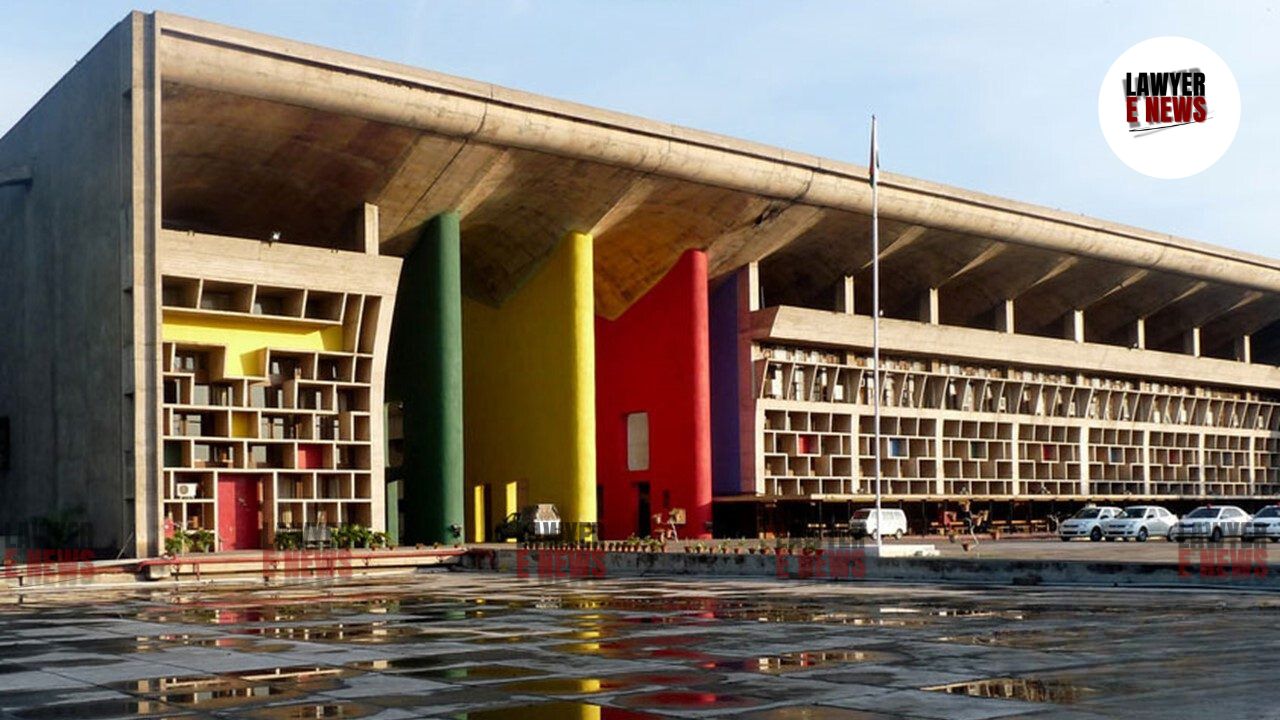
"Appellate Court Must Apply Its Mind: Judgment Without Framing Points of Determination Under Order XLI Rule 31 CPC Is Unsustainable in Law", In a scathing judgment Punjab and Haryana High Court at Chandigarh reversed a decree of specific performance granted by the First Appellate Court and restored the Trial Court’s order, which had refused the relief owing to severe inconsistencies and suspicious circumstances surrounding the contract in question. Justice Nidhi Gupta held that “a court cannot shut its eyes to blatant contradictions and unexplained anomalies in agreements that are sought to be enforced specifically.”
The plaintiff’s claim was rooted in two separate agreements to sell — both in respect of the same property, between the same parties, for the same consideration. The Court asked rhetorically: “When one valid agreement is sufficient, what plausible purpose does the second serve — except to cast doubt?” The explanation offered by the plaintiff — that one was handwritten and the other typed — was brushed aside as a “superficial justification which fails the test of legal scrutiny.”
“An Agreement to Sell Must Stand on Its Own Legs; It Cannot Limp Forward On Contradictions and Presumptions”
At the heart of the dispute was an agreement allegedly executed by the illiterate defendant, Roopa Mehra, who contended that her thumb impressions were taken on blank papers under the guise of a loan transaction — a claim she substantiated through her consistent pleadings and a criminal complaint lodged against the plaintiff. Yet, the First Appellate Court had granted a decree for specific performance by relying almost solely on the defendant’s admission of her thumb impression.
Justice Nidhi Gupta observed with concern: “Admitting a thumb impression is not the same as admitting a concluded contract. Execution in law involves not just proof of signature, but proof of conscious assent to the terms contained in the document.”
The Court highlighted that the typed agreement bore all the hallmarks of manipulation. “Abnormal narrow gaps in the final lines, thumb impressions only on the last page, and contradictions in consideration — these are not clerical mistakes, they are red flags,” remarked the Court, adding that, “where an agreement is cloaked in suspicion, specific performance becomes not a remedy, but an injustice.”
"Readiness and Willingness Is Not A Ritual — Plaintiff Must Demonstrate It With Precision and Proof," Declares High Court
The High Court reiterated that Section 16(c) of the Specific Relief Act mandates not just a claim of readiness and willingness but its concrete demonstration. The plaintiff had placed affidavits claiming he appeared before the Sub-Registrar; but the Court found that to be insufficient. “Affidavits of presence cannot substitute proof of capacity. Plaintiff has not shown how or when he paid or arranged for the balance consideration. That omission is fatal,” held the Court.
The Court found that the plaintiff had failed to explain why the sale deed was drafted in advance, why the consideration was lowered in the final deed without explanation, and how he reconciled those contradictions. “The law does not allow a party to pick and choose facts as per convenience and expect equitable relief,” it said.
“First Appellate Court Acted Like A Silent Spectator — Reversal Without Reason Cannot Sustain Judicial Scrutiny”
In a strong indictment of the First Appellate Court, Justice Gupta declared that its judgment was “not merely cryptic but legally infirm, having failed to frame points of determination, consider trial court findings, or appreciate evidence.”
Referring to Order XLI Rule 31 CPC, the Court held: “It is not a formality. The rule is the spine of appellate reasoning. Failure to frame and decide upon specific issues is a jurisdictional error that vitiates the decree.”
Quoting the Supreme Court's decision in Malluru Mallappa v. Kuruvathappa, the High Court reminded that “even when an appellate court agrees with the Trial Court, it must show application of mind. When it reverses the trial findings, the burden is even heavier.”
The Court concluded that “the First Appellate Court did not engage with the material discrepancies, did not discuss the suspicious nature of the agreement, and glossed over the burden of proof. Such a decree cannot stand.”
“Equity Does Not Reward Ambiguity — Specific Performance Is A Discretion, Not An Entitlement”
The judgment underscored a fundamental principle of equitable relief under the Specific Relief Act — namely, that it is discretionary. The Court noted that “the plaintiff came to court with a case riddled with contradictions, failed to adhere to his own pleadings, gave evasive explanations, and expected the court to presume legitimacy. That is not how equitable remedies function.”
Drawing from the Supreme Court’s judgment in Garre Mallikharjuna Rao v. Nalabothu Punniah, the High Court reiterated: “Discretionary relief of specific performance cannot be granted on shaky and vague evidence.”
Agreement to Sell Must Be Clear, Consistent, and Credible — Else, Courts Will Not Enforce It
With these findings, the High Court allowed the Regular Second Appeal, “restoring the well-reasoned judgment of the Trial Court” dated 03.12.2010, which had declined specific performance but allowed recovery of ₹50,000, the only amount credibly proved to have been paid. The Appellate Court’s decree dated 24.12.2011 was set aside in full.
“Specific performance cannot be allowed to become a cloak for enforcing doubtful, incomplete, or fabricated transactions. The High Court stands as a gatekeeper to prevent such misuse of legal process,” Justice Nidhi Gupta concluded.
Date of Decision: 22 January 2026