-
by sayum
24 August 2026 3:22 PM







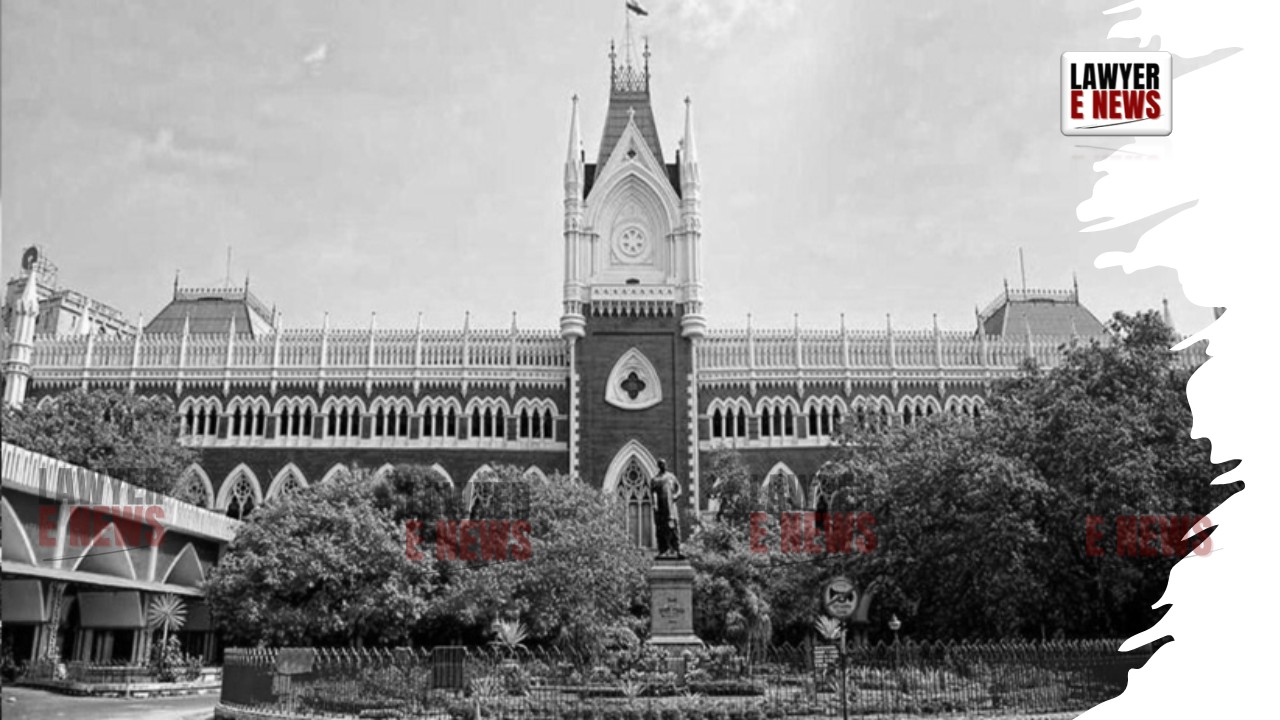
"Real controversy is whether Udharani had transferable title under law between 1911 and 1933—not whether plaintiffs can amend pleadings to clarify this" – In a decision that reinforces the liberal and purposive approach to amendment of pleadings, the Calcutta High Court dismissed a challenge to a trial court’s order allowing amendment of a plaint in a long-standing partition suit. Justice Ajoy Kumar Mukherjee, exercising revisional jurisdiction under Article 227 of the Constitution, held that clarifying or explaining an earlier admission—especially when it concerns a question of law—does not amount to withdrawing a fundamental part of the case, nor does it justify interference at this stage of litigation.
The Court rejected the contention that the plaintiffs’ amendment seeking to state that their predecessor Udharani Dasi had only a limited estate under the then-prevailing law would amount to withdrawing an “admission” or changing the nature of the suit.
"Admission does not create title and is not conclusive—it may or may not be erroneous and remains subject to court’s scrutiny," the Court observed. "Amendment cannot be refused simply because it seeks to explain an admission already made." [Para 22]
Partition Suit and Proposed Amendment Regarding Ownership
The plaintiffs had filed the suit in 2015 seeking declaration of joint ownership and partition of the suit property, asserting that they and defendants No. 1 to 5 jointly inherited the property from Udharani Dasi, who inherited it from her father Benimadhab Das.
The original plaint described Udharani as the “absolute owner” of the property. However, by way of amendment, the plaintiffs now sought to plead that under the law prevailing between 1911–1933, Udharani, being a female heir, could hold only a limited estate and lacked legal capacity to alienate the property during her lifetime.
The defendants (petitioners before the High Court), descendants of Kamini Moni Dasi, argued that they had acquired valid title from Udharani’s sons and that the plaintiffs were estopped from withdrawing the earlier admission. They contended that the amendment came after framing of issues and at the stage of trial, and was hit by the proviso to Order VI Rule 17 CPC, which bars amendments post-trial unless due diligence is shown.
Amendment Permissible, Clarifies Legal Position—Does Not Alter Cause of Action
The High Court, after analysing pleadings and precedents, found that:
The plaintiffs' case was always based on inheritance from Udharani.
The amendment did not alter the relief sought (declaration of joint ownership and partition).
The core controversy remained: whether Udharani had transferable title, and whether the defendants’ predecessor acquired any valid title from her.
"If the proposed amendment is allowed it would neither change the cause of action of the suit, nor the relief… would be materially affected." [Para 19]
The Court emphasized that categorical admissions may be explained or clarified, especially if they are legal in nature, and reiterated that title is a matter of law, not merely of admission.
"Offering explanation in regard to admission or explaining away the same cannot be said to be mutually destructive." [Para 19]
"Admission does not create title and therefore is not conclusive." [Para 22]
No Violation of Order VI Rule 17—Delay Not Fatal If Real Controversy Can Be Resolved
On the issue of delay, the Court observed that mere belatedness is not a ground to deny amendment if the proposed changes are necessary for adjudication of the real dispute. The proviso to Order VI Rule 17 CPC, which requires demonstration of due diligence, was held not to bar the amendment in the facts of this case.
"Belated amendment cannot be refused if it is found that for deciding the real controversy… it is required to be allowed on payment of costs." [Para 20]
Citing Rajesh Kumar Agarwal v. K.K. Modi (2006) 4 SCC 385, the Court reiterated that the “real controversy test” is the cardinal test for deciding amendment applications.
Supervisory Jurisdiction Under Article 227 Not to Be Invoked Lightly
Finding no perversity or illegality in the trial court’s order, the High Court declined to interfere in exercise of its supervisory powers under Article 227.
"Order of the court below allowing the proposed amendment does not suffer from any impropriety or perversity…" [Para 24]
"Court must lean in favour of doing full and complete justice… where the party against whom the amendment is allowed can be compensated by costs or allowed to file additional written statement." [Para 20]
Clarificatory Pleadings on Title Do Not Amount to New Cause—Amendment Upheld
In summation, the Court ruled that the plaintiffs’ proposed amendment did not introduce a new or mutually destructive case, but rather sought to clarify the legal character of their predecessor’s interest, which was central to the real issue in the suit.
"The proposed amendment shall not introduce a different case… nor does it set up an entirely new case, foreign to the case set up in the plaint." [Para 23]
Accordingly, the civil revisional application was dismissed, and the trial court's order allowing the amendment was affirmed.
“Admission is Not a Deed—Title is a Legal Question” – Calcutta High Court refuses to stop plaint amendment explaining ownership claim
Date of Decision: January 30, 2026