-
by sayum
24 August 2026 3:22 PM







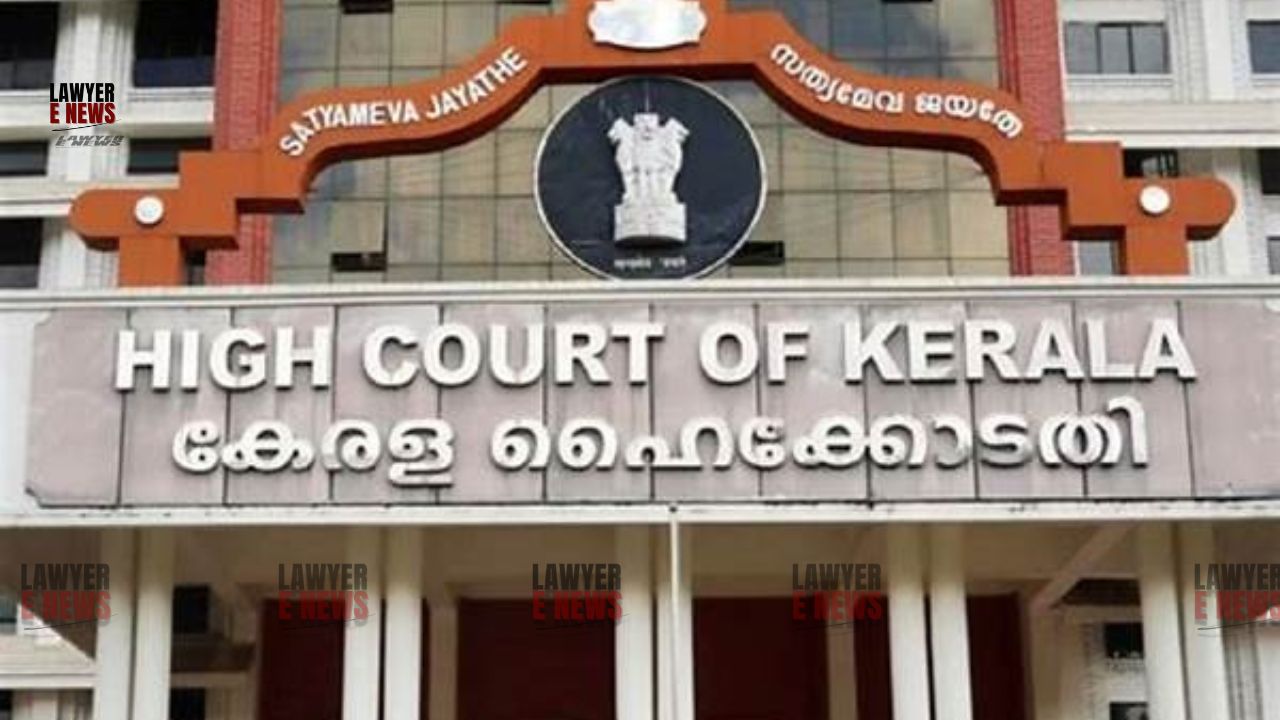
“More Than Sufficient Opportunity Was Given to the Appellant to Defend Her Case and Adduce Evidence” – Kerala High Court, in a detailed judgment delivered in Dr. Stellamma Xavier v. The Manager, Fathima Matha National College & Another, upheld the disciplinary action taken against a senior college lecturer, refusing to interfere with the findings of the Kerala University Appellate Tribunal. The Bench of Justice Anil K. Narendran and Justice Muralee Krishna S. held that the scope of revisional jurisdiction under Section 60(9) of the Kerala University Act, 1974 is limited, and interference is warranted only in cases of “perversity, illegality, material irregularity or violation of natural justice.”
This significant ruling reaffirms long-standing judicial discipline that prohibits revisional courts from reappreciating evidence or sitting as appellate forums in service matters, particularly where disciplinary proceedings have been found to be fair and in accordance with statutory procedure.
Allegations of Forgery, Insubordination and Unauthorised Leave: Tribunal's Findings Based on Evidence
The petitioner, Dr. Stellamma Xavier, a Senior Scale Lecturer in Hindi at Fathima Matha National College, was subjected to disciplinary proceedings after repeated memos were issued alleging dereliction of duty. Ultimately, a consolidated memo of nine charges was served, including serious accusations such as forging the attendance register, erasing supervisory notations, making false allegations against superior officers, and taking unauthorised leave without prior sanction.
Following an enquiry in which multiple management witnesses were examined and documents produced, the Enquiry Officer found the petitioner guilty on seven out of the nine charges. The Management initially proposed withholding three increments with cumulative effect but reduced the penalty to withholding of two increments after considering her representation.
When the Kerala University Appellate Tribunal dismissed her appeal, she invoked the revisional jurisdiction of the High Court, alleging, among other grounds, violation of natural justice, procedural irregularities, and vagueness in the charge memo.
Court Emphasises Judicial Restraint in Departmental Enquiries: "Findings Not Perverse or Illegal"
Relying on the established principles laid down in Nemi Chand Nalwaya v. Union of India [(2011) 4 SCC 584], the High Court stressed that courts cannot reassess evidence led in departmental enquiries unless the findings are unsupported by evidence or suffer from perversity.
Quoting from Nemi Chand, the Court observed:
"If the enquiry has been fairly and properly held and the findings are based on evidence, the question of adequacy of the evidence or the reliable nature of the evidence will not be grounds for interfering with the findings in departmental enquiries... Courts will however interfere with the findings in disciplinary matters, if principles of natural justice or statutory regulations have been violated or if the order is found to be arbitrary, capricious, mala fide or based on extraneous considerations."
The Bench categorically rejected the petitioner's claim of denial of natural justice, holding that ample opportunities had been provided during the enquiry, and that her non-participation could not be held against the enquiry officer or the disciplinary authority.
Significantly, the Tribunal had observed in paragraphs 15 and 16 of its judgment that:
"It is evident that on the days when the witness of the management was present, the appellant did not turn up. She was cunning enough to be present on the days on which the management witnesses were absent. Yet several notices were repeatedly given to the appellant. But she did not turn up and finally evidence was recorded in her absence. So more than sufficient opportunity was given to the appellant to defend her case and to adduce evidence."
The Court found no procedural illegality in the enquiry and reiterated that under Statute 72 of the Kerala University First Statutes, a detailed enquiry is not even mandatory for the imposition of a minor penalty, yet one was conducted.
Charges Were Clear and Understood – Tribunal Found No Vagueness
The petitioner’s argument that the charge memo was vague was also rejected. The High Court noted the Tribunal’s finding that the consolidated charges were based on earlier memos and that the petitioner had submitted detailed explanations. The Tribunal had clearly stated:
"Her explanation shows that she fully understood the allegations. If she was vague in her answers, it was because she fully knew that what she did was wrong."
Thus, the claim of vagueness was held to be unsubstantiated.
Minor Penalty Within Disciplinary Authority’s Power – Court Refuses to Substitute Its Wisdom
The High Court also considered the proportionality of the punishment, noting that only a minor penalty—i.e., withholding of two increments with cumulative effect—had been imposed. The Tribunal had observed that the Management had been lenient in imposing such punishment despite the seriousness of some of the misconduct.
No illegality or procedural irregularity was found in the disciplinary authority’s decision or the Tribunal’s affirmation of the same.
Dismissing the Civil Revision Petition, the High Court underlined the judicial self-restraint applicable in revisional proceedings relating to service law. It affirmed that the Appellate Tribunal had rightly appreciated the evidence and statutory framework, and that the punishment imposed was neither disproportionate nor arbitrary.
In conclusion, the Court reiterated:
"From reappreciating the findings arrived at by the Tribunal, with reference to the materials placed on record, we find no ground to hold that the Tribunal failed to properly appreciate the evidence and materials placed on record or in other words, the impugned judgment of the Tribunal is perverse, illegal or suffering from material irregularity, which warrants interference of this Court by exercising the revisional jurisdiction."
Date of Decision: 05/01/2026