Limitation Under Section 34 Is Not a Technicality, It's Jurisdictional: Allahabad High Court Remands Commercial Court Order on MSME Award Challenge Labeling A Disease ‘Lifestyle Or Constitutional’ Can’t Be A Reason To Deny Pension: Bombay High Court Slams Army, Navy Medical Boards Delay of the State Is No Divine Right: Punjab & Haryana High Court Slams Bureaucratic Lethargy, Refuses to Condon Delay in Criminal Revision Courts Will Not Reappreciate Evidence or Act as Appellate Authority in Disciplinary Matters Unless Findings Are Perverse: Kerala High Court Reiterates Limits of Revisional Jurisdiction Sanction for Prosecution Is Not a Ritualistic Rubber Stamp: Madhya Pradesh High Court Quashes Sanction Against Excise Officer Sole Testimony Of Prosecutrix Not Free From Doubt, Cannot Be Basis Of Conviction: Delhi High Court Acquits Five Men In Gang-Rape Case Mere Recovery of Tainted Money Without Proof of Demand Cannot Sustain Conviction Under PC Act: J&K High Court Acquits Patwari Bail Cannot Be Denied When Trial Becomes Endless: Delhi High Court Grants Bail in Murder Conspiracy Case Money Laundering Is Not Frozen in Time – It Flows with the Proceeds of Crime: Calcutta High Court Revives PMLA Trial Against Accused Despite Pre-Amendment Predicate Offence Gravity of Offence Alone Not Ground to Deny Bail Where Co-Accused Are Released: Karnataka High Court Grants Bail in Murder Case Under BNS Mere Rearrangement of Known Elements Without Technical Advance is Not Patentable: Madras High Court Mere Pendency of Order 9 Rule 13 Application Not Ground to Condon Delay: Karnataka High Court Stray Revenue Entries Can't Create Tenancy in Surplus Land Already Vested in State: Punjab & Haryana High Court Allahabad High Court Quashes Ceiling Surplus Land Order Passed Without Spot Inspection, Ignores Rights Acquired Through Adverse Possession Civil Death Cannot Be the Price of Past Mistakes: Orissa High Court Strikes Down Blanket Tender Ban on Previously Blacklisted Bidders Once Supreme Court Cancels Bail for Violation, Subordinate Courts Cannot Reconsider: Karnataka High Court Non-joinder Is a Curable Defect, Not a Death Blow to Appeal: Madhya Pradesh High Court Restores Mutation Appeal Stale Allegations and Closed FIRs Cannot Justify Preventive Detention: J&K High Court Quashes PSA Detention Order for Lack of Proximate Link Employment-Related Separation Cannot Be Labelled as Desertion: Jharkhand High Court Dismisses Husband’s Divorce Appeal “Fair Pre-Estimate” of Damages Valid Even Without Proof of Loss: Delhi High Court Partly Sets Aside Arbitral Award in Carlsberg Dispute Or 39 CPC | Unregistered Will With Single Attesting Witness Cannot Confer Absolute Title: Delhi High Court Grants Injunction Failure To Comply With Mandatory Rent Deposit Directions Under WBPTA Will Invite Striking Off of Tenant’s Defence, Even For Single Default: Calcutta High Court Insistence on Impossible Term Reflects Absence of Readiness: Bombay High Court Denies Specific Performance for Delay and Inflexibility Two Agreements for One Sale? Courts Cannot Decree Specific Performance on Suspicious Contracts Lacking Clarity and Credibility: Punjab & Haryana High Court Ph.D. Pays: Delhi High Court Upholds Higher Academic Grade Pay for Polytechnic Teachers With Doctorate Adoption Legally Severs All Ties With Biological Family: Jharkhand High Court Denies Partition Claim By Biological Brother Over Adoptive Mother’s Property Institutions Cannot Crush Merit at the Gates of the Olympics: Delhi High Court Directs Inclusion of Top-Ranked Skier in Milano Cortina 2026 After Arbitrariness by IOA Ad-hoc Committee Failure To Consider Final De-Bonding Date Vitiates Duty Demand: Andhra Pradesh High Court Sets Aside CESTAT Order In Richi Men Silks Case No Statutory Shortcut: Compensation for Acquired Land Must Be Monetary—TDR Cannot Be Forced Upon Landowners: Bombay High Court Admission Does Not Create Title, Nor Is It Conclusive: Calcutta High Court Upholds Amendment Clarifying Ownership Claim in Partition Suit Resumption under PTCL Act is a serious intrusion on property rights — it demands strict proof, not presumptions: Karnataka HC Freedom of Speech Cannot Be a Shield for Obscene Religious Insults: Karnataka High Court Upholds Investigation into WhatsApp Circulation of Offensive Images of Hindu Deities Sterling Witness Evidence Needs No Corroboration: Kerala High Court Upholds Murder Conviction Appointment of Advocate Commissioner Is Essential Where Mandatory Injunction Is Sought: Madras High Court MSME Benefits Can’t Be Claimed as a Last-Minute Shield After SARFAESI Actions Begin: Orissa High Court Clarifies Borrower’s Duty Section 91 CrPC | Accused Has No Right to Demand Defence Material Before Trial Begins: Allahabad High Court

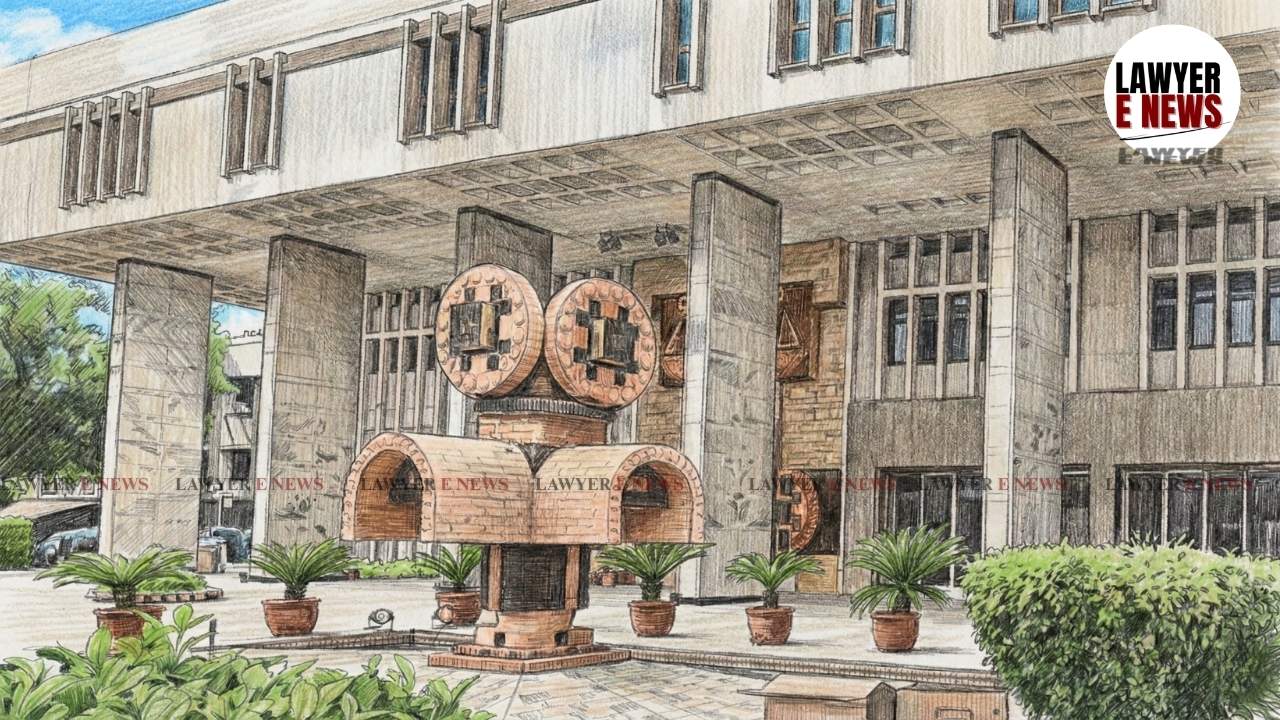
Delay of the State Is No Divine Right: Punjab & Haryana High Court Slams Bureaucratic Lethargy, Refuses to Condon Delay in Criminal Revision

01 February 2026 9:39 AM

By: sayum


"Government litigants must demonstrate bona fide, sufficient, and cogent cause for delay — absent such justification, delay cannot be condoned merely on account of the applicant’s identity” — High Court reaffirms strict standard for limitation condonation

In a significant decision emphasizing the sanctity of statutory limitation and rejecting bureaucratic inefficiency as an excuse, the Punjab and Haryana High Court on January 22, 2026, dismissed an application filed by the DFSC-cum-District Manager seeking condonation of delay of 168 days in a criminal revision. The Court held that the State and its instrumentalities are not entitled to mechanical condonation and must meet the same standards of diligence and sufficiency of cause as any private litigant.

The decision was delivered by Justice Sumeet Goel in CRM-22208-2025 in & CRR-1412-2025, DFSC-cum-District Manager v. State of Haryana and Others. The Court not only rejected the application seeking condonation but also dismissed the accompanying revision petition as barred by limitation.

The ruling reinforces the principle that "condonation of delay is to remain an exception, not the rule," especially when the delay is attributed to administrative or procedural laxity without sufficient substantiation.

“Bald Assertions Without Cogent Explanation Cannot Be Elevated to Sufficient Cause” – Court Rejects State’s Plea for Condonation

The main legal issue before the Court was whether the petitioner, a State functionary, had demonstrated “sufficient cause” under Section 5 of the Limitation Act, 1963, to warrant condonation of a 168-day delay in filing a criminal revision under Sections 397 and 401 of the CrPC.

In rejecting the plea, the Court categorically held that the reasons cited—such as shortage of staff, delayed legal opinions, and non-availability of records—were generalised assertions with no documentary proof or timeline to justify the prolonged inaction. “This application, apart from being bereft of any specific details or particulars which may reflect bona fide on part of the applicant-petitioner… rather reflects a deliberate attempt… to somehow entangle the respondent-accused in prolonged litigation,” observed the Court.

Citing the Supreme Court’s decisions in Pathapati Subba Reddy v. Special Deputy Collector (2024 INSC 286) and Shivamma v. Karnataka Housing Board (2025 INSC 1104), the High Court held that the identity of the applicant as a government entity could not serve as a license for circumventing statutory deadlines. “Courts must guard against casual and routine pleas of bureaucratic lethargy,” it observed.

“Merely Attributing Delay to Bureaucratic Hurdles Doesn’t Meet Legal Threshold” – Liberal Approach Must Be Anchored in Credibility

The Court acknowledged the principle laid down in various precedents that while a liberal approach is permissible in condoning delay to advance substantial justice, such liberalism is not unfettered. Quoting from Deepak v. Noori (CRR-F-1844-2023, decided on 29.02.2024), the judgment emphasized that “a prayer for condonation of delay ought not to be granted sans reasonable explanation.”

Referring to the Supreme Court’s consistent position from Postmaster General v. Living Media India Ltd. (2012) 3 SCC 563 to G. Ramegowda v. Special Land Acquisition Officer (1988) 2 SCC 142, Justice Goel reinforced that “Governmental litigants, no less than private parties, must demonstrate bona fide, sufficient, and cogent cause for delay.”

The petitioner’s contention that administrative delay in obtaining legal opinions, compounded by staff retirements and lack of personnel, constituted sufficient cause was firmly rejected. “The applicant-petitioner has neither shown continuous interest in the case nor presented any exceptional or unavoidable circumstances that could explain such an extensive delay,” the Court held, dismissing the claim as vague and unsubstantiated.

Dismissal of Criminal Revision

Consequent to the dismissal of the application for condonation, the Court held that the main criminal revision petition itself was not maintainable and must be dismissed. “Since the application seeking condonation of delay has been dismissed, the main revision petition stands dismissed as well accordingly,” the judgment concluded.

This ruling underscores a growing judicial trend to hold State litigants accountable to the same legal standards as private parties, particularly in matters involving procedural compliance and delay.

Date of Decision: January 22, 2026



Latest Legal News