-
by sayum
24 August 2026 3:22 PM







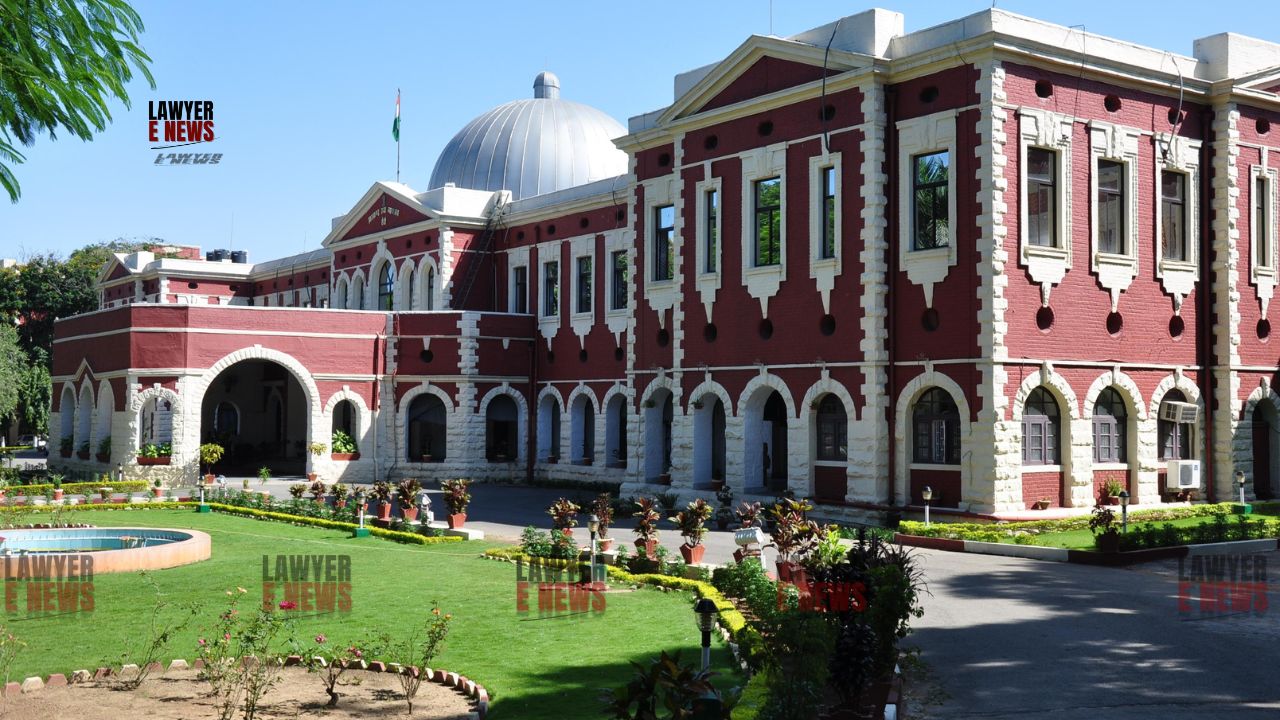
“Once adoption is not challenged, the adopted son ceases to be part of biological family and cannot be treated as a coparcener,” Jharkhand High Court emphatically ruled that an adopted son’s rights are confined to his adoptive family and do not extend to the joint family of his biological relatives. Dismissing Second Appeal Court upheld the first appellate court’s decree, denying the plaintiff’s claim to partition of property inherited by his adoptive brother from their great-grandmother. The judgment was passed by Hon’ble Mrs. Justice Anubha Rawat Choudhary, who held that, “The defendant got separated in all respects from the family of his biological father upon his adoption by Man Kumari.”
The plaintiff, Bishwanath Prasad, had sought partition of Schedule B property, asserting a 50% share on the plea that the property had been thrown into the joint Hindu family hotchpotch. The Court, however, found that the adopted son, Dwarika Prasad, had exclusive rights over the suit property by virtue of a registered adoption in 1944 and a subsequent compromise decree.
“Property of Adoptive Mother Cannot Become Joint Family Property of Biological Family” – High Court Finds No Unity of Title or Possession
The central issue before the Court was whether Dwarika Prasad, adopted by Man Kumari, retained any coparcenary ties with his biological brother Bishwanath Prasad and father Nathuni Choudhary. The Court categorically held that “once adoption is not questioned and stands valid, the adopted son ceases to be a member of his biological family.” Citing Sections 11 and 12 of the Hindu Adoption and Maintenance Act, 1956, the Court held that the adopted son acquires the same rights in the adoptive family as a natural-born child and loses all rights in the biological lineage.
Rejecting the plaintiff’s contention that the suit property had been thrown into the joint family pool, the Court reiterated that “mere permissive occupation of two rooms in the suit house by the plaintiff cannot create a claim of title.” It was observed that the plaintiff did not claim joint possession of the entire property, a crucial element in any partition suit.
“Agreement Dated 23.12.1948 Is a Fabricated Document” – Mention of Non-Existent Municipal Number Fatal to Plaintiff’s Case
One of the main planks of the plaintiff’s argument was an alleged agreement dated 23.12.1948 (Exhibit-9), said to be executed by Man Kumari and Dwarika Prasad, which purportedly acknowledged the plaintiff’s equal share in the suit property. However, the Court termed this document “forged and unreliable,” pointing out a fatal inconsistency: the agreement referred to a municipal holding number (No. 315) that didn’t exist until 1949–50.
Justice Choudhary remarked that, “the mention of the new holding number in the recital of the alleged agreement, as back as on 23.12.1948, clearly proves that the agreement was a colorable and tainted document devoid of any credibility.” The plaintiff’s contradictory statements—first claiming to have witnessed the execution, then later claiming to have discovered it only in 1977—further damaged its evidentiary value.
“Adopted Son Was Lawfully Divested From Biological Lineage” – Registered Adoption Deed Carries Statutory Presumption of Validity
The Court emphasized that the adoption of Dwarika Prasad by Man Kumari in 1944 was never challenged by the plaintiff, and even if it had been, such challenge would now be barred by limitation. Relying on Section 16 of the Hindu Adoption and Maintenance Act, the Court noted the presumption of legality attached to a registered adoption deed.
Justice Choudhary clarified that “the property of Man Kumari could not devolve upon children born through another wife of her husband”, adding that the plaintiff had no legitimate claim either through inheritance or joint family doctrine. The Court observed that the property was already allocated to Dwarika Prasad under a compromise decree in the First Appeal No. 11 of 1949, and there was no challenge to that decree.
“Mere Residence Does Not Constitute Ownership” – Plaintiff Held to Be in Permissive Possession Without Title
Another vital blow to the plaintiff’s case was the Court’s conclusion that he was merely in permissive possession of two rooms in the suit premises and had never asserted a hostile or legal title. “Unity of title and unity of possession are essential ingredients of a partition suit. Neither has been proved here,” the Court concluded.
While the plaintiff had produced municipal tax receipts, the Court noted that only one of them, Exhibit-1, was in his name—and that too dated after the filing of the partition suit. As such, it was held that these receipts could not confer any ownership rights.
“Non-Substitution of One Legal Heir Will Not Lead to Abatement” – Estate of Deceased Defendant Held Sufficiently Represented
The respondents had argued that the appeal had abated due to the non-substitution of one of the legal heirs of the original defendant (respondent no.1(d)). The Court rejected this argument, stating that “there is a clear distinction between non-substitution of a party and non-substitution of one of the heirs of a party.”
Citing the Supreme Court’s ruling in Kishorilal (D) through LRs v. Gopal and Others [2026 INSC 48], the Court concluded that since the remaining legal heirs (brothers of the deceased respondent) were on record and sufficiently represented the estate, the appeal had not abated.
No Share for Biological Brother in Property of Adoptive Mother – Appeal Dismissed
In conclusion, the High Court upheld the findings of the First Appellate Court and dismissed the appeal, holding that the plaintiff had no share in the Schedule B property.
“The Schedule B property was the exclusive property of the defendant and the plaintiff is not entitled to half share of the same as prayed for in the title suit,” Justice Anubha Rawat Choudhary ruled, affirming that adoption severs all legal ties with the biological family unless specifically provided otherwise.
Date of Decision: 29 January 2026