-
by sayum
24 August 2026 3:22 PM







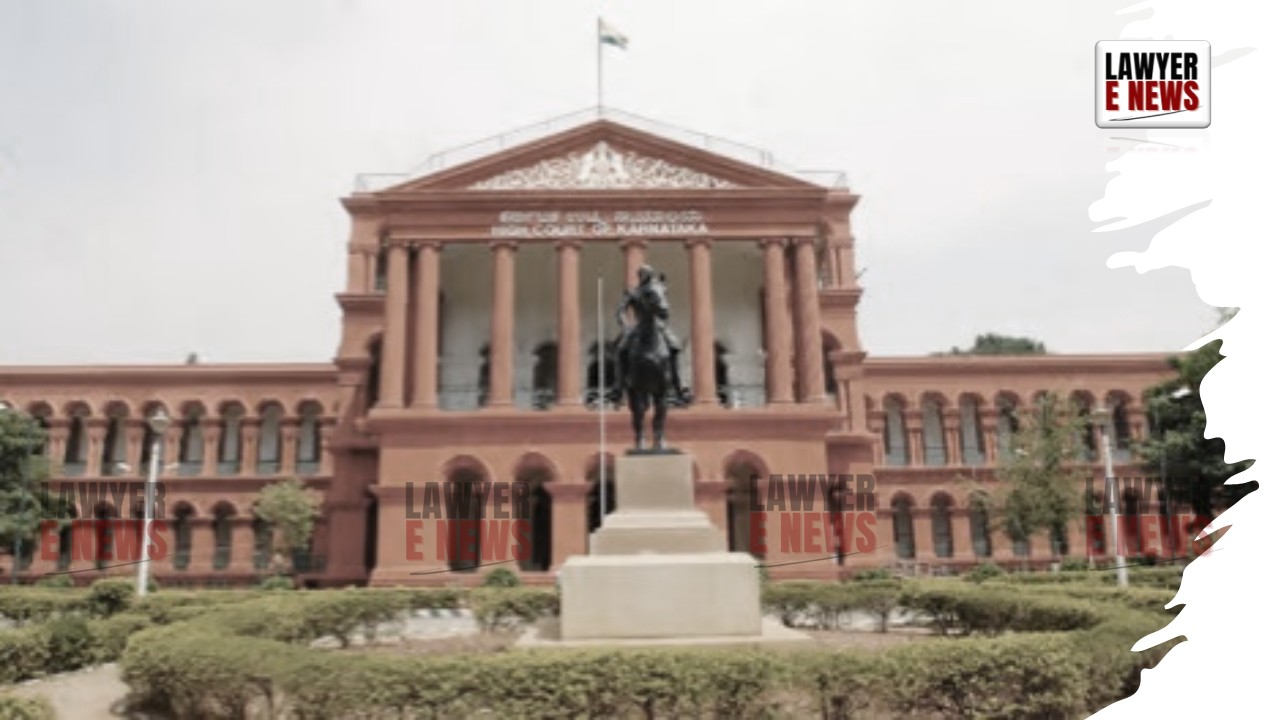
“Sanction under Section 196 CrPC is not a prerequisite for FIR or investigation under Section 295A IPC”, In a significant pronouncement reinforcing the balance between freedom of speech and public order, the Karnataka High Court has dismissed a petition seeking quashing of an FIR under Section 295A IPC and Section 67 of the IT Act, holding that the police are empowered to investigate religious insult offences even without prior sanction under Section 196 of the CrPC.
Justice M. Nagaprasanna, ruled that the requirement of prior sanction applies only at the stage of cognizance by a Magistrate and not at the initial stages of FIR registration or investigation. The Court held that premature judicial interference would stifle a lawful inquiry into serious allegations involving deeply obscene and demeaning depictions of Hindu deities, circulated through a WhatsApp group with over 250 members.
“To insist upon sanction even before investigation would be to place the cart before the horse and defeat the very object of investigation,” the Court observed, rejecting the petitioner’s claim that the FIR was illegal for want of prior sanction.
“Content Prima Facie Meets Ingredients of Section 295A – Investigation Must Proceed Unhindered”
The FIR arose from a complaint filed by K. Jayaraj Salian, who received a WhatsApp group link titled “Bajarangi Go Kallaru”. Upon joining, he alleged that repeated circulation of vulgar and profane images of Hindu deities and political figures was carried out with deliberate intent to hurt religious sentiments.
While challenging the FIR, the petitioner contended that he had no direct role, that evidence may have been lost, and that prosecution was selective as other group administrators were not being investigated.
However, Justice Nagaprasanna squarely rejected these arguments:
“Investigation material contains depictions of Hindu deities in an extraordinarily obscene, demeaning, and profane manner… The content is such that reproduction in a judicial order would itself be inappropriate.”
“Whether the petitioner had the requisite mens rea, the extent of his role, and the liability of other administrators are all matters squarely within the domain of investigation.”
The Court reiterated that Section 295A penalises only aggravated forms of insult committed with deliberate and malicious intent to outrage religious feelings. Citing Ramji Lal Modi v. State of UP and Amish Devgan v. Union of India, the Court reaffirmed that free speech under Article 19(1)(a) is subject to reasonable restrictions under Article 19(2), especially when it involves public disorder or religious insult.
“Sanction Required Only for Cognizance, Not for Crime Registration or Police Inquiry” — Court Clarifies Statutory Bar under Section 196 CrPC
One of the core legal issues examined was whether Section 196 of CrPC — which mandates prior government sanction before courts take cognizance of offences under Section 295A IPC — also applies to registration of FIRs or investigation.
The Court answered decisively in the negative: “Section 196 Cr.P.C. employs the expression ‘No Court shall take cognizance’. The bar is explicit — it operates only at the stage when the Court proposes to take cognizance and does not fetter the police to register FIR or conduct investigation.”
Justice Nagaprasanna cited a series of binding precedents, including:
Parvez Parwaz v. State of Uttar Pradesh (2022 SCC OnLine SC 1103)
State of Karnataka v. Pastor P. Raju, (2006) 6 SCC 728
Vishwanath v. State of Karnataka, 2020 SCC OnLine Kar 501
All these decisions clearly held that investigation and FIR registration are preliminary steps not restricted by the sanction requirement.
“Investigation precedes prosecution. It is not known at the investigation stage whether material collected would ultimately warrant filing of a charge sheet or closure. There is no requirement of sanction at this stage.”
Court Expresses Concern Over Uneven Police Action But Refuses to Interdict Probe
Although the Court did note that the investigation appeared lopsided, with some group administrators not being pursued, it left the matter to be resolved by the police based on evidence:
“This Court notes with concern that the Investigating Officer appears to have blissfully ignored to proceed uniformly against all administrators… However, if investigation leads to any member being actively involved, they must be brought to book.”
It directed the police to conclude the investigation expeditiously, and refused to quash the FIR or prevent further proceedings.
Judicial Restraint at the Investigation Stage Reaffirmed
Dismissing the petition, the Court concluded: “None of the contentions advanced would hold water… The petition, lacking in merit, stands rejected.”
The interim orders previously granted were vacated, and I.A. No.2 of 2024 was also disposed of.
This decision is yet another reaffirmation of the limited scope of interference under Section 482 CrPC at the pre-cognizance stage. It reiterates that serious allegations involving religious insult and obscenity must be thoroughly investigated before courts can step in. Most importantly, it draws a clear constitutional line between legitimate free speech and malicious content aimed at outraging religious sentiments.
Date of Decision: 30 January 2026