Limitation Under Section 34 Is Not a Technicality, It's Jurisdictional: Allahabad High Court Remands Commercial Court Order on MSME Award Challenge Labeling A Disease ‘Lifestyle Or Constitutional’ Can’t Be A Reason To Deny Pension: Bombay High Court Slams Army, Navy Medical Boards Delay of the State Is No Divine Right: Punjab & Haryana High Court Slams Bureaucratic Lethargy, Refuses to Condon Delay in Criminal Revision Courts Will Not Reappreciate Evidence or Act as Appellate Authority in Disciplinary Matters Unless Findings Are Perverse: Kerala High Court Reiterates Limits of Revisional Jurisdiction Sanction for Prosecution Is Not a Ritualistic Rubber Stamp: Madhya Pradesh High Court Quashes Sanction Against Excise Officer Sole Testimony Of Prosecutrix Not Free From Doubt, Cannot Be Basis Of Conviction: Delhi High Court Acquits Five Men In Gang-Rape Case Mere Recovery of Tainted Money Without Proof of Demand Cannot Sustain Conviction Under PC Act: J&K High Court Acquits Patwari Bail Cannot Be Denied When Trial Becomes Endless: Delhi High Court Grants Bail in Murder Conspiracy Case Money Laundering Is Not Frozen in Time – It Flows with the Proceeds of Crime: Calcutta High Court Revives PMLA Trial Against Accused Despite Pre-Amendment Predicate Offence Gravity of Offence Alone Not Ground to Deny Bail Where Co-Accused Are Released: Karnataka High Court Grants Bail in Murder Case Under BNS Mere Rearrangement of Known Elements Without Technical Advance is Not Patentable: Madras High Court Mere Pendency of Order 9 Rule 13 Application Not Ground to Condon Delay: Karnataka High Court Stray Revenue Entries Can't Create Tenancy in Surplus Land Already Vested in State: Punjab & Haryana High Court Allahabad High Court Quashes Ceiling Surplus Land Order Passed Without Spot Inspection, Ignores Rights Acquired Through Adverse Possession Civil Death Cannot Be the Price of Past Mistakes: Orissa High Court Strikes Down Blanket Tender Ban on Previously Blacklisted Bidders Once Supreme Court Cancels Bail for Violation, Subordinate Courts Cannot Reconsider: Karnataka High Court Non-joinder Is a Curable Defect, Not a Death Blow to Appeal: Madhya Pradesh High Court Restores Mutation Appeal Stale Allegations and Closed FIRs Cannot Justify Preventive Detention: J&K High Court Quashes PSA Detention Order for Lack of Proximate Link Employment-Related Separation Cannot Be Labelled as Desertion: Jharkhand High Court Dismisses Husband’s Divorce Appeal “Fair Pre-Estimate” of Damages Valid Even Without Proof of Loss: Delhi High Court Partly Sets Aside Arbitral Award in Carlsberg Dispute Or 39 CPC | Unregistered Will With Single Attesting Witness Cannot Confer Absolute Title: Delhi High Court Grants Injunction Failure To Comply With Mandatory Rent Deposit Directions Under WBPTA Will Invite Striking Off of Tenant’s Defence, Even For Single Default: Calcutta High Court Insistence on Impossible Term Reflects Absence of Readiness: Bombay High Court Denies Specific Performance for Delay and Inflexibility Two Agreements for One Sale? Courts Cannot Decree Specific Performance on Suspicious Contracts Lacking Clarity and Credibility: Punjab & Haryana High Court Ph.D. Pays: Delhi High Court Upholds Higher Academic Grade Pay for Polytechnic Teachers With Doctorate Adoption Legally Severs All Ties With Biological Family: Jharkhand High Court Denies Partition Claim By Biological Brother Over Adoptive Mother’s Property Institutions Cannot Crush Merit at the Gates of the Olympics: Delhi High Court Directs Inclusion of Top-Ranked Skier in Milano Cortina 2026 After Arbitrariness by IOA Ad-hoc Committee Failure To Consider Final De-Bonding Date Vitiates Duty Demand: Andhra Pradesh High Court Sets Aside CESTAT Order In Richi Men Silks Case No Statutory Shortcut: Compensation for Acquired Land Must Be Monetary—TDR Cannot Be Forced Upon Landowners: Bombay High Court Admission Does Not Create Title, Nor Is It Conclusive: Calcutta High Court Upholds Amendment Clarifying Ownership Claim in Partition Suit Resumption under PTCL Act is a serious intrusion on property rights — it demands strict proof, not presumptions: Karnataka HC Freedom of Speech Cannot Be a Shield for Obscene Religious Insults: Karnataka High Court Upholds Investigation into WhatsApp Circulation of Offensive Images of Hindu Deities Sterling Witness Evidence Needs No Corroboration: Kerala High Court Upholds Murder Conviction Appointment of Advocate Commissioner Is Essential Where Mandatory Injunction Is Sought: Madras High Court MSME Benefits Can’t Be Claimed as a Last-Minute Shield After SARFAESI Actions Begin: Orissa High Court Clarifies Borrower’s Duty Section 91 CrPC | Accused Has No Right to Demand Defence Material Before Trial Begins: Allahabad High Court

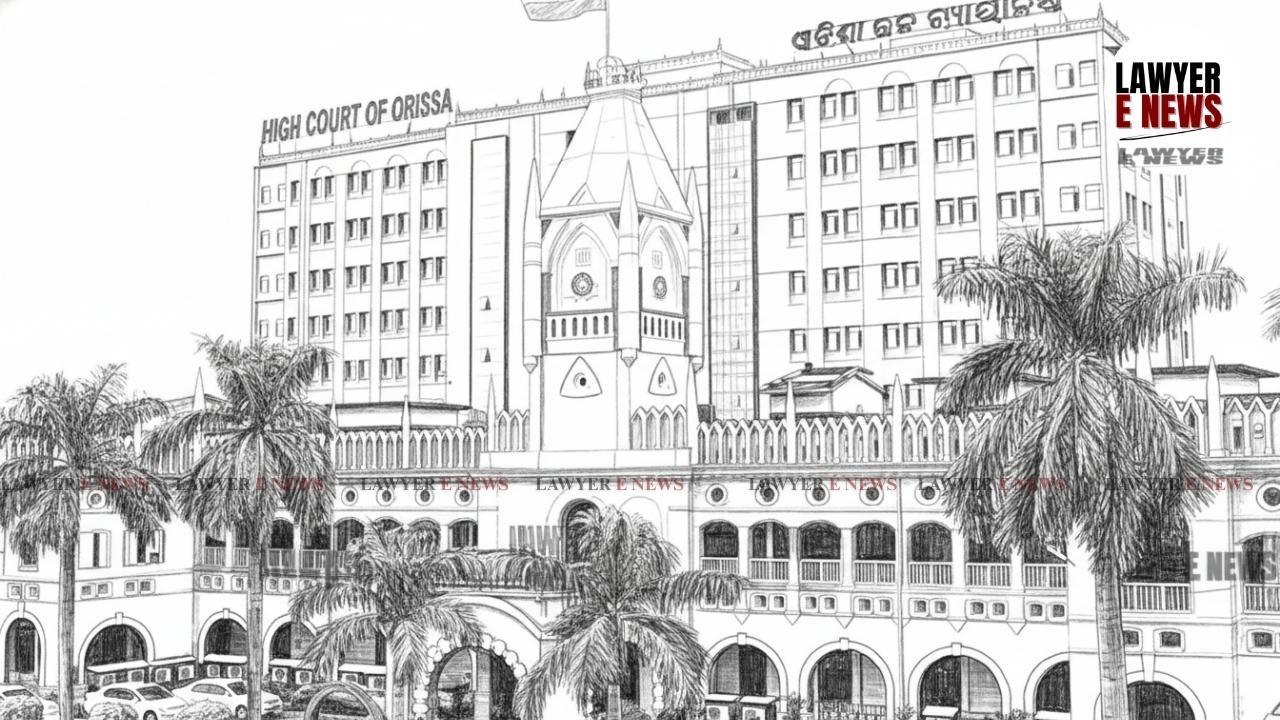
MSME Benefits Can’t Be Claimed as a Last-Minute Shield After SARFAESI Actions Begin: Orissa High Court Clarifies Borrower’s Duty

01 February 2026 10:48 AM

By: Admin


“An MSME must assert its status and invoke the RBI Framework at the stage of reply to Section 13(2) notice—silence amounts to waiver” —  In a significant judgment clarifying the obligations of MSME borrowers under the SARFAESI Act, the Orissa High Court has ruled that a borrower cannot belatedly claim benefits under the RBI's MSME Revival Framework after the secured creditor has already taken advanced steps under the SARFAESI process.

Division Bench comprising Justice B. P. Routray and Justice Chittaranjan Dash dismissed a writ petition challenging e-auction proceedings initiated by Indian Bank for sale of mortgaged residential properties belonging to a defaulting borrower. The Court held that there was “no arbitrariness or procedural impropriety” on part of the Bank and stated that “the borrower cannot take shelter under the MSME Framework after the horse has bolted.”

“MSME Status Must Be Asserted With an Affidavit in Reply to Section 13(2) Notice — Silence Cannot Be Rewarded”

The Court began its judgment by addressing the core of the Petitioner’s grievance — that Indian Bank had reduced the reserve prices of mortgaged residential properties in a third round of e-auction held in January 2024 and failed to consider the Petitioner's MSME status while initiating SARFAESI measures.

However, the Court firmly rejected this plea, stating:

“No material has been placed to demonstrate that the Petitioner, in response to the demand notice issued under Section 13(2) of the SARFAESI Act, ever asserted its MSME status or sought the benefit of the RBI framework by filing objections supported by an affidavit, as mandatorily contemplated.”

It was noted that the Petitioner had failed to submit any restructuring proposal or revival package despite being an MSME. The Court cited with approval the rulings of the Supreme Court in M/s Pro Knits v. Canara Bank (2024 INSC 56) and Shri Shri Swamy and Finance Solution v. NKGSB Co-op Bank Ltd. (2025 INSC 908), reiterating that the RBI’s Framework for Revival and Rehabilitation of MSMEs places a corresponding obligation on the borrower to proactively claim benefits at the earliest stage.

Quoting from Shri Shri Swamy, the Court observed: “If such an Enterprise allows the entire process for enforcement of security interest under the SARFAESI Act to be over... it could not be permitted to misuse the process of law for thwarting the actions taken under the SARFAESI Act by raising the plea of being an MSME at a belated stage.”

“SARFAESI Is Not a Safe Haven for Strategic Defaults — Borrowers Must Act With Diligence”

Rejecting the contention that the Bank acted arbitrarily in reducing reserve prices, the Bench held that repeated failure of auction attempts warranted revision, and such reduction was undertaken strictly in compliance with Rules 8 and 9 of the SARFAESI Rules, 2002.

“The reduction of reserve price by 10% in the third auction was strictly in accordance with bank guidelines and SARFAESI Rules after repeated auction failures,” the Court remarked.

The Petitioner’s reliance on independent valuation reports was also dismissed as “misleading” and contrary to official norms.

In a sharply worded observation, the Court noted: “The Petitioner, having failed to avail the statutory remedies in the manner and at the stage prescribed by law, cannot be permitted to invoke the equitable jurisdiction of this Court to stall proceedings lawfully initiated under the SARFAESI Act.”

Emphasizing the measured approach of the Bank, the Court acknowledged that one mortgaged property had been released to allow the Petitioner to liquidate dues, FDRs had been adjusted, and further deposits were accepted — all showing that the Bank had extended substantial latitude before proceeding with recovery.

“The Bank adopted a fair, measured and restrained approach. There is no arbitrariness or procedural impropriety,” the Court held.

Judicial Refusal to Rescue: Court Dismisses Writ Petition with Strong Caution Against Misuse of MSME Label

Concluding that there was no violation of statutory mandate, the Court dismissed the writ petition and upheld the auction proceedings as lawful, stating: “The measures initiated by the Bank are in consonance with the provisions of the SARFAESI Act and the Rules framed thereunder, and no arbitrariness, procedural impropriety, or violation of statutory mandate is discernible.”

The verdict reinforces the principle that borrowers cannot lie low during crucial procedural stages and later invoke judicial protection, especially when they have defaulted on loans and the lender has complied with the legal framework.

Date of Decision: 30 January 2026

Latest Legal News