-
by sayum
26 August 2026 4:44 AM







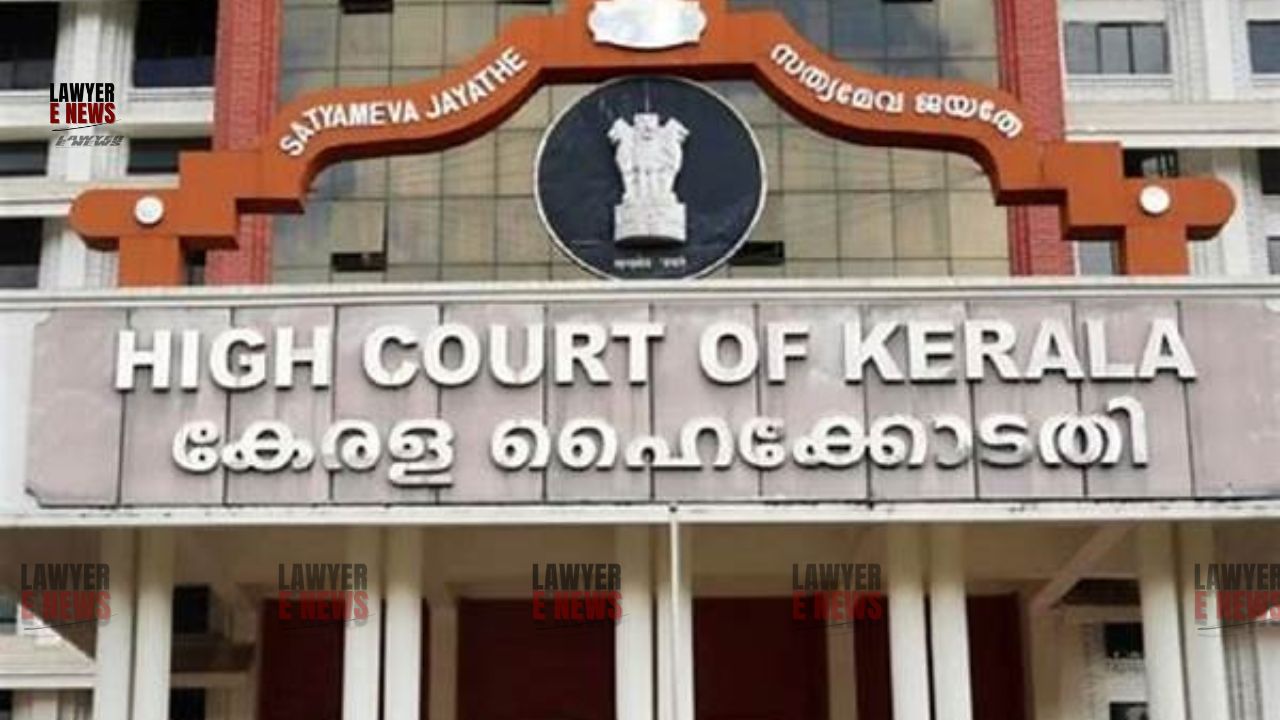
The Kerala High Court has confirmed the legitimacy of a contested Will from 1997, countering the trial court's earlier decision to void it. Justice A. Badharudeen ruled that the propounders had successfully removed all doubts regarding the Will's authenticity, thereby overturning the trial court's findings of suspicious circumstances and upholding the appellate court's judgment.
The case revolves around the Will of Mr. Parameswaran Pillai, who executed two Wills: one in 1988 (Ext.A3) and another in 1997 (Ext.A4/Ext.B1). The plaintiff, Rajagopal, argued that the 1997 Will was invalid due to the testator's alleged mental and physical incapacity. The trial court initially declared the 1997 Will void, favoring the 1988 Will as the last valid testament. However, the appellate court reversed this decision, prompting Rajagopal to file a second appeal.
The High Court found that the attesting witnesses to the 1997 Will, DW2 and DW3, provided consistent and credible testimony supporting the Will's execution. "Their evidence was not shaken during cross-examination, which supports the validity of the Will under Section 63 of the Indian Succession Act and Section 68 of the Indian Evidence Act," noted Justice Badharudeen.
Addressing the trial court's findings of suspicious circumstances, the High Court stated, "The trial court's concerns about the testator's health, the location of the Will's execution, and the difference in signatures were not substantial enough to invalidate the Will." The judgment emphasized that minor differences in signatures due to age and health issues do not constitute a basis for declaring a Will void if overall testamentary capacity is established.
The High Court underscored the principle that the burden of proof lies on the propounders to demonstrate the Will's validity and to dispel any doubts about its execution. "In the absence of compelling evidence to the contrary, the appellate court rightly concluded that the 1997 Will was executed freely and voluntarily by Parameswaran Pillai," the judgment stated.
Justice Badharudeen remarked, "The evidence provided by the attesting witnesses, coupled with the lack of substantial proof of the testator's alleged incapacity, leads to the conclusion that the 1997 Will stands valid."
The Kerala High Court's decision to uphold the 1997 Will reinforces the judicial approach towards evaluating testamentary documents. By affirming the appellate court's findings, the judgment clarifies the standards required for proving a Will's validity, particularly in the face of allegations of suspicious circumstances. This ruling is expected to have significant implications for future probate cases in the jurisdiction.
Date of Decision: May 20, 2024