-
by sayum
12 August 2026 1:53 PM







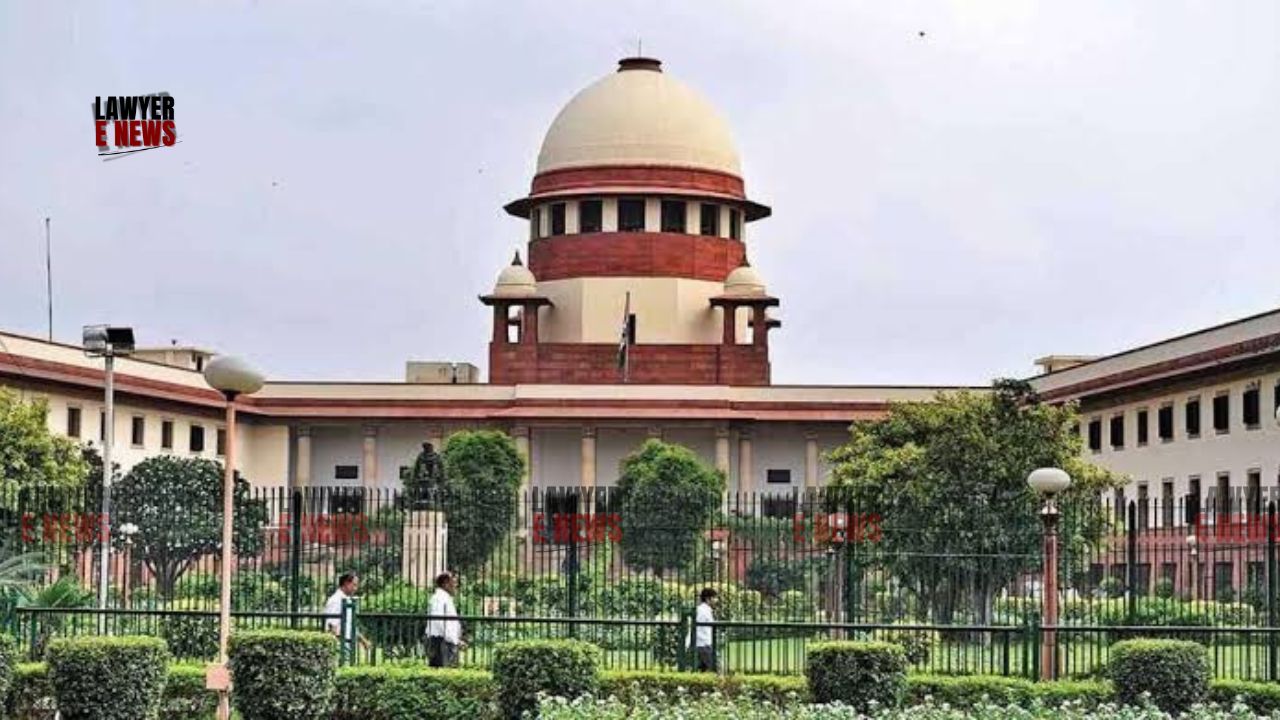
In a recent ruling Supreme Court of India dissolved the marriage by mutual consent, invoking its extraordinary powers under Article 142 of the Constitution. The Court set aside the earlier divorce decree granted on grounds of cruelty, replacing it with divorce by mutual consent, and quashed all pending civil and criminal cases between the couple, ensuring that their 12-year-long legal battle reached a dignified and conclusive end.
Delivering the verdict in Civil Appeal No. 3514 of 2025 and Civil Appeal No. 3515 of 2025, a bench of Justice Surya Kant and Justice Nongmeikapam Kotiswar Singh observed, "Marital disputes should not be allowed to linger indefinitely in courtrooms when both parties are willing to settle their differences amicably. Courts must step in to provide finality and prevent further acrimony."
The Court approved the Final Settlement Agreement dated October 3, 2024, which resolved all financial, custodial, and legal disputes between the parties.
"Marriage Collapsed in 2013 – Years of Litigation Followed Before Amicable Settlement Was Reached"
The couple, Santosh Meena, a doctor, and Siddharth B.S. Meena, an IRS officer, married on January 31, 2009. A male child was born on April 12, 2011, but marital discord surfaced in 2013, leading to prolonged litigation.
The wife moved out with the child on August 14, 2013, and both parties initiated multiple legal proceedings against each other. The husband filed for divorce in the Family Court, Jaipur, which was later transferred to the Family Court, Bhopal, upon the wife’s request.
On August 31, 2019, the Family Court granted divorce to the husband on grounds of cruelty and also awarded him custody of the child. The wife challenged both rulings before the Madhya Pradesh High Court, which upheld the divorce but reversed the custody order, granting the child’s custody to the mother.
Both parties filed cross-appeals before the Supreme Court, further prolonging their dispute.
"Mediation Achieves What Litigation Could Not – Supreme Court Encourages Amicable Settlements"
Recognizing the acrimonious nature of the dispute, the Supreme Court referred the matter for mediation, appointing a former Supreme Court judge as the mediator. The parties, with the assistance of their legal counsel, successfully reached a final settlement on October 3, 2024.
Emphasizing the benefits of mediation, the Court observed, "In family disputes, litigation often deepens hostility rather than resolving conflict. Mediation provides an opportunity for closure with dignity, ensuring that both parties can move forward without bitterness."
The Final Settlement Agreement comprehensively addressed all issues, including financial maintenance, child custody, and withdrawal of criminal cases.
"₹2.11 Crore Settlement for Child’s Maintenance Ensures Financial Security"
Under the terms of the Final Settlement Agreement, the husband agreed to pay ₹2.11 crore towards the maintenance and welfare of the minor child, to be raised solely by the wife. A substantial portion had already been paid, and the Court directed the remaining sum of ₹1.61 crore to be cleared through three post-dated cheques drawn in favor of Axis Bank, Khan Market Branch, New Delhi.
To ensure compliance, the Court ruled, "The husband undertakes that all cheques will be honored. In the event of any default, an additional penalty of ₹50 lakh shall be payable."
The Court clarified that upon full payment, no further financial claims could be raised by the wife or her family.
"Structured Visitation Rights Balance Parental Bonding and Child Stability"
The Final Settlement Agreement carefully structured a detailed visitation schedule for the father, ensuring that the child's need for stability was balanced with his right to maintain a bond with the non-custodial parent.
Approving the schedule, the Supreme Court directed, "The child shall meet his father twice a month in New Delhi, with overnight visitation rights once a month starting February 2025, and extended visitation during summer vacations."
The Court emphasized that visitation rights should be exercised with sensitivity, prioritizing the child’s emotional and psychological well-being.
"No More Litigation – Supreme Court Quashes All Pending Criminal and Civil Cases"
The Supreme Court, using its inherent powers under Article 142, ensured that all pending legal disputes between the parties were permanently resolved. The Court set aside the divorce decree granted on cruelty grounds, stating: "Since both parties have agreed to a divorce by mutual consent, all previous findings of cruelty or desertion stand expunged. The marriage is now dissolved under Section 13B of the Hindu Marriage Act, 1955."
Additionally, the Court quashed all pending criminal cases, including:
The defamation case (Section 500 IPC) filed by the husband in Bhopal.
The domestic violence complaint (MJC No. 3241/2014) filed by the wife.
The FIR under Section 498A IPC registered against the husband in Jaipur.
The Supreme Court ruled, "No further litigation shall arise between the parties, their families, or relatives concerning this matrimonial dispute."
"Divorce Must Be Handled With Finality and Dignity – Supreme Court’s Judgment Provides a Model for Resolving Matrimonial Disputes"
The Supreme Court, invoking Article 142, ensured that a 12-year-long marital conflict was resolved swiftly and conclusively. The Court stated:
"The purpose of the law is not to perpetuate suffering but to provide a fair and just resolution. When estranged spouses choose to separate amicably, courts must facilitate that decision rather than prolong their ordeal through endless litigation."
With this judgment, the Supreme Court reinforced the importance of mediation, financial security, and parental stability in resolving matrimonial disputes. The ruling sets a crucial precedent by establishing that:
Mediation is the preferred approach for family disputes, ensuring dignity and fairness.
Article 142 can be used to quash all pending litigation when a comprehensive settlement is reached.
Financial security and child welfare must be central to any divorce settlement.
By granting divorce by mutual consent, quashing all pending litigation, and ensuring financial and parental stability for the child, the Supreme Court has set a progressive and humane standard for handling matrimonial disputes.
Date of decision: 03/03/2025