-
by sayum
26 August 2026 4:44 AM







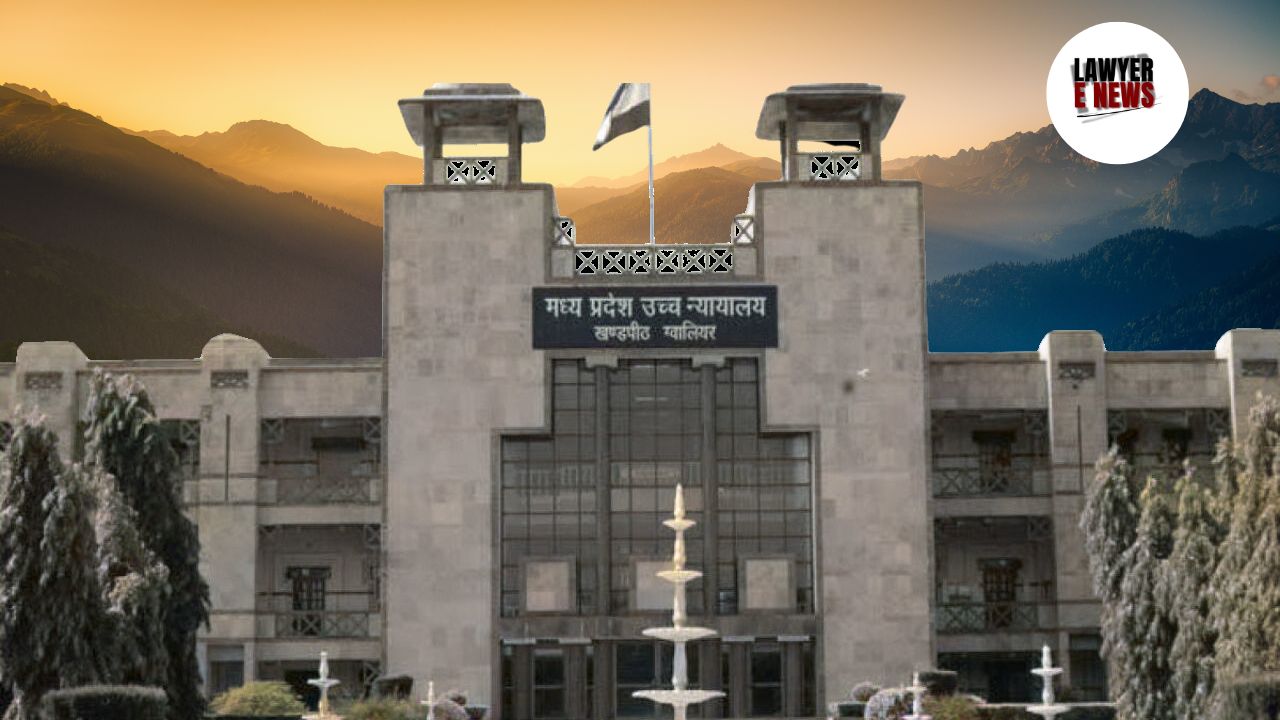
State Has the Right to Monitor Teachers’ Attendance, But Privacy Concerns Cannot Be Ignored - In a ruling Madhya Pradesh High Court dismissed a challenge to a circular issued by the CEO, Jila Panchayat, Vidisha, which mandated primary and secondary school teachers to submit their attendance via WhatsApp photographs. The petitioners, Mahesh Kumar Koli and another, both primary school teachers, argued that the directive violated privacy rights, conflicted with existing policies, and was arbitrary.
A Division Bench comprising Justice Anand Pathak and Justice Hirdesh, while rejecting the appeal in Writ Appeal No. 353 of 2025, observed: "Teachers are the builders of the nation. Ensuring their attendance through technology is not an arbitrary measure but a necessary one to uphold the constitutional mandate of the Right to Education. However, privacy concerns regarding female teachers and students require immediate redressal."
The High Court upheld the validity of the circular but directed the State Government to devise an alternative mechanism that protects the privacy of female teachers and students while ensuring accountability.
"State Cannot Be a Silent Spectator to Absenteeism and Proxy Teaching": High Court Justifies Attendance Monitoring
The circular dated November 28, 2024, issued by the CEO, Jila Panchayat, Vidisha, mandated that all teachers submit JIO Tap Photos via WhatsApp at 10:00 AM and 4:00 PM to confirm their presence at school. The petitioners challenged this order on the grounds that it conflicted with a 2019 policy, which assigned school attendance monitoring to a School Academy Committee consisting of teachers and parents.
Rejecting the argument that the 2019 policy rendered the new circular unnecessary, the High Court noted that: "The School Academy Committees and the attendance verification system are not in conflict but complementary. The 2019 policy does not prohibit technological interventions aimed at improving accountability."
The State Government justified the circular, citing instances where:
Teachers failed to report to schools regularly, leading to a decline in education standards.
Some teachers engaged in proxy teaching, appointing unauthorized individuals to take classes on their behalf.
Acknowledging these concerns, the High Court ruled: "The right to education under Article 21-A of the Constitution mandates that every child receives proper schooling. If teachers remain absent without justification or engage in proxy teaching, it becomes a mockery of education and a failure of constitutional duty."
"Privacy Cannot Be Compromised in the Name of Accountability": High Court Directs Government to Develop Alternative System
While upholding the State’s right to regulate attendance, the Court found merit in the privacy concerns raised by the petitioners, particularly regarding female teachers and students. The petitioners contended that requiring female staff to submit photographs daily via WhatsApp exposed them to the risk of misuse and unauthorized sharing.
The Court recognized this risk, stating that: "The possibility of photographs being misused cannot be ruled out. The privacy of female teachers and students must be protected. The government must adopt a more secure system instead of relying on WhatsApp, which is prone to data leaks and breaches."
In response, the High Court directed the Department of Information and Technology, Government of Madhya Pradesh (MAP-IT), to develop a secure mobile application for attendance marking, stating that:
"Until a dedicated, secure system is implemented, female teachers shall be permitted to submit campus or office photographs instead of personal images."
"Proxy Teaching is a Breach of Public Trust": High Court Directs Stern Action Against Violators
The High Court also took strong objection to the practice of proxy teaching, where teachers unlawfully delegate their duties to others for a share of their salary. The State was directed to ensure that such practices are immediately eradicated, with the Court stating that: "A teacher is appointed to educate students, not to outsource their responsibilities. If any teacher is found indulging in proxy teaching, strict legal action—both civil and criminal—must be taken against them and the unauthorized individuals acting on their behalf."
"Male Teachers Have No Personal Stake in Privacy Concerns, Appeal is Misconceived": High Court Imposes Costs on Appellants
The Court noted that the petitioners, being male teachers, were not personally affected by the privacy concerns they raised in their plea. While acknowledging the validity of these concerns for female teachers, the Court ruled that the appellants had no locus standi to argue this aspect.
Dismissing the appeal, the High Court imposed a cost of ₹2,500 on each appellant, directing them to deposit the amount with the High Court Legal Services Authority within one month. The Court concluded: "This appeal is misconceived and appears to have been filed merely to resist accountability. While the privacy concerns of female teachers must be addressed, there is no justification for challenging a mechanism aimed at ensuring teachers perform their constitutional duty."
This Madhya Pradesh High Court judgment affirms the State’s right to introduce digital attendance monitoring for teachers but simultaneously highlights the need for data privacy protections. The ruling underscores that:
The government has a duty to monitor teacher attendance to prevent absenteeism and proxy teaching.
Privacy risks associated with WhatsApp-based attendance tracking must be addressed by implementing a more secure system.
Female teachers and students must not be compelled to submit personal photographs where data security is not assured.
Proxy teaching is a serious violation of public trust and must be eradicated through strict enforcement.
By balancing the need for accountability with privacy concerns, the High Court has laid down a precedent for future cases involving digital monitoring systems in public employment. The ruling ensures that technological interventions in governance remain both effective and respectful of individual rights.
Date of Decision: 14/02/2025