-
by sayum
26 August 2026 4:44 AM








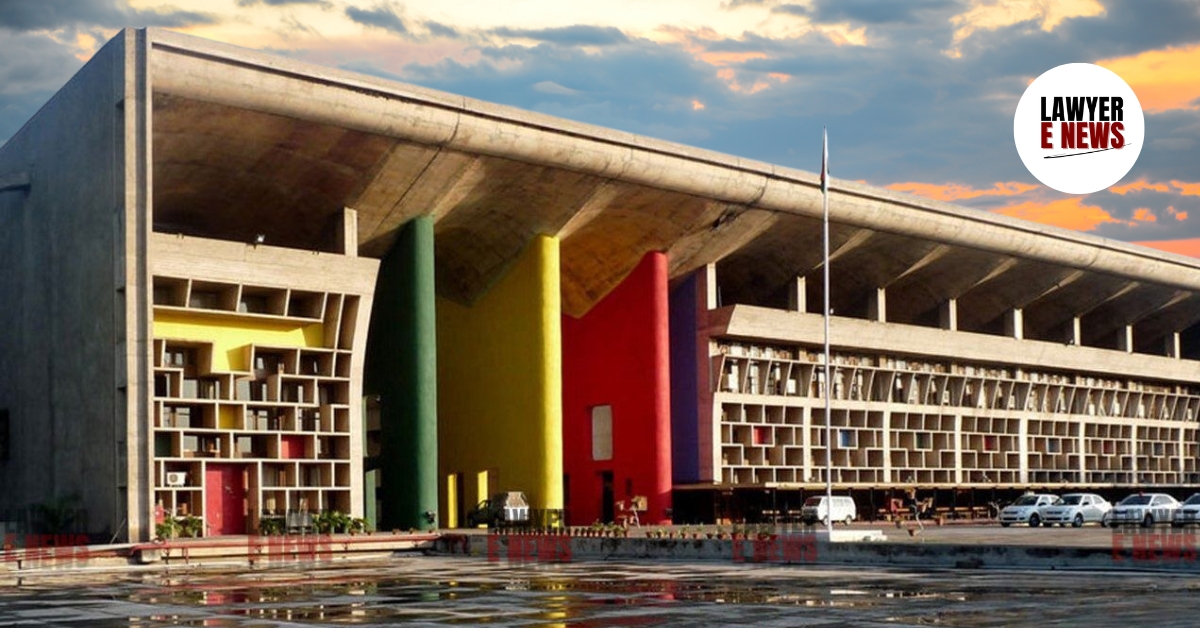
Lapse of Time and Inaction Cannot Revive a Stale Claim - Punjab & Haryana High Court dismissed a petition filed by Navdeep Singh & Another challenging the rejection of their representations for appointment as PCS (Judicial Branch) Officers. The case stemmed from the 2001 judicial selection process, which was later annulled due to a recruitment scam. The petitioners, having been acquitted of corruption charges in 2016, sought reinstatement in 2017, a full 16 years after their termination.
Justice Sheel Nagu, Chief Justice, and Justice Sumeet Goel ruled that judicial review cannot be exercised to revive a claim that has attained finality through long delay and inaction. The Court held, “Lapse of time and inaction on the part of the petitioners cannot breathe life into a stale claim. The doctrine of laches applies with full force.”
In 2001, the Punjab Public Service Commission (PPSC) issued an advertisement for 21 posts in the PCS (Judicial Branch). The petitioners applied, cleared the selection process, and were issued appointment letters on March 18, 2002. However, before they could take office, a recruitment scam surfaced, leading to the cancellation of their appointments on August 17, 2002.
An FIR (No. 64/2002) under the Prevention of Corruption Act, 1988 was registered against several candidates, including the petitioners. As a result, they faced a criminal trial. Meanwhile, some of their co-selectees challenged the cancellation order before the High Court, but the Full Bench of the Punjab & Haryana High Court dismissed their plea on May 27, 2008. The Supreme Court upheld this decision on March 18, 2010.
On March 21, 2016, the petitioners were acquitted by the Sessions Court. Following their acquittal, they submitted representations on August 31, 2016, and September 1, 2016, seeking reinstatement. The Punjab government rejected their representations on February 8, 2017, and February 24, 2017. Sixteen years after their termination, they approached the High Court in 2017, filing CWP-26988-2017.
The Punjab & Haryana High Court dismissed the petition, holding that the delay of 16 years was fatal to their claim. The Court emphasized that writ jurisdiction cannot be invoked for claims that have been abandoned through prolonged inaction.
"Doctrine of Laches Bars the Petition": Court Rejects Revival of Old Claims
Rejecting the plea, the Court observed, “The petitioners allowed their claim to become stale. The law does not aid those who sleep over their rights.” Referring to the doctrine of laches, the Bench ruled:
“Inordinate delay in seeking judicial intervention weakens the credibility of a claim. The principle that ‘equity aids the vigilant, not those who slumber on their rights’ must be applied with full force in this case.”
"Finality of the Earlier Judgment Cannot Be Reopened"
The Court noted that the 2008 Full Bench decision had already settled the matter, and the Supreme Court had upheld it in 2010. It held: “Once the cancellation of appointments was upheld by the Full Bench and later affirmed by the Supreme Court, the matter attained finality. The petitioners’ acquittal in 2016 does not undo the judicial conclusions already reached.”
The Court also pointed out that other similarly placed candidates had earlier challenged their termination and lost in 2008. The petitioners did not participate in those proceedings, and now, years later, they could not seek a different outcome.
"Acquittal in Criminal Case Does Not Automatically Grant Right to Reappointment"
The Court rejected the argument that acquittal should lead to reinstatement, stating: “Acquittal in a criminal case does not automatically entitle a candidate to reinstatement. The recruitment process had already been quashed due to serious irregularities, and the government was not obligated to restore appointments after such a long delay.
The Court referred to Anil Kumar Jindal v. State of Punjab (2024), where a similar claim was dismissed on the ground of laches. It cited the Supreme Court's ruling in Maharashtra State Road Transport Corporation v. Balwant Regular Motor Service (1969), stating: “Courts will not grant relief where claimants exhibit negligence or omission in asserting their rights.”
Dismissing the petition, the Court concluded: “There is no merit in the petitioners’ claim. The doctrine of laches applies in full measure. The challenge to the cancellation of appointments was adjudicated long ago and has attained finality.”
With this ruling, the High Court reaffirmed that delay and inaction defeat legal claims, preventing the reopening of settled matters after 16 years of inaction.
Date of Decision: March 6, 2025