-
by sayum
26 August 2026 4:44 AM







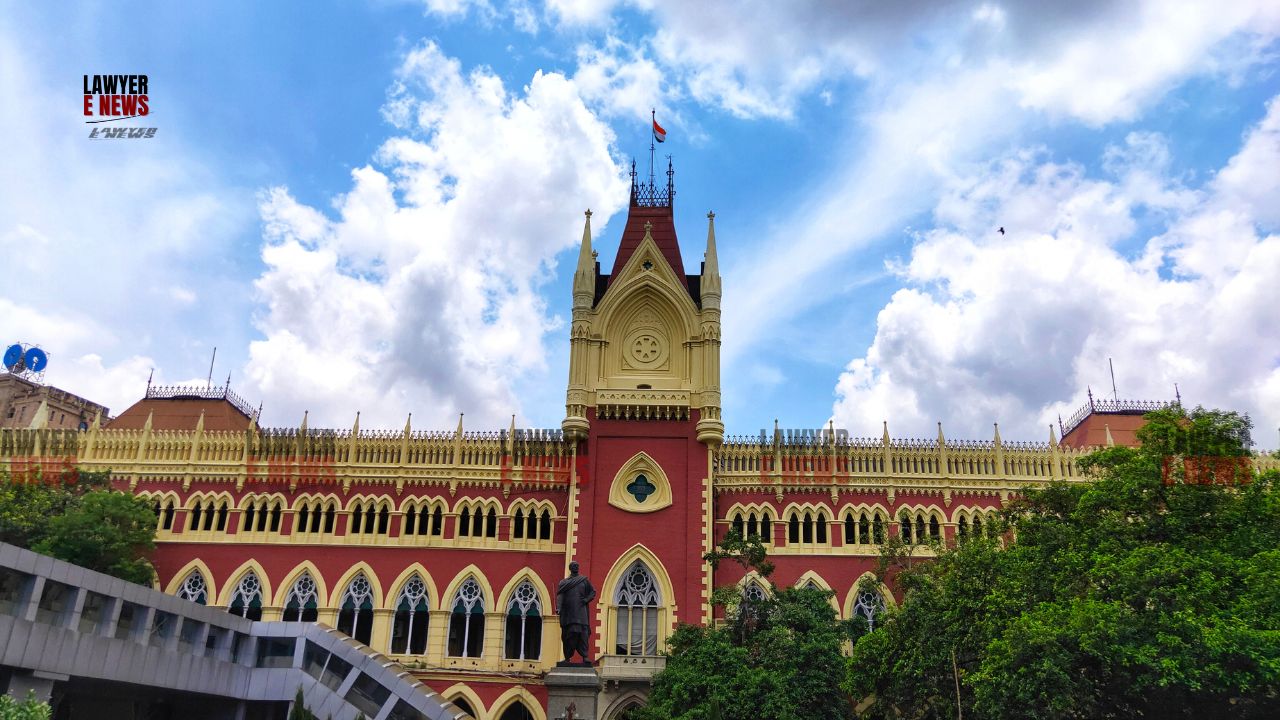
Religious Endowments Cannot Be Alienated by a Single Trustee - In a landmark ruling Calcutta High Court in Shree Shree Iswar Sitaram Jew & Anr. v. Subhodeep Ganguly & Ors. overturned a trial court order that had refused to grant an injunction against the sale of a debuttar property. A division bench comprising Justice Sabyasachi Bhattacharyya and Justice Uday Kumar held that the transfer of religious property by a single shebait (trustee of a Hindu deity) without the consent of other shebaits was fraudulent and void. The court restrained the defendants from acting on the sale deed or creating third-party interests in the property.
The court condemned the unauthorized transfer, stating, "It is a settled legal position that all shebaits must act together in the interest of the debuttar property. Ruby, the vendor, claimed to be the sole shebait, despite other shebaits having a stake in the property. Thus, fraud vitiated the deed, and the sale cannot stand."
"Fraud Has No Limitation—A Transaction Vitiated by Misrepresentation Can Be Challenged at Any Time"
The respondents argued that the suit was barred by limitation, as the sale took place in 2015, and the plaintiffs only challenged it in 2023. However, the court rejected this contention, emphasizing that in cases of fraud, limitation does not apply.
Referring to Supreme Court precedent, the bench observed, "A transaction vitiated by fraud can be challenged at any time before any forum. The fact that the plaintiffs became aware of the sale only in 2019 and obtained documentary evidence later strengthens their claim."
The court further pointed to Article 94 of the Limitation Act, 1963, which provides a 12-year limitation period for challenging transfers of religious property. It ruled, "Since the plaintiffs challenged the sale within the prescribed period, the suit is not barred by limitation."
"Judicial Order Permitting Sale Was a Nullity—Trusts Act Does Not Apply to Religious Endowments"
The respondents relied on an order obtained under Section 34 of the Indian Trusts Act, 1882, which had granted permission for the sale. The High Court dismissed this argument, holding that the Trusts Act does not apply to religious endowments.
Referring to the Act’s savings clause, the court held, "The savings clause in Section 1 of the Trusts Act expressly states that the Act does not apply to religious endowments. Thus, the order allowing the sale was passed without jurisdiction and is a nullity in the eyes of the law."
The court clarified that Section 34 of the Trusts Act is restricted to matters of trust administration and does not permit alienation of religious property. It further held, "The scope of Section 34 is limited to the ‘management or administration’ of trust property. It does not empower a trustee or shebait to alienate religious property to third parties."
"Lis Pendens Does Not Bar an Injunction—Unlawful Transfers Must Be Prevented"The trial court had refused to grant an injunction, stating that since the sale had already occurred, the principle of lis pendens (pending litigation) was sufficient protection. The High Court dismissed this reasoning, emphasizing that injunctions are necessary to prevent complications arising from continued transfers.
The bench ruled, "Lis pendens merely binds subsequent purchasers to the outcome of the case but does not prevent unnecessary complications due to continued transfers. Granting an injunction is necessary to prevent multiplicity of proceedings."
The court relied on the precedent set in Sm. Muktakesi Dawn v. Haripada Mazumdar (AIR 1988 Cal 25), which held that "Lis pendens alone cannot protect plaintiffs’ rights and does not prevent courts from granting an injunction."
"Religious Property Cannot Be Rendered Secular—Subsequent Deed Confirms Deity's Ownership"
The respondents contended that the suit property was not originally part of the debuttar estate, as it was not included in the 1922 Arpananama (endowment deed). However, the High Court found that a subsequent 1929 deed by the original settlor, Sital Chandra Bandopadhyay, vested the disputed property in the deity.
Rejecting the respondents' claims, the court ruled, "Even if the 1922 Arpananama did not include the property, the 1929 deed confirms that the settlor intended it to belong to the deity. Thus, the property is part of the debuttar estate and cannot be alienated."
"Sale Deed is Invalid—Injunction Necessary to Protect Religious Endowment"
Setting aside the trial court’s refusal to grant an injunction, the High Court restrained the respondents from:
Acting on the impugned sale deed dated July 2, 2015.
Transferring, alienating, or creating third-party interests in the suit property.
Parting with possession of the property until the disposal of the injunction application in the trial court.
Justice Bhattacharyya, delivering the judgment, held, "If third-party interests are created and the impugned deed is given effect to, the relief sought in the suit may be rendered infructuous. On the other hand, if the respondents refrain from dealing with the property until the case is decided, no irreparable harm will be caused to them. Thus, the balance of convenience and irreparable injury clearly favor the plaintiffs."
The respondents were directed to file objections in the trial court within three weeks, and the lower court was instructed to dispose of the injunction application expeditiously.
"Debuttar Property Belongs to the Deity—Trustees Are Merely Custodians"
The court reiterated that the deity is the true owner of the religious property, and trustees are merely custodians. It warned against misappropriation by individual shebaits, stating, "A single trustee cannot act against the interest of the deity and the other shebaits. The law does not recognize individual ownership over religious endowments."
The judgment serves as a significant precedent in cases involving mismanagement and unauthorized transfers of religious endowments. It reinforces the principle that religious properties cannot be alienated arbitrarily, and fraud vitiates all transactions, regardless of delay in challenging them.
Date of decision: March 3, 2025