Section 32 Arbitration Act | Termination for Non-Payment of Fees Ends Arbitrator’s Mandate; Remedy Lies in Section 14(2): Supreme Court False Allegations of Dowry and Bigamy Amount to Mental Cruelty: Madras High Court Upholds Divorce Plaintiff Must Prove Her Own Title Before Seeking Demolition Of Defendant’s Pre-existing House: Andhra Pradesh High Court Mismatch Between Bullet and Recovered Gun Fatal to Prosecution: Calcutta High Court Acquits Man Convicted for Murder Where the Conduct of the Sole Eye-Witness Appears Unnatural and No Independent Witness Is Examined, Conviction Cannot Stand: Allahabad High Court Fraudulent Sale of Vehicle During Hire Purchase Renders Agreement Void: Gauhati High Court Upholds Decree for Refund of ₹4.90 Lakhs Unsigned Written Statement Can’t Silence a Defendant: Hyper-Technical Objections Must Yield to Substantive Justice: Delhi High Court Default Bail | No Accused, No Extension: Delhi High Court Rules Custody Extension Without Notice as Gross Illegality Under Article 21 Gratuity Can Be Withheld Post-Retirement for Proven Negligence Under Service Rules – Payment of Gratuity Act Does Not Override CDA Rules: Calcutta High Court Cognizance Is of the Offence, Not the Offender: Madras High Court Rejects Challenge to ED’s Supplementary Complaint in PMLA Case Acquittal in Rajasthan No Bar to Trial in Madhya Pradesh: MP High Court Rejects Double Jeopardy Plea in Antiquities Theft Case 20% Deposit Isn’t Automatic in Cheque Bounce Appeals: Right to Appeal Can’t Be Priced Out: Punjab & Haryana High Court Checks Mechanical Use of Section 148 NI Act A Child Is Not a Non-Earner: Punjab & Haryana High Court Sets New Benchmark in Compensation for Minors’ Deaths 90 Days Is Not Sacrosanct – Courts Can Permit Reply to Counter-Claim Even Beyond Prescribed Time in Interest of Justice: Punjab & Haryana High Court Magistrate Can Proceed Only for Offences Committed in India Until Sanction Is Obtained for Acts Outside India: Orissa High Court on International Financial Fraud Award Is Vitiated by Non-Consideration of Material Evidence: Orissa High Court Sets Aside Industrial Tribunal’s Wage Award in IMFA Case POCSO | Absence of Child's Name in Birth Certificate Not Fatal: Kerala High Court No One Has the Right to Impute Illicit Motives to Judges in the Name of Free Speech: Karnataka High Court Jails Man for Criminal Contempt DV Complaint Cannot Be Quashed at Threshold Under Article 227: Madras High Court Refuses to Interfere, Directs Accused to Seek Remedy Before Magistrate Recovery Wasn't From Accused's Exclusive Knowledge — Cylinder Already Marked in Site Plan Before Arrest: Allahabad High Court Acquits Man in Murder Case State Can’t Block SARFAESI Sale by Late Revenue Entries: Secured Creditor’s Charge Prevails Over Tax Dues: Punjab & Haryana High Court Slams Sub-Registrar’s Refusal Providing SIM Card Without Knowledge of Its Criminal Use Does Not Imply Criminal Conspiracy: P&H High Court Grants Bail in UAPA & Murder Case Importer Who Accepts Enhanced Valuation Cannot Later Contest Confiscation and Penalty for Undervaluation: Madras High Court Upholds Strict Liability under Customs Act "Allegations Are Not Proof: Madras High Court Refuses Divorce Without Substantiated Cruelty or Desertion" When FIR Is Filed After Consulting Political Leaders, the Possibility of Coloured Version Cannot Be Ruled Out: Kerala High Court Mere Allegations of Antecedents Without Conviction Can't Defeat Right to Anticipatory Bail: Kerala High Court Section 106 Of Evidence Act Cannot Be Invoked In Vacuum – Prosecution Must First Lay Foundational Facts: Karnataka High Court Acquits Wife And Co-Accused In Husband’s Murder Case Parity Cannot Be Claimed When Roles Are Different: Karnataka High Court Refuses Bail to Youth Accused of Brutal Killing Injured Wife Would Not Falsely Implicate Her Husband: Gauhati High Court Upholds Conviction in Domestic Stabbing Case Disputed Bids, Missing Evidence and No Prejudice: Delhi High Court Refuses to Intervene in Tender Challenge under Article 226 Setting Fire to House Where Only Minors Were Present is a Heinous Offence – No Quashing Merely Because Parties Settled: Calcutta High Court No Exclusive Possession Means Licence, Not Lease: Calcutta High Court Rules City Civil Court Has Jurisdiction to Evict Licensees Defendant's Own Family Attested the Sale Agreement – Yet She Called It Nominal: Andhra Pradesh High Court Upholds Specific Performance Renewal Not Automatic, No Evidence Of Notice Or Mutual Agreement: AP High Court Dismisses Indian Oil’s Appeal Against Eviction

Courts Must Not Act as Subject Experts: Punjab & Haryana High Court Dismisses Challenge to PGT Chemistry Answer Key

12 March 2025 10:04 AM

By: Deepak Kumar


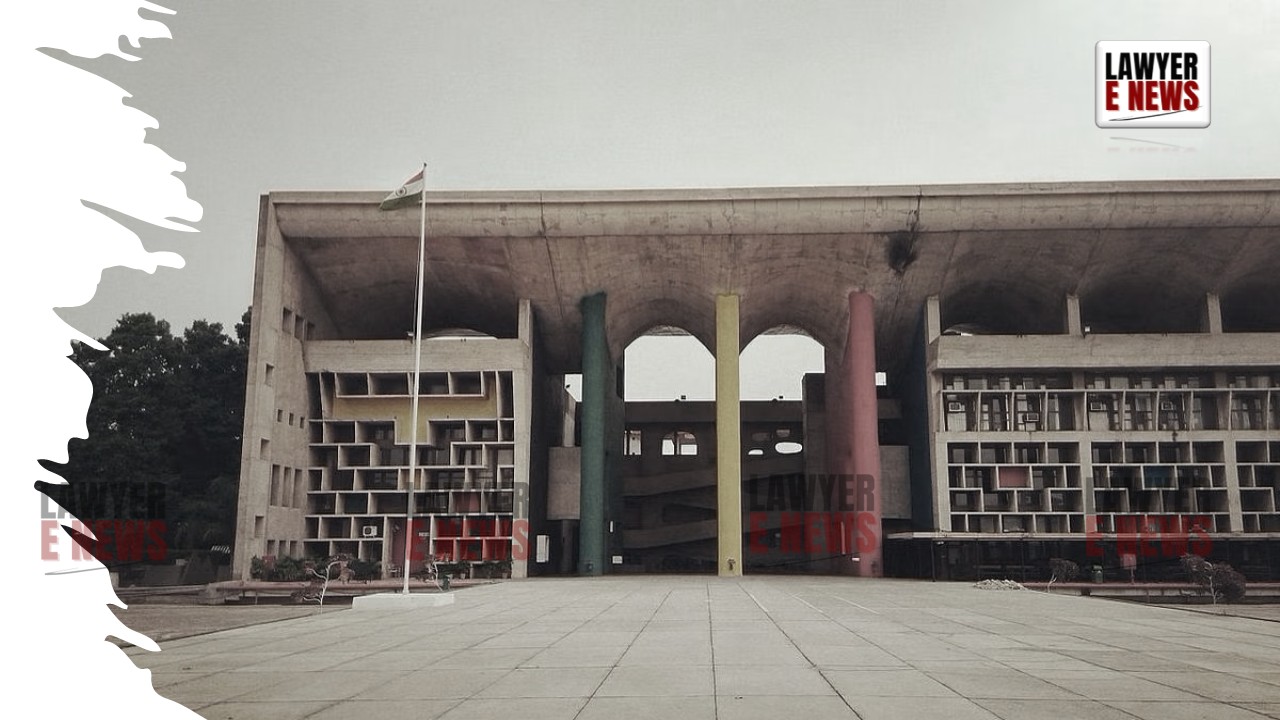
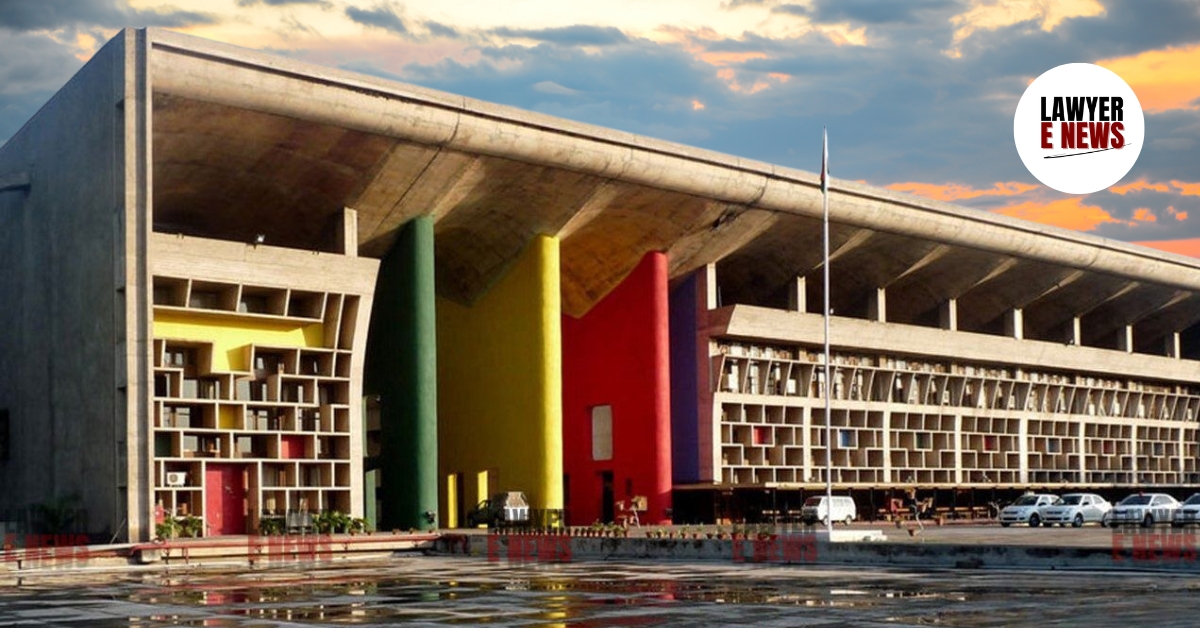
The Judicial Arm Should Not Reach Where Its Grasp Is Neither Necessary Nor Appropriate - In a significant ruling Punjab and Haryana High Court dismissed an appeal challenging the answer key of the PGT Chemistry screening test conducted by the Haryana Public Service Commission (HPSC). The Division Bench of Justices Sanjeev Prakash Sharma and Meenakshi I. Mehta refused to interfere with the findings of the Expert Committee, reiterating that courts must exercise judicial restraint in academic matters.

“The Judicial Arm Should Not Reach Where Its Grasp Is Neither Necessary Nor Appropriate,” observed the Court, emphasizing that technical evaluation is best left to experts and judicial intervention should be avoided unless there is a clear case of illegality or mala fide intent.

The appeal arose from the screening test held on October 13, 2024, for the recruitment of Post Graduate Teachers (PGT) in Chemistry. Following the test, the final answer key was published on October 28, 2024, which led to objections from several candidates, particularly regarding Question No. 82.

The petitioners argued that the correct answer to Question No. 82 was “Peroxy Acyl Nitrate” (Option C), which had previously been accepted as correct in similar exams conducted by the Haryana School Education Board. However, the HPSC’s revised answer key marked “None of the Above” (Option D) as the correct answer, affecting the rankings of several candidates.

Challenging this decision, the petitioners approached the High Court through a writ petition (CWP-29861-2024), which was dismissed by a Single Judge. Subsequently, they filed a Letters Patent Appeal (LPA-322-2025) before the Division Bench, contending that the expert review process was flawed and that their exclusion from the merit list was unfair.

The High Court reaffirmed the well-established principle that courts should not interfere with expert academic decisions unless an answer key is "palpably and demonstrably wrong."

“It is a settled law that the concerned examiner or the expert would have the expertise to reach a particular conclusion,” observed the Court. “If an expert committee, whose credentials are not under question, has examined the matter and reached a decision, the Court should not substitute its own views.”

Referring to Ran Vijay Singh v. State of U.P. (2018) 2 SCC 357, the Court held that judicial intervention in academic matters should be rare and only warranted in cases of clear and egregious errors.

“The evaluation process is an exercise of specialized discretion entrusted to the examiner, and it is not the writ Court’s role to encroach upon this domain,” the Bench stated. “If the judiciary starts questioning the wisdom of experts in specialized fields, it will disrupt the balance of institutional roles.”

The High Court also relied on Himachal Pradesh Public Service Commission v. Mukesh Thakur (2010) 6 SCC 759, where the Supreme Court categorically held that courts should not evaluate question papers unless the error is "palpable and demonstrable."

Dismissing the argument that a different answer had been accepted in previous examinations, the Court stated: “Merely because an earlier examination treated an answer differently does not mean that the current key is incorrect. Two wrongs do not make a right.”

Rejecting the plea, the High Court upheld the validity of the answer key finalized by the Expert Committee, holding that there was no demonstrable error or mala fide intent in the revision process.

“The entire basis of an examination is that we have faith in our examiners and experts,” the Court remarked. “If a different view is taken in every case, all competitive examinations would be under a perpetual scanner, and there would be no finality to selection processes.”

The appeal was dismissed, and the HPSC’s selection process was upheld.

This ruling reinforces the judiciary’s reluctance to interfere in academic matters and affirms that technical questions must be left to subject matter experts. By upholding the integrity of the selection process, the Punjab & Haryana High Court has set a precedent that prevents unnecessary litigation from disrupting recruitment procedures.

Date of Decision: March 3, 2025

 

Latest Legal News