-
by sayum
12 August 2026 1:53 PM







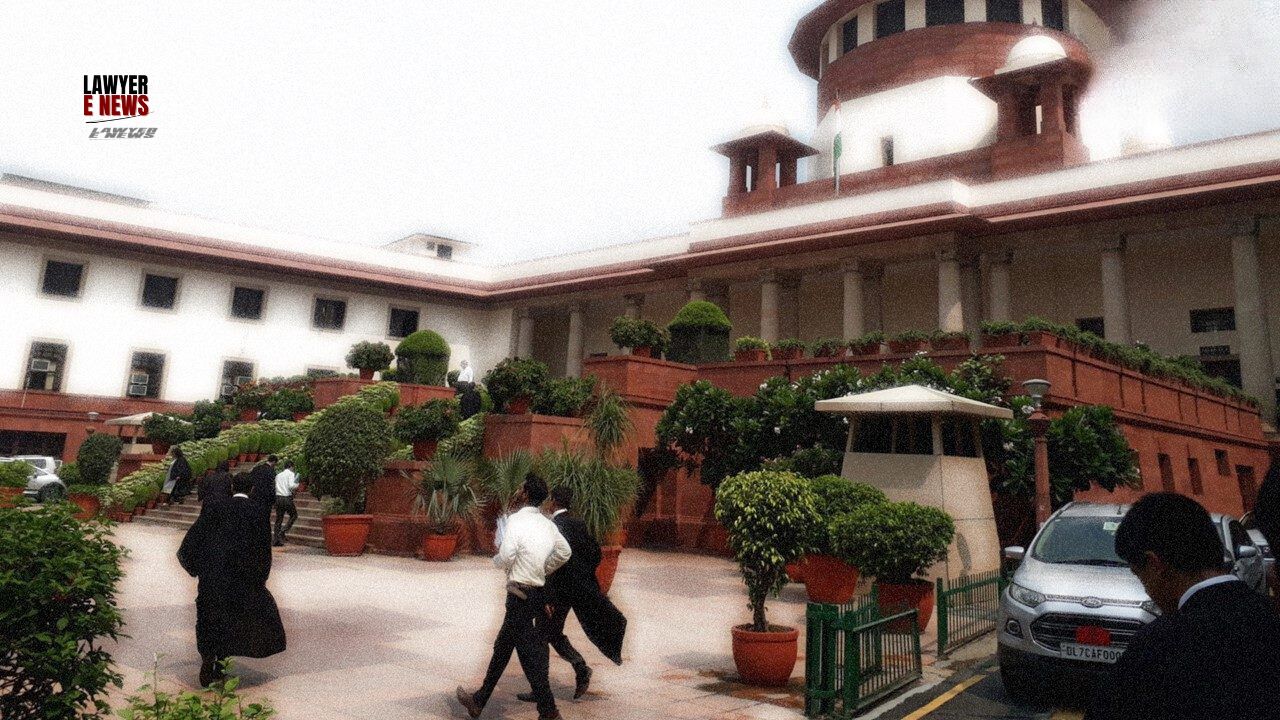
A Litigant Cannot Be Denied the Opportunity to Present Evidence on Technical Grounds – In a significant ruling Supreme Court of India held that a complainant cannot be denied the right to present pre-charge evidence, setting aside the Punjab and Haryana High Court’s order that had upheld the trial court’s decision to close the evidence stage. The Court ruled that procedural delays cannot become a reason to deprive a litigant of a fair chance to prove their case, emphasizing that the principles of justice demand that a person must be allowed to testify in support of their own complaint before charges are framed.
Hearing the appeal in Gajraj v. Ajay Raghav @ Bobby & Others, a bench of Justice B.V. Nagarathna and Justice Satish Chandra Sharma observed, "A fair trial is not a matter of discretion but a fundamental right. The complainant’s right to present evidence before the framing of charges is an essential safeguard to prevent wrongful prosecution or acquittal. The denial of this right on procedural grounds is unjustified and must be rectified."
The Court permitted the appellant, Gajraj, to testify and tender his pre-charge evidence on March 19, 2025, while imposing a cost of ₹1 lakh payable to the Supreme Court Legal Services Committee.
"Allegations of Fraud Over ₹1.13 Crore – Complainant Claims He Was Cheated in a Land Sale"
The dispute arose from a land transaction in which Gajraj alleged that he was defrauded of ₹1.13 crore by the respondents in a fraudulent land sale. The case involved a 31 Kanals 10 Marlas agricultural property, where the original owner had initially agreed to sell 5 Kanals to one Suresh Kumar on December 13, 2010, for ₹10 lakh. Later, through respondents Ajay Raghav and others, the land was allegedly sold to the complainant on January 10, 2011, for ₹1.38 crore, with the sale deed to be executed on February 10, 2011.
According to the complainant, the execution date was extended to April 10, 2011, but he was later pressured to pay an additional ₹30 lakh, bringing the total amount to ₹1.50 crore. The complainant alleged that he issued a cheque to Respondent No. 4 and paid ₹68 lakh in cash to Suresh Kumar in the presence of the other accused. However, instead of receiving the registered sale deed, he was handed a General Power of Attorney dated May 11, 2011, which he later discovered was fraudulent and did not belong to the actual landowner.
Feeling deceived, Gajraj filed a criminal complaint against the accused under Sections 406, 420, 467, 468, 471, and 120-B of the Indian Penal Code, alleging that they had fraudulently taken his money without transferring the ownership of the land.
"Trial Court Summoned Accused, But Closed Pre-Charge Evidence Without Hearing Complainant"
The Judicial Magistrate recorded preliminary evidence and summoned the accused on July 31, 2013, but during the pre-charge stage, the complainant was only able to produce three witnesses. The court later closed the pre-charge evidence on July 17, 2019, citing multiple adjournments.
Seeking to testify, Gajraj filed an application under Section 311 of the CrPC, requesting permission to examine himself and provide further evidence, but the Magistrate dismissed the application on October 5, 2019. The complainant then challenged this before the Sessions Court, but the revision petition was dismissed on November 19, 2019.
Left with no alternative, he approached the Punjab and Haryana High Court, which also refused to intervene on September 18, 2024, holding that the trial court was justified in closing the evidence stage due to delays.
"Closing Evidence Without Hearing the Complainant Violates Principles of Fair Trial" – Supreme Court Reverses High Court Order
The Supreme Court, after hearing the appeal, ruled that denying the complainant the right to testify before the framing of charges amounted to a miscarriage of justice. The Court observed, "Closing the evidence stage without allowing the complainant to testify undermines the very purpose of pre-charge proceedings. A complainant must be given an opportunity to present their case fully before charges are framed."
The Court criticized the mechanical application of procedural rules, stating that "while the law requires due diligence in the conduct of proceedings, it must not be used to defeat the complainant’s right to present evidence. Delays in trial cannot be an excuse to deny a litigant the chance to testify in their own case."
The Court set aside the High Court’s order and ruled that: "The appellant shall be permitted to examine himself and submit his pre-charge evidence before the trial court on March 19, 2025. The right to be heard cannot be taken away due to procedural rigidity."
To ensure that the appellant does not misuse this opportunity, the Court imposed a cost of ₹1 lakh, which must be deposited with the Supreme Court Legal Services Committee within two weeks.
"Justice Must Not Be Sacrificed for the Sake of Procedural Discipline" – Supreme Court’s Ruling Reinforces Fair Trial Rights
The Supreme Court’s ruling sets an important precedent in ensuring that procedural limitations do not curtail substantive justice. The judgment reinforces that:
A litigant’s right to present evidence cannot be dismissed on technical grounds.
Pre-charge evidence is a crucial stage where the complainant must be allowed to testify, especially in cases involving allegations of fraud and cheating.
Courts must not shut the door on litigants merely due to procedural delays, as doing so may lead to wrongful prosecution or unjust acquittal.
The Court emphasized that trial courts must balance procedural discipline with fairness, ensuring that no party is deprived of an opportunity to support their case simply because of adjournments or minor delays.
By restoring the complainant’s right to testify, the Supreme Court has strengthened the principles of natural justice, ensuring that no person is denied a fair trial due to rigid procedural constraints.
Date of decision: 04/03/2025