-
by sayum
12 August 2026 1:53 PM







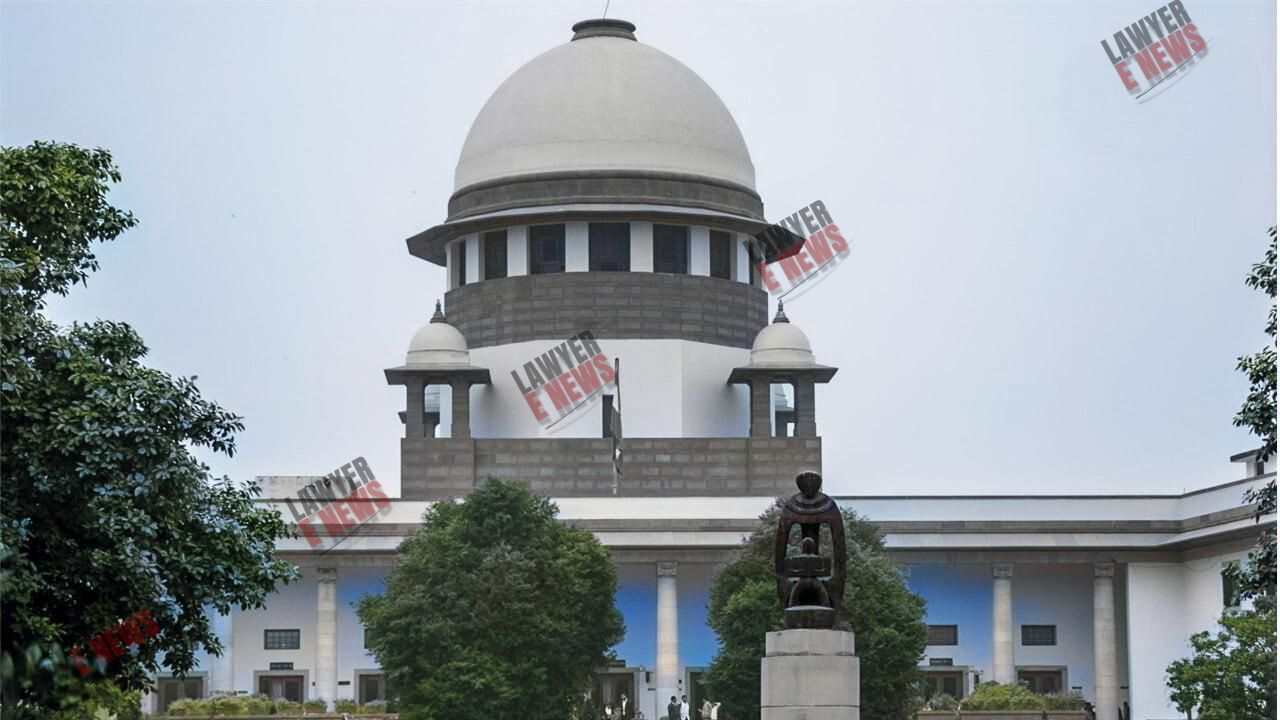
Husband Filed Theft Case While Seeking Wife’s Return – Supreme Court Calls It a Contradiction and Quashes Proceedings. In a scathing judgment the Supreme Court of India set aside criminal proceedings initiated by a husband and his mother-in-law against the wife, calling it a misuse of criminal law in a matrimonial dispute. The Court found that the complainants had deliberately suppressed material facts, misleading the Magistrate into issuing summons.
Justice Abhay S. Oka and Justice Ujjal Bhuyan, while delivering the verdict in Criminal Appeal No. 1073 of 2025 – Abhilasha Sharma & Ors. v. The State of Himachal Pradesh & Ors., observed, “If the husband truly believed his wife had committed theft in his house, he would not have simultaneously filed a petition for Restitution of Conjugal Rights, compelling her to return.”
The Supreme Court ruled that the criminal complaint filed by the husband and mother-in-law was nothing but an abuse of process, aimed at harassing the wife during ongoing matrimonial disputes.
A Marital Dispute Turned into Criminal Allegations – How the Case Unfolded
The case stemmed from a troubled marriage between Abhilasha Sharma and her husband. The couple got married on January 18, 2020, but disputes arose, leading the wife to leave her matrimonial home and file criminal complaints against her husband and mother-in-law.
On November 25, 2020, she lodged an FIR under Sections 498-A, 323, 504, 506, 354 of the IPC and Sections 3 and 4 of the Dowry Prohibition Act, 1961, alleging domestic violence and dowry harassment. Soon after, she filed a complaint under the Protection of Women from Domestic Violence Act, 2005 and sought maintenance under Section 125 of the CRPC.
In response, her husband filed a petition under Section 9 of the Hindu Marriage Act, 1955, for Restitution of Conjugal Rights, urging the wife to return to him and resume marital life.
While these proceedings were ongoing, the husband and mother-in-law filed a criminal complaint on October 21, 2021, under Sections 420, 120-B, 406, 407, 379, and 427 of the IPC, alleging that the wife had stolen jewelry and household items in August 2020. The Judicial Magistrate, Shimla, issued summons, leading the wife to approach the Himachal Pradesh High Court for quashing.
The High Court refused to quash the case, forcing the wife to appeal to the Supreme Court.
Contradictions in the Husband’s Conduct – Supreme Court Calls Out Abuse of Law
The Supreme Court closely examined the timing and conduct of the husband. It found that the theft complaint was filed more than a year after the alleged incident, at a time when the husband was simultaneously seeking the wife’s return through a petition for Restitution of Conjugal Rights.
The Court observed, “If the third respondent genuinely believed that the first appellant had stolen valuable ornaments, why would he move the Court to compel her to return to the same house? Such contradictory conduct casts doubt on the credibility of the allegations.”
What alarmed the Court even more was that the husband and mother-in-law deliberately suppressed the fact that they had sought the wife’s return, while presenting the theft complaint before the Magistrate.
"Had the complainants disclosed the fact that a petition under Section 9 of the Hindu Marriage Act, 1955 was filed after the alleged theft, the Magistrate’s view could have been different. The suppression of material facts misled the Court and resulted in summons being issued improperly."
Supreme Court on the Role of Magistrates – ‘Duty to Scrutinize Complaints’
The Supreme Court emphasized that Magistrates must exercise caution before issuing summons in criminal cases, ensuring that no frivolous or malicious litigation proceeds under the garb of criminal law.
"When a complaint under Section 200 of the CRPC is filed, the Court is duty-bound to examine the complainant on oath, ascertain the truth, and ensure that a genuine case is made out before proceeding further," the judgment stated.
By suppressing key facts, the complainants misled the Magistrate into issuing summons, turning a personal dispute into a criminal case, the Court ruled.
"This is a classic case of a criminal complaint being used as a tool for harassment in a matrimonial dispute. Such conduct not only clogs the judicial system but also dilutes the sanctity of genuine criminal cases," the bench observed.
Final Verdict – Complaint Quashed, Proceedings Set Aside
Striking down the Himachal Pradesh High Court’s refusal to quash the case, the Supreme Court set aside the summons issued by the Judicial Magistrate, Shimla.
"The impugned order dated 2nd January, 2024, of the High Court of Himachal Pradesh, Shimla is set aside, and the order dated 12th April, 2022, passed by the Judicial Magistrate First Class, Shimla, issuing summons on the complaint, is quashed," the judgment declared.
The appeal was allowed, with the Court making it clear that this was a case of legal harassment.
However, the Court clarified that this ruling applied only to the criminal complaint and would have no bearing on other pending proceedings between the husband and wife.
"Filing False Criminal Complaints to Settle Personal Scores is Unacceptable" – Supreme Court
The ruling sets a strong precedent against the misuse of criminal law in family disputes. The Supreme Court sent a clear message that when a party contradicts its own actions in legal proceedings, courts will not hesitate to step in and quash such cases.
"Weaponizing criminal law to settle personal scores is an abuse of process. If family disputes are turned into baseless criminal cases, it weakens the system and leads to unnecessary harassment," the Court warned.
This judgment reinforces the principle that courts must be vigilant against false complaints filed out of spite, especially in matrimonial cases. The role of Magistrates in carefully scrutinizing complaints before issuing summons was also emphasized.
By quashing this frivolous complaint, the Supreme Court ensured that criminal law remains a tool for justice, not vengeance.
Date of decision: 04/03/2025