-
by sayum
24 August 2026 3:22 PM








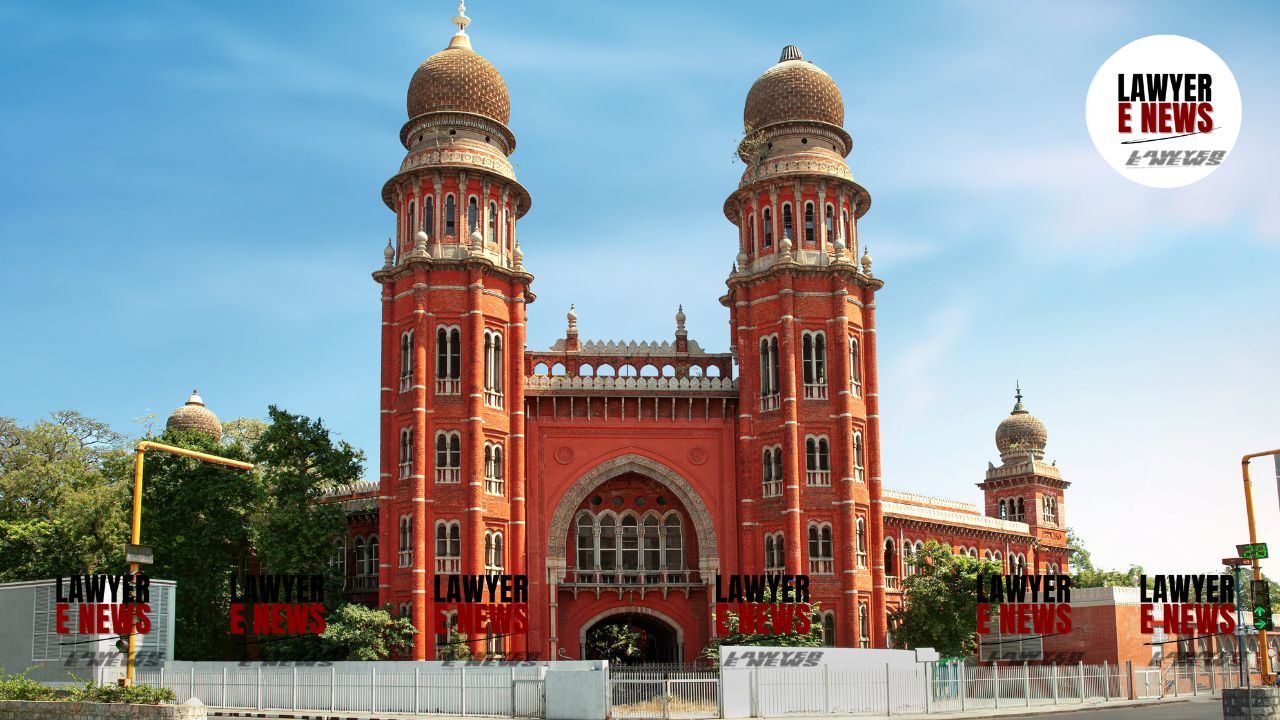
Madras High Court, in a significant ruling, has dismissed multiple quash petitions filed under Section 482 of the Code of Criminal Procedure (Cr.P.C.) seeking to quash criminal proceedings under Section 138 of the Negotiable Instruments Act, 1881 (NI Act). The petitioners, M/s. Ultimate Computer Care and Another, contended that part payments made prior to the encashment of cheques extinguished their liability, invoking Section 56 of the NI Act. However, the Court rejected this argument, holding that unless such payments were specifically endorsed on the cheques, the provision would not apply.
Justice N. Anand Venkatesh, presiding over the matter, dismissed the petitions, directing the Judicial Magistrate, Aruppukottai, to dispose of the cases within six months. The Court further issued detailed directions to ensure the expeditious disposal of cheque dishonour cases, citing the alarming backlog of over 33 lakh pending cases across India.
"Unless Payments Are Directly Linked to Specific Cheques, Section 56 NI Act Does Not Apply"
The petitioners argued that they had made various payments between 11.01.2022 and 22.02.2022, reducing their outstanding liability before the cheques in question were presented between 03.01.2022 and 27.04.2022. They contended that the complainant had improperly presented the cheques despite receiving part payments, thus violating Section 56 of the NI Act, which mandates endorsement of part payments on the cheque before encashment.
Rejecting this contention, the Court relied on Dashrathbhai Trikambhai Patel v. Hitesh Mahendrabhai Patel, 2022 (6) CTC 467, and held: "For Section 56 NI Act to apply, the part payment must be specifically endorsed on the cheque. If no such endorsement is made, the cheque remains a legally enforceable instrument for the full amount. Mere bank entries of payments without direct linkage to a specific cheque do not suffice to quash proceedings under Section 138 NI Act."
The Court clarified that unless the payments were directly relatable to the dishonoured cheque, the presumption under Section 139 NI Act—that a cheque represents a legally enforceable debt—would remain valid. Since the petitioners failed to establish such a link, the Court ruled that the cases must proceed to trial.
"Quashing Under Section 482 Cr.P.C. Requires Unimpeachable Evidence"
The Court reiterated the stringent standard required for quashing complaints under Section 482 Cr.P.C., holding that only materials of "sterling quality" and "unimpeachable character" could justify pre-trial interference. It found that:
"Bank statements reflecting payments do not automatically establish discharge of liability unless they are linked to specific cheques. A dispute over part payments must be decided by trial evidence, not at the quash stage."
Thus, the petitioners' reliance on their bank records was insufficient, as they did not conclusively prove that the cheques in question did not represent a legally enforceable debt at the time of presentation.
"Section 138 NI Act Cases Are Clogging Courts—Magistrates Must Adhere to Supreme Court Guidelines for Speedy Disposal"
The Court took judicial notice of the massive backlog of cheque dishonour cases, citing data that as of April 2022, over 33 lakh cases were pending across India, contributing to 8.81% of total criminal cases and 11.82% of cases stagnating due to service-related delays.
"The very purpose of introducing Chapter XVII of the NI Act—ensuring swift prosecution for cheque dishonour—is being defeated by delays in the judicial process," the Court remarked, emphasizing that trial courts must adhere to Supreme Court guidelines for expeditious disposal.
The Court consolidated several Supreme Court rulings, including Indian Bank Assn. v. Union of India (2014) 5 SCC 590, Meters and Instruments (P) Ltd. v. Kanchan Mehta (2018) 1 SCC 560, and Re: Expeditious Trial of Cases Under Section 138 NI Act, 1881, In re (2021) 16 SCC 116, and issued comprehensive procedural directions to Magistrates handling cheque dishonour cases.
Key Directives Issued to Magistrates for Speedy Disposal of Section 138 NI Act Cases
• Strict Scrutiny of Complaints – Complaints must be examined for compliance with statutory requirements and essential documents before taking cognizance.
• Timely Issuance of Summons – Courts must ensure summons are served promptly via RPAD, email, or digital methods (N-STEP system).
• Expeditious Trials – Trials must be conducted in a summary manner unless exceptional circumstances warrant a full-fledged summons trial.
• Strict Adherence to Timelines – Examination-in-chief, cross-examination, and re-examination of the complainant must be completed within three months.
• Encouraging Settlements – Courts must inform accused persons about compounding the offence through mediation.
• Limited Adjournments – Adjournments should be granted only in exceptional cases and must be accompanied by cost impositions.
"Digital Summons via N-STEP Facility Should Be Implemented for Faster Service"
The Court directed the High Court Registry to place the order before the Hon’ble Chief Justice, recommending the implementation of the N-STEP (National Service and Tracking of Electronic Processes) system for issuing digital summons in cheque dishonour cases.
"Service of summons is the biggest cause of delay in cheque dishonour cases. A digital mechanism like N-STEP can drastically reduce pendency and improve judicial efficiency," the Court noted.
Expeditious Disposal Ordered—Trial Must Conclude in Six Months Dismissing the quash petitions, the Court ordered that the Judicial Magistrate, Aruppukottai, must dispose of the pending cases (C.C.Nos. 122, 123, 130, 131, 132, 133, 134, 135, and 136 of 2022) within six months.
"The Magistrate must ensure strict adherence to Supreme Court timelines. The trial must not be delayed under any circumstances," the Court directed.
Additionally, the Principal District Judges in Tamil Nadu were instructed to circulate the Court’s order to all Magistrates and submit compliance reports by 02.06.2025.
A Strong Push for Faster Resolution of Cheque Dishonour Cases
This ruling reinforces the Supreme Court’s emphasis on reducing pendency in cheque dishonour cases and ensures that technical objections under Section 56 NI Act cannot be used to evade trial. By issuing comprehensive procedural directions, the Court has set a strict framework for Magistrates to ensure timely disposal of Section 138 NI Act cases.
With over 33 lakh cases pending nationwide, the ruling serves as a wake-up call for the judiciary and litigants alike, ensuring that the deterrent purpose of Section 138 NI Act is not lost in procedural delays.
Date of Decision: 12 February 2025