-
by sayum
02 October 2026 8:27 AM








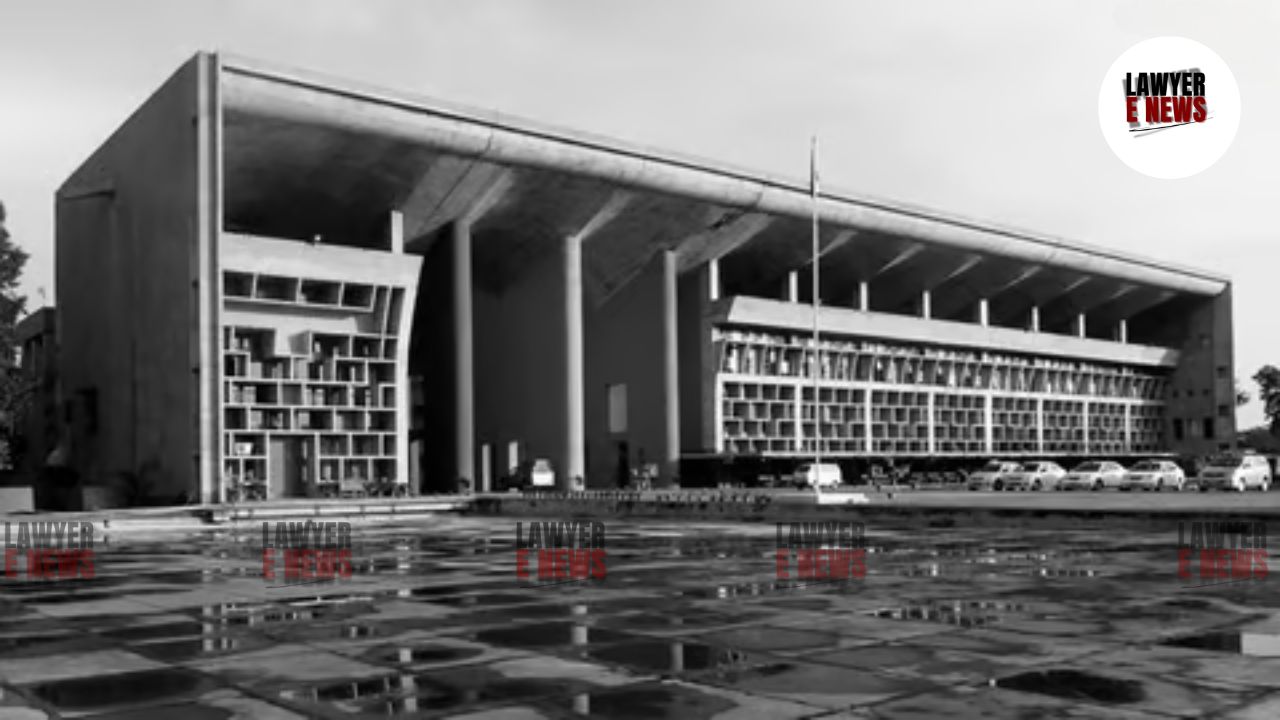
The High Court of Punjab and Haryana, comprising Justices G.S. Sandhawalia and Jagmohan Bansal, has granted bail to four appellants involved in a high-profile case concerning allegations of drug smuggling and financing terrorist activities. The court underscored the constitutional right to a speedy trial and personal liberty, emphasizing that prolonged pre-trial detention cannot substitute for punishment. The decision mandates the release of Gursant Singh, Manpreet Singh alias Mann, Hilal Ahmed Shergoji alias Hilal Ahmed Wagay alias Hilal Ahmad, and Bikram Singh alias Bikramjit Singh alias Vicky
The case, originating from an FIR registered on April 25, 2020, involves serious charges under the Unlawful Activities (Prevention) Act (UAPA), the Narcotic Drugs and Psychotropic Substances Act (NDPS Act), the Indian Penal Code (IPC), and the Arms Act. The National Investigation Agency (NIA) took over the investigation on May 6, 2020. The appellants were accused of smuggling heroin, generating proceeds from drug sales, and funneling these funds to the terrorist organization Hizb-ul-Mujahideen.
The court highlighted the appellants’ prolonged detention of nearly four years without substantial progress in the trial. Citing the Supreme Court’s precedent in Javed Gulam Nabi Shaikh v. State of Maharashtra (2024), the bench reaffirmed that the right to a speedy trial is fundamental. “If the State or any prosecuting agency, including the court concerned, has no wherewithal to provide or protect the fundamental right of an accused to have a speedy trial as enshrined under Article 21 of the Constitution, then the State or any other prosecuting agency should not oppose the plea for bail on the ground that the crime committed is serious,” the judgment stated.
The court meticulously examined the stringent conditions for bail under Section 37 of the NDPS Act and Section 43D of the UAPA. It found that the appellants, except for Hilal Ahmed, were primarily accused of offenses under the NDPS Act, with no direct recovery of narcotics from them. The evidence against the appellants relied heavily on call detail records and the statements of protected witnesses, which the court found insufficient to deny bail
The court detailed the specific charges and roles attributed to each appellant:
Gursant Singh was accused of concealing evidence and facilitating drug smuggling, but no recovery of narcotics or proceeds was made from him.
Manpreet Singh alias Mann faced charges related to drug possession and trading, with a lack of recovery of firearms despite allegations.
Hilal Ahmed Shergoji alias Hilal Ahmed Wagay alias Hilal Ahmad was implicated as a member of Hizb-ul-Mujahideen with no charges under the NDPS Act.
Bikram Singh alias Bikramjit Singh alias Vicky was accused of concealing heroin and possessing narcotics, with some recovery made.
Justice Bansal highlighted the importance of not using pre-trial detention as punishment: “Bail is not to be withheld as punishment. The human potential in everyone is good so never write off any criminal as beyond redemption.”
The High Court’s decision to grant bail underscores the judiciary’s commitment to upholding fundamental rights and ensuring that pre-trial detention does not become a substitute for punishment. The court’s emphasis on the right to a speedy trial and personal liberty marks a significant step in addressing prolonged detentions under stringent laws like the UAPA and NDPS Act. This landmark judgment is expected to have far-reaching implications for similar cases, reinforcing the balance between stringent statutory provisions and constitutional safeguards.
Date of Decision: July 12, 2024
Gursant Singh v. State Through National Investigation Agency