-
by sayum
13 August 2026 1:48 PM








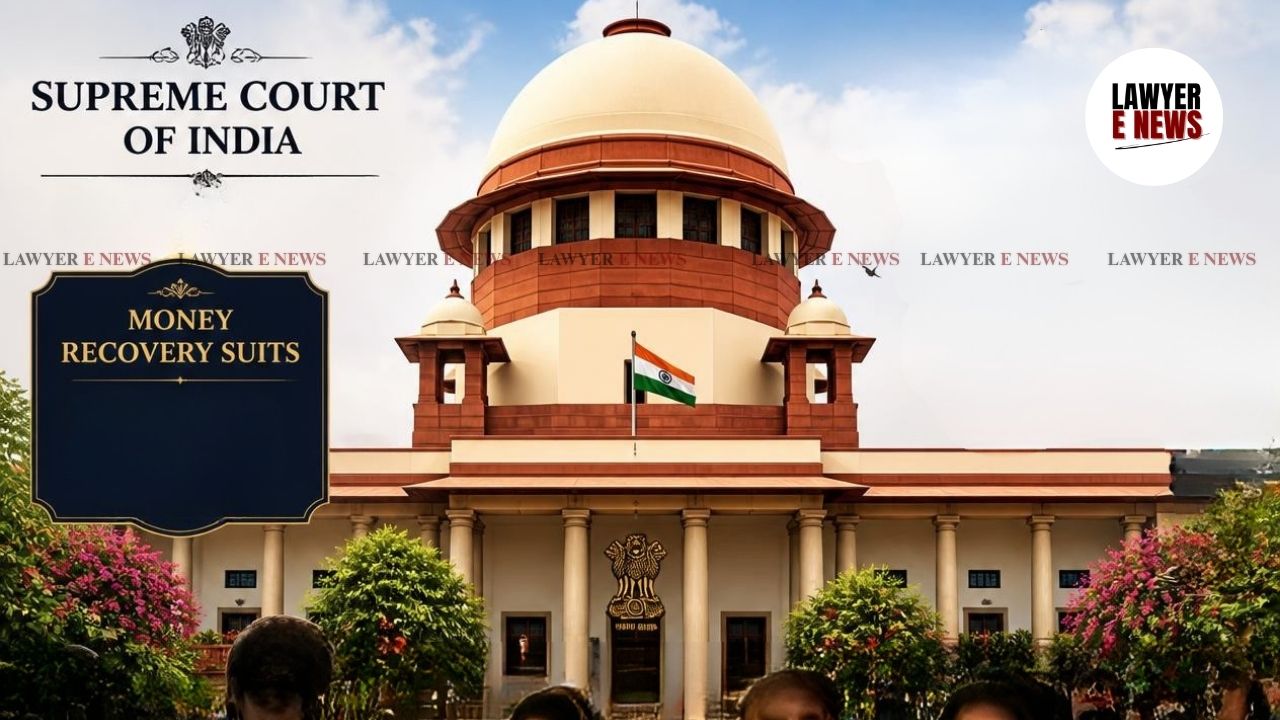
Justice Cannot Be Built on Half-Truths: Supreme Court Criticizes Prosecution for Suppressing Key Witnesses. In a significant ruling Supreme Court of India overturned a murder conviction, holding that a prosecution which deliberately omits crucial witnesses and relies on selective testimony cannot be trusted. The Court found that the entire case against the accused was marred by contradictions, unexplained omissions, and the failure to examine material witnesses who were present at the crime scene.
"Justice cannot be built on half-truths and selective prosecution. When key witnesses who could shed light on the incident are deliberately kept away from the stand, the Court cannot close its eyes. Suppression of evidence is as grave as fabrication, and no conviction can rest on such a foundation," observed the Bench of Justices Abhay S. Oka and Ujjal Bhuyan while setting aside the conviction of the appellant, Vinobhai, who had been sentenced to life imprisonment under Section 302 of the Indian Penal Code for allegedly murdering one Ramakrishnan.
The Trial Court and the High Court had both upheld the conviction, relying on the statements of two eyewitnesses, PW-4 and PW-5. However, the Supreme Court found that their testimonies were riddled with inconsistencies and omissions, and that multiple independent witnesses present at the scene had never been examined.
"A conviction must be based on complete and unimpeachable evidence. When the prosecution picks and chooses its witnesses, leaving out those who could provide a more accurate picture, it damages the very integrity of the trial," the Court observed.
"Why Were the Most Important Witnesses Not Examined?" – Supreme Court Questions Prosecution's Conduct
The Court was particularly critical of the prosecution’s decision to omit crucial witnesses, including one Sasi, who, by the admission of the two so-called eyewitnesses, was present at the scene of the crime. PW-4 and PW-5 had testified that Sasi had witnessed the attack, yet the prosecution never called him to testify.
"When an independent witness is present at the scene of the crime and is not examined, the natural presumption is that his testimony would not have supported the prosecution. A fair trial demands that all material witnesses be heard, and any deliberate suppression casts serious doubt on the case itself," the Court remarked.
Another key lapse was the failure to examine Sumesh, whom PW-4 claimed he had immediately informed about the crime. The Court found it highly suspicious that this witness was never brought to the stand.
"The prosecution cannot selectively present only those witnesses who support its narrative while keeping away those who might contradict it. This is not a battle to win at all costs; it is a process to discover the truth," the Court warned.
The Court further noted that PW-6, another crucial witness, refused to support the prosecution’s case.
"When independent witnesses contradict the prosecution, and key eyewitnesses are not examined at all, the entire edifice of the case crumbles. A court cannot convict an accused on assumptions and probabilities," the Bench stated in strong terms.
"A Witness Who Watches but Does Nothing? The Court Questions Unnatural Conduct"
The Supreme Court found the behavior of PW-4 and PW-5 highly unnatural, noting that neither of them made any attempt to report the murder to the police or help the victim. PW-4, despite claiming to have witnessed the murder, chose to transport the accused on his motorcycle rather than inform the authorities.
"Human instinct is to call for help or seek justice when witnessing a crime. When a witness claims to have seen a brutal murder unfold but takes no action—neither to report the crime nor to aid the victim—their testimony must be viewed with the highest suspicion," the Court held.
The Court found it troubling that neither PW-4 nor PW-5 made any effort to take the victim to the hospital, despite claiming to have seen him being stabbed.
"In cases of violent crime, the spontaneous reaction of a genuine witness is crucial. Silence, inaction, and delayed reporting speak volumes about credibility. A witness who stands still while a murder takes place, and does not attempt to save the victim or seek help, raises more questions than answers," the Court remarked.
The Court held that such unexplained behavior created serious doubts about the truthfulness of the eyewitnesses' statements.
"Suspicion is Not Proof" – Supreme Court Rejects Conviction Based on Weak Evidence
While the prosecution had heavily relied on the recovery of a knife at the accused’s instance, the Supreme Court made it clear that recovery alone does not prove guilt beyond reasonable doubt.
"A knife recovered from an accused does not, by itself, establish his guilt unless it is linked with the crime through unimpeachable evidence. A case cannot be built on suspicion and assumptions—proof beyond reasonable doubt is the only standard in criminal law," the Court reiterated.
Referring to its earlier decision in Manoj Kumar Soni v. State of M.P., the Supreme Court held that a disclosure statement without corroboration cannot form the sole basis of conviction.
"A statement made in custody must be backed by substantive evidence. Without a clear and direct link between the weapon and the crime, the mere recovery of an object is not enough to convict a person," the Court ruled.
The Bench further emphasized that a criminal conviction requires certainty, not conjecture.
"Suspicion, however strong, is not proof. The law does not permit courts to convict merely because an accused appears guilty. The prosecution must prove its case with clarity, precision, and certainty, or else the accused must be given the benefit of doubt," the Court stated while acquitting the accused.
A Judgment That Reaffirms the Right to a Fair Trial
With this hard-hitting judgment, the Supreme Court has reaffirmed fundamental principles of criminal justice—a conviction cannot be based on selective prosecution, material witnesses must be examined, and the burden of proof must always rest on the prosecution.
"The power of the state to prosecute is not absolute—it must be exercised fairly and justly. A trial where key witnesses are deliberately kept away is not a trial at all. Justice must be based on truth, not convenience," the Court concluded.
By quashing the conviction, setting aside the High Court’s judgment, and ordering the immediate release of the accused, the Supreme Court has sent a strong message against wrongful convictions based on incomplete and unreliable evidence.
Date of decision: 29/01/2025