Advocates Cannot Threaten Judges With Corruption Allegations To Force Favourable Orders: Bombay High Court Holds Lawyers Guilty Of Criminal Contempt Co-Sharer Cannot Transfer Specific Portion Of Joint Land; Sale Operates Only As Transfer Of Undivided Share: Himachal Pradesh High Court Companies Act 2013 | Amount Due For Refund Post-Capital Reduction Does Not Qualify As Unclaimed Application Money For IEPF Transfer: Delhi High Court Seniority Cannot Be Claimed By Ad Hoc Or Temporary Employees Over Regularly Appointed Candidates: Supreme Court Supreme Court Directs Deposit Of Entire Enhanced Compensation In Land Acquisition Appeals To Balance Financial Liability And Landowners' Rights Succession To Bhumidhari Rights By Hindu Women Governed By Personal Law As It Stands On Date Of Demise: Supreme Court Hindu Widow’s Limited Life Interest In Agricultural Land Becomes Absolute Upon Enactment Of HSA 1956, Governs Devolution Under Delhi Land Reforms Act: Supreme Court Bodily Injury Under Section 165 MV Act Covers Both Temporary And Permanent Injuries Irrespective Of Disability Certification: Bombay High Court Testimony Of An Injured Witness Is A 'Sterling Witness' With A Built-In Guarantee Of Presence At The Scene Of Crime: Allahabad High Court Scrutiny Committee Has Inherent Power To Direct Re-Examination Of Documents During Caste Verification, Does Not Need To Discard Entire Vigilance Report: Bombay High Court Tender Cancellation Orders Must Be Reasoned; Affidavit Cannot Supplement Missing Reasons: Allahabad High Court Section 9 Of Arbitration Act Allows Interim Orders Against Non-Signatories To Preserve Subject Matter: Delhi High Court Order VII Rule 11 CPC | Parsi Matrimonial Suit Can Be Dismissed At Threshold If Jurisdictional Fact Of Marriage Solemnisation In India Is Absent: Bombay High Court Section 125 CrPC | Maintenance Is A Social Welfare Measure To Prevent Destitution, Not A Tool For Financial Enrichment: Allahabad High Court Locus Standi To Challenge Tenancy Orders | Person With Registered Agreement For Sale Is An 'Aggrieved Person' Under BTAL Act: Bombay High Court State Legislature Lacks Competence To Levy Cess On Agricultural Produce Brought For Manufacturing Without Sale: Uttarakhand High Court Senior Citizens Act | Maintenance Order Attains Finality And Remains Executable Against Legal Heirs Post-Death Of Respondent: Telangana High Court Civil Court Cannot Grant Injunction Against SARFAESI Proceedings Even If Suit Property Title Is Disputed: Madhya Pradesh High Court Co-Accused Confession Without Recovery Hit By Section 23 BSA: Punjab & Haryana High Court Grants Bail In Robbery Case Section 28 Hindu Marriage Act | Appellate Court Can Set Aside Divorce Decree Upon Post-Decree Reconciliation Between Parties: Rajasthan High Court Failure To Collect Electronic Evidence Such As Call Detail Records In Offences Under Section 354 IPC Can Prove Fatal To Prosecution Case: Telangana High Court Mere Pendency Of Challenge To Sale Certificate Before DRT Does Not Bar Mutation Under OSS Rules: Orissa High Court Court May Impose Conditions On Minor’s Custody In Habeas Corpus Proceedings To Protect Best Interest Of Child: Madhya Pradesh High Court Banking Fraud | Failure Of Bank Official To Conduct Physical Inspection Of Collateral Property Constitutes Criminal Conspiracy And Abuse Of Official Position: Madras High Court Order 7 Rule 11 CPC | Plaint Cannot Be Rejected For Lack Of Specific Particulars Or Res Judicata At Preliminary Stage: Kerala High Court Surprise Check Without Prior FIR Registration Casts Doubt On Foundational Facts; Uncorroborated Approver Evidence Tainted: Madras High Court Acquits Former Protector Of Emigrants Appointment Of Lambardar | Appellate Authority Remanding Matter Must Not Pre-Judge Merits Of Candidates: Punjab & Haryana High Court Disciplinary Proceedings | Subsequent Deposit Of Embezzled Amount Does Not Exonerate Employee Or Efface Misconduct: Rajasthan High Court Order XXI Rule 37 CPC | Willful Evasion Of Decretal Debt Despite Having Means Justifies Arrest And Detention: Telangana High Court Claims For Recovery Of Stridhan Must Be Substantiated By Cogent Evidence, Not Merely Oral Assertion: Kerala High Court Concurrent Findings Of Fact Regarding Unproved Oral Family Settlement Cannot Be Re-Appreciated In Second Appeal: Punjab And Haryana High Court Limitation Act | Governmental Bureaucratic Delays Without Acceptable Explanation Cannot Be A Ground For Condoning Delay Under Section 5: Telangana High Court Constitutional Courts Should Refrain From Fixing Time-Bound Schedules For Disposal Of Cases In Lower Courts: Jharkhand High Court Industrial Tribunal Cannot Bypass Adjudication Of Domestic Enquiry Validity In Termination Disputes: Calcutta High Court Section 106 Indian Evidence Act Cannot Shift Burden To Accused Unless Prosecution Establishes A Prima Facie Case: Allahabad High Court NDPS Act | Criminal Antecedents And Stage Of Investigation Are Decisive Factors For Grant Of Bail Under Section 480 BNSS: Andhra Pradesh High Court Cannot Dismember An Existing Factory: Bombay High Court Quashes BMC Notices To Acquire Private Land Under Section 299 MMC Act Order 21 Rule 32 CPC | Proof Of Violation By Way Of Expert Evidence Regarding Age Of Construction Is Mandatory: Himachal Pradesh High Court Section 34 Arbitration And Conciliation Act | Court Cannot Re-appreciate Evidence, But Award Lacking Reasoning And Basis Is Patently Illegal: Calcutta High Court Section 175(3) & (4) BNSS | Magistrate Cannot Pass Mechanical Orders For FIR Registration Against Public Servants Without Complying With Statutory Safeguards: Allahabad High Court

Constitutional Courts Should Refrain From Fixing Time-Bound Schedules For Disposal Of Cases In Lower Courts: Jharkhand High Court

10 October 2026 3:37 PM

By: sayum


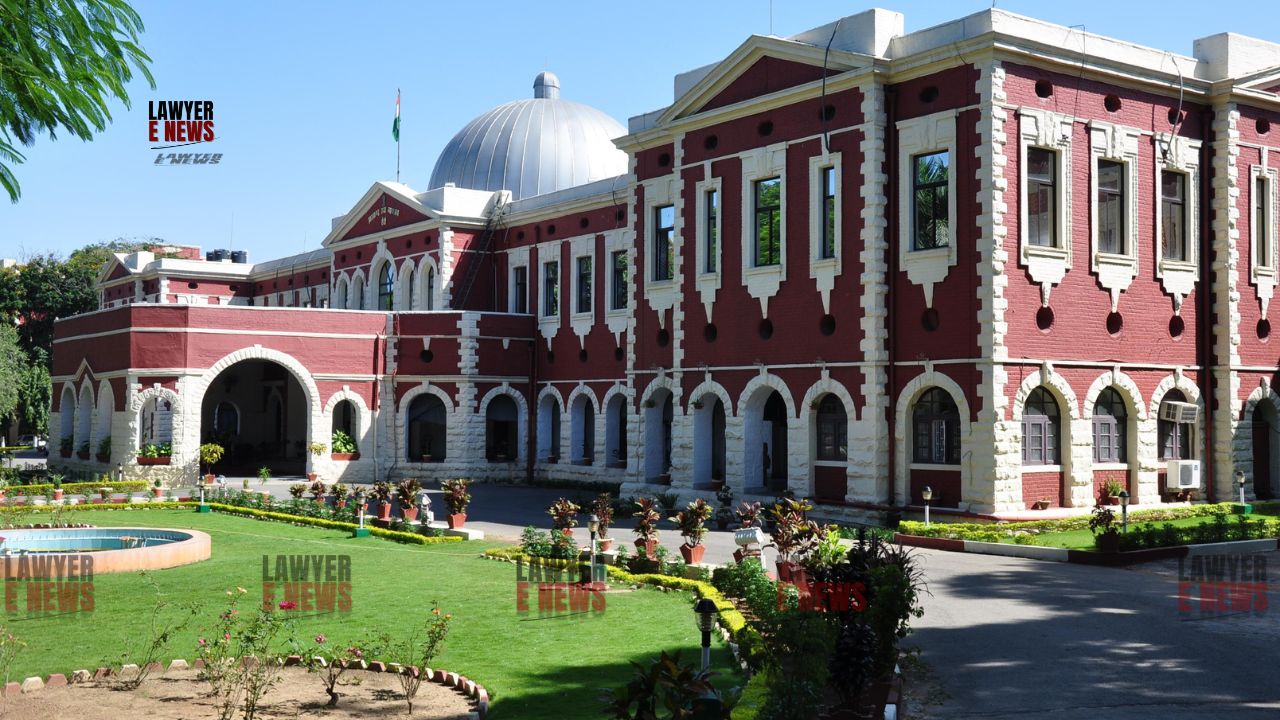
"Constitutional courts, in the ordinary course, should refrain from fixing a time-bound schedule for the disposal of cases pending before any other courts. The issue of prioritising the disposal of cases should be best left to the decision of the courts concerned where the cases are pending." Jharkhand High Court, in a ruling dated 9th October 2026, held that constitutional courts must exercise restraint in imposing rigid time-bound schedules for the disposal of proceedings in subordinate courts.

A division bench comprising Justice Sujit Narayan Prasad and Justice Sanjay Prasad dismissed a petition seeking modification of an earlier order, reiterating that the prioritisation of cases is a matter best left to the discretion of the trial courts.

The dispute arose between a husband and wife regarding the custody of their minor daughter. Following previous litigation and an order by this Court on 15.05.2026, which granted interim custody to the mother and directed an expeditious disposal of the guardianship suit, the father filed a Civil Miscellaneous Petition (CMP) under Section 151 of the CPC. The petitioner sought a modification of the earlier order, alleging that the mother was failing to participate in the ongoing guardianship proceedings and further questioning the territorial jurisdiction of the Family Court.

The primary questions before the court were whether a previous order granting interim custody and directing expeditious disposal could be modified or clarified in a subsequent petition, and whether the High Court ought to fix a time-bound schedule for the conclusion of the pending guardianship suit. The court also addressed the sustainability of a second petition seeking similar relief after an earlier petition for the same purpose had been withdrawn by the petitioner.

Court Rejects Attempt To Relitigate Settled Issues

The bench observed that the petitioner had previously filed a Civil Miscellaneous Petition seeking identical relief, which was withdrawn with liberty to approach a competent forum. By filing the present petition, the petitioner attempted to relitigate the same grounds. The court noted that the current application was effectively a disguised review of the earlier judgment, which is not permissible under the garb of seeking clarification.

"The instant petition has been filed in the garb of seeking modification of order dated 15.05.2026, for which the earlier CMP has already been dismissed as withdrawn, which is not tenable."

No Justification For Rigid Time-Bound Directions

Regarding the request to impose a specific timeframe for the conclusion of the guardianship suit, the court referenced the Supreme Court’s mandate in High Court Bar Association, Allahabad vs. State of Uttar Pradesh & Ors. and Sangram Sadashiv Suryavanshi Vs. The State Of Maharashtra. The court affirmed that directing subordinate courts to conclude proceedings within a specific period is an exceptional measure and not the norm.

Court Cites Supreme Court Precedent On Judicial Discretion

The bench emphasized that the responsibility of managing judicial calendars and prioritizing case disposal rests with the trial judges. It observed that since the Family Court is already seized of the matter, it is best equipped to handle the progress of the suit without undue interference from the appellate court. The court maintained that its previous instruction for "expeditious disposal" was sufficient and that further rigid directions would be improper.

"Constitutional courts may issue directions for the time-bound disposal of cases only in exceptional circumstances. The issue of prioritising the disposal of cases should be best left to the decision of the courts concerned where the cases are pending."

Jurisdictional Objections Overruled

The court also dismissed the petitioner's argument regarding the territorial jurisdiction of the Ranchi Family Court. Noting that the guardianship suit is already sub judice before the Family Court at Ranchi, the bench held that the issue of jurisdiction was not fit to be reconsidered in the present proceedings, particularly when the petitioner had failed to demonstrate any valid legal impediment to the lower court's continued oversight of the matter.

Finding no merit in the application, the Jharkhand High Court dismissed the petition. The ruling reinforces the principle of judicial non-interference in the internal management of subordinate courts, emphasizing that trial courts must be allowed to exercise their discretion in prioritizing and disposing of cases within their jurisdiction.

Date of Decision: 09 October 2026

Latest Legal News