-
by sayum
10 October 2026 8:11 AM







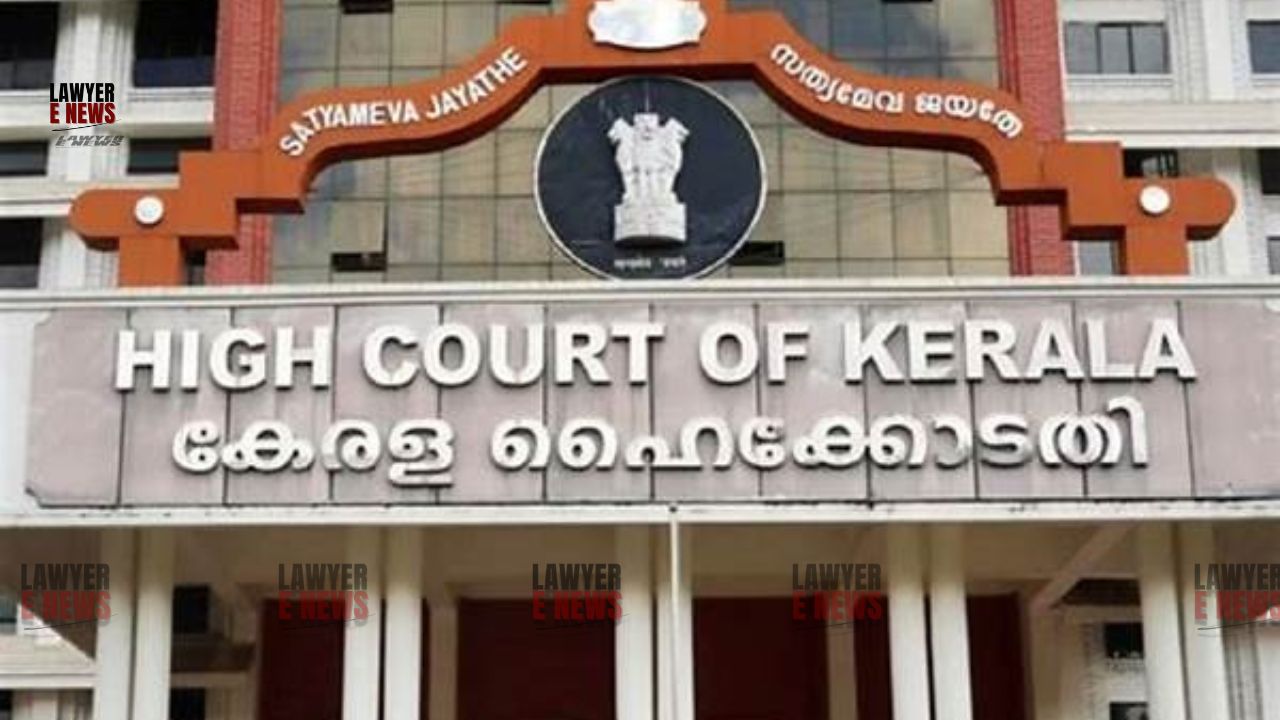
"The plaint need only plead the material facts constituting the cause of action, and need not plead the evidence by which they will be proved. If the defendants needed particulars, the remedy lay in seeking them, or in testing the plaintiffs' version at trial." Kerala High Court, in a significant ruling dated October 8, 2026, held that a plaint cannot be rejected under Order 7 Rule 11 of the Code of Civil Procedure (CPC) merely because the defendant disputes the facts or demands further particulars, nor can a plea of res judicata be decided at the threshold stage without an examination of previous records.
A single bench of Justice Mohammed Nias C.P. observed that an inquiry under Order VII Rule 11 is strictly confined to the averments in the plaint and the documents filed alongside it, maintaining that the court must not allow "clever drafting" to create an illusion of a cause of action, but must conversely not stifle a suit where essential facts are pleaded.
The revision petitioner, being the defendant in a suit for fixation of boundaries and permanent injunction, had moved an application to reject the plaint. The petitioner argued that the plaint failed to disclose a cause of action by omitting details regarding the identity of the defendants' agents and the precise nature of the alleged obstruction. Furthermore, the petitioner contended that the suit was barred by res judicata in light of several earlier rounds of litigation between the same parties, claiming the current suit was an attempt to re-agitate settled issues.
The primary questions before the court were whether the absence of specific evidentiary particulars in a plaint constitutes a failure to disclose a cause of action under Order VII Rule 11(a) CPC, and whether a plea of res judicata can be summarily adjudicated upon without examining the pleadings and decrees of former suits. The court was also called upon to define the scope of judicial inquiry during the consideration of a motion for plaint rejection.
Strict Scope Of Order VII Rule 11
The court reiterated that when considering the rejection of a plaint, the inquiry is confined strictly to the plaint and the documents accompanying it, with all averments being taken as true. The bench emphasized that the defense set up in a written statement is entirely irrelevant at this stage. Quoting the Supreme Court’s stance, the court noted that while a plaint drafted to create a deceptive illusion of a cause of action must be rejected, a plaint that provides a fair disclosure of material facts cannot be discarded simply because the defendant disputes them or seeks granular details.
Distinction Between Material Facts And Evidence
Addressing the petitioner's argument regarding the omission of the agents' names and specific obstruction details, the court clarified that the law mandates the pleading of material facts, not the evidence intended to prove them. The court held that if a defendant requires further particulars to prepare a defense, the procedural path is to move an application for better particulars or to challenge the plaintiff’s version during the trial. The absence of such particulars does not render a plaint legally deficient or devoid of a cause of action.
Res Judicata As A Mixed Question Of Fact And Law
Regarding the plea of res judicata, the court ruled that determining whether a matter was "directly and substantially in issue" in a former suit requires a comparative analysis of the pleadings, issues framed, and the final findings of earlier judgments. Since these records are not part of the current plaint or its accompanying documents, they cannot be adjudicated upon under Order VII Rule 11. The bench categorized res judicata in this context as a "mixed question of fact and law" that must be resolved only upon a full examination of records at the appropriate stage of the trial.
No Jurisdictional Error Found
Concluding its analysis, the High Court found that the Trial Court had correctly exercised its discretion by refusing to reject the plaint at the threshold. The bench affirmed the lower court's order, noting that the revision petitioner failed to demonstrate any jurisdictional error, illegality, or material irregularity. The Court dismissed the revision petition, explicitly stating that the parties remain free to agitate all contentions, including those pertaining to title and res judicata, on their merits during the trial.
Date of Decision: 08 October 2026