Advocates Cannot Threaten Judges With Corruption Allegations To Force Favourable Orders: Bombay High Court Holds Lawyers Guilty Of Criminal Contempt Co-Sharer Cannot Transfer Specific Portion Of Joint Land; Sale Operates Only As Transfer Of Undivided Share: Himachal Pradesh High Court Companies Act 2013 | Amount Due For Refund Post-Capital Reduction Does Not Qualify As Unclaimed Application Money For IEPF Transfer: Delhi High Court Seniority Cannot Be Claimed By Ad Hoc Or Temporary Employees Over Regularly Appointed Candidates: Supreme Court Supreme Court Directs Deposit Of Entire Enhanced Compensation In Land Acquisition Appeals To Balance Financial Liability And Landowners' Rights Succession To Bhumidhari Rights By Hindu Women Governed By Personal Law As It Stands On Date Of Demise: Supreme Court Hindu Widow’s Limited Life Interest In Agricultural Land Becomes Absolute Upon Enactment Of HSA 1956, Governs Devolution Under Delhi Land Reforms Act: Supreme Court Bodily Injury Under Section 165 MV Act Covers Both Temporary And Permanent Injuries Irrespective Of Disability Certification: Bombay High Court Testimony Of An Injured Witness Is A 'Sterling Witness' With A Built-In Guarantee Of Presence At The Scene Of Crime: Allahabad High Court Scrutiny Committee Has Inherent Power To Direct Re-Examination Of Documents During Caste Verification, Does Not Need To Discard Entire Vigilance Report: Bombay High Court Tender Cancellation Orders Must Be Reasoned; Affidavit Cannot Supplement Missing Reasons: Allahabad High Court Section 9 Of Arbitration Act Allows Interim Orders Against Non-Signatories To Preserve Subject Matter: Delhi High Court Order VII Rule 11 CPC | Parsi Matrimonial Suit Can Be Dismissed At Threshold If Jurisdictional Fact Of Marriage Solemnisation In India Is Absent: Bombay High Court Section 125 CrPC | Maintenance Is A Social Welfare Measure To Prevent Destitution, Not A Tool For Financial Enrichment: Allahabad High Court Locus Standi To Challenge Tenancy Orders | Person With Registered Agreement For Sale Is An 'Aggrieved Person' Under BTAL Act: Bombay High Court State Legislature Lacks Competence To Levy Cess On Agricultural Produce Brought For Manufacturing Without Sale: Uttarakhand High Court Senior Citizens Act | Maintenance Order Attains Finality And Remains Executable Against Legal Heirs Post-Death Of Respondent: Telangana High Court Civil Court Cannot Grant Injunction Against SARFAESI Proceedings Even If Suit Property Title Is Disputed: Madhya Pradesh High Court Co-Accused Confession Without Recovery Hit By Section 23 BSA: Punjab & Haryana High Court Grants Bail In Robbery Case Section 28 Hindu Marriage Act | Appellate Court Can Set Aside Divorce Decree Upon Post-Decree Reconciliation Between Parties: Rajasthan High Court Failure To Collect Electronic Evidence Such As Call Detail Records In Offences Under Section 354 IPC Can Prove Fatal To Prosecution Case: Telangana High Court Mere Pendency Of Challenge To Sale Certificate Before DRT Does Not Bar Mutation Under OSS Rules: Orissa High Court Court May Impose Conditions On Minor’s Custody In Habeas Corpus Proceedings To Protect Best Interest Of Child: Madhya Pradesh High Court Banking Fraud | Failure Of Bank Official To Conduct Physical Inspection Of Collateral Property Constitutes Criminal Conspiracy And Abuse Of Official Position: Madras High Court Order 7 Rule 11 CPC | Plaint Cannot Be Rejected For Lack Of Specific Particulars Or Res Judicata At Preliminary Stage: Kerala High Court Surprise Check Without Prior FIR Registration Casts Doubt On Foundational Facts; Uncorroborated Approver Evidence Tainted: Madras High Court Acquits Former Protector Of Emigrants Appointment Of Lambardar | Appellate Authority Remanding Matter Must Not Pre-Judge Merits Of Candidates: Punjab & Haryana High Court Disciplinary Proceedings | Subsequent Deposit Of Embezzled Amount Does Not Exonerate Employee Or Efface Misconduct: Rajasthan High Court Order XXI Rule 37 CPC | Willful Evasion Of Decretal Debt Despite Having Means Justifies Arrest And Detention: Telangana High Court Claims For Recovery Of Stridhan Must Be Substantiated By Cogent Evidence, Not Merely Oral Assertion: Kerala High Court Concurrent Findings Of Fact Regarding Unproved Oral Family Settlement Cannot Be Re-Appreciated In Second Appeal: Punjab And Haryana High Court Limitation Act | Governmental Bureaucratic Delays Without Acceptable Explanation Cannot Be A Ground For Condoning Delay Under Section 5: Telangana High Court

Disciplinary Proceedings | Subsequent Deposit Of Embezzled Amount Does Not Exonerate Employee Or Efface Misconduct: Rajasthan High Court

10 October 2026 1:37 PM

By: sayum


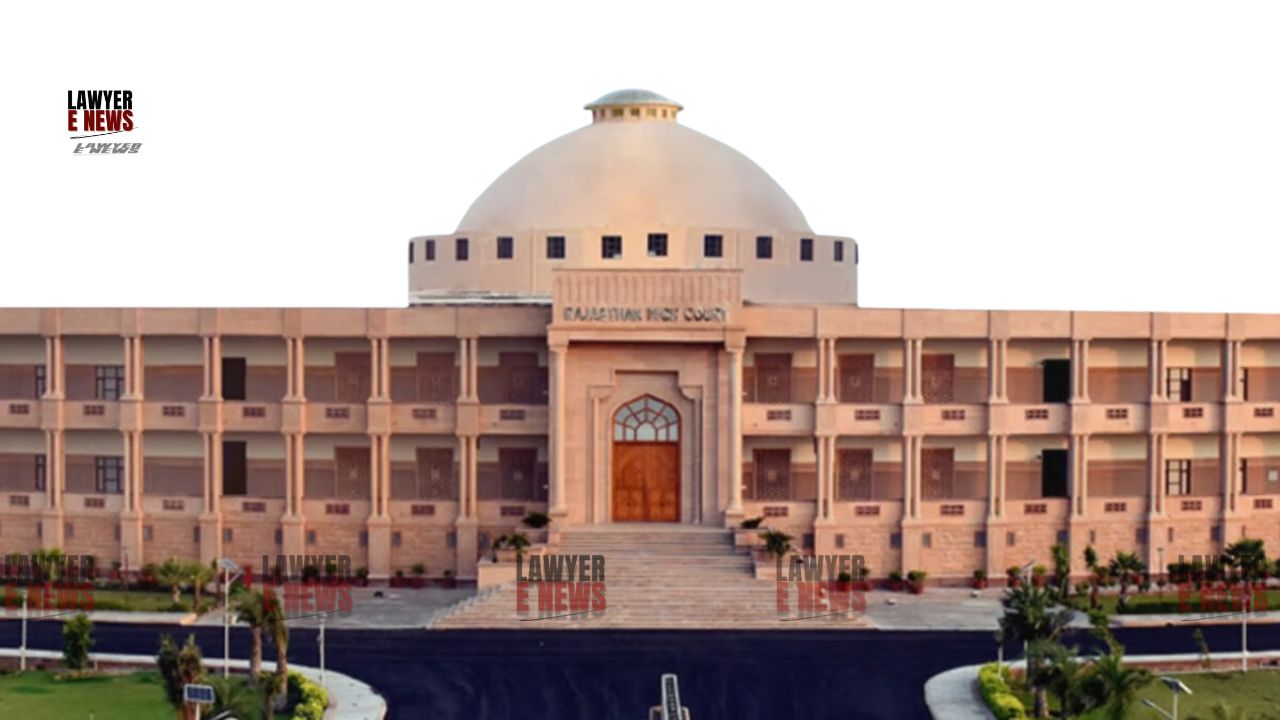
"The subsequent deposit of the embezzled amount does not absolve the employee of the misconduct and also emphasised the limited scope of interference by the High Court in exercise of judicial review." Rajasthan High Court, in a ruling dated 09 October 2026, held that the subsequent restitution of misappropriated funds by a delinquent employee does not render the underlying misconduct lawful, nor does it automatically entitle the employee to the setting aside of a major penalty.

A bench of Justice Bipin Gupta observed that departmental proceedings and criminal prosecution operate in distinct fields, and an acquittal in a criminal case does not, by itself, efface the findings of a disciplinary inquiry.

The petitioner, a former Assistant Sub-Inspector in the Rajasthan Police, challenged his dismissal from service and the recovery of Rs. 1,04,984/- imposed by disciplinary authorities. The charges pertained to financial irregularities and embezzlement discovered during his tenure as the Manager of the Police Cooperative Upabhoka Bhandar between 1994 and 1998. Following a departmental inquiry, the petitioner was dismissed in 2004, and his subsequent appeals and review petitions were rejected by the departmental authorities.

The primary question before the court was whether the departmental inquiry stood vitiated by the non-supply of documents, vagueness of charges, or violation of natural justice. The court was also called upon to determine the effect of the petitioner's subsequent acquittal in a parallel criminal case and whether the penalty of dismissal was disproportionate to the proved misconduct.

Charge-Sheet Not Vitiated by Vagueness

The court held that a charge-sheet is legally sufficient if it contains enough particulars to enable the delinquent to understand the substance of the allegations. It is not required to contain the entire evidence at the charge-sheet stage. Since the petitioner participated in the inquiry and cross-examined witnesses, he was clearly aware of the case he was required to meet.

No Demonstrable Prejudice in Document Denial

Regarding the non-supply of certain records, the court emphasized that procedural fairness is not a ritualistic formality. The petitioner failed to demonstrate any "real and demonstrable prejudice" caused by the denial of specific documents. The court clarified that mere technical or procedural irregularity, in the absence of actual harm to the defense, does not render the entire inquiry void.

"Mere assertion that some documents have not been supplied or even mentioning the said documents would not be enough unless the consequential prejudice which would or has been caused to a delinquent employee is put forth."

Subsequent Deposit Does Not Wipe Out Misconduct

Addressing the petitioner’s argument that he had deposited the alleged embezzled amount, the court noted that such restitution does not absolve the employee of the misconduct. Emphasizing that the relationship of a public servant with an institution is one of trust, the court stated that financial integrity is paramount, especially for members of a disciplined force.

Departmental Proceedings vs Criminal Acquittal

The court reiterated that criminal prosecution and departmental inquiries operate on different standards of proof—beyond reasonable doubt versus the preponderance of probabilities. The acquittal of the petitioner in the criminal case did not automatically invalidate the departmental findings, as the evidentiary basis and the standards applied in the two forums are distinct.

"Acquittal in a criminal case ipso facto would not be tantamount to closure or culmination of proceedings in favour of a delinquent employee."

The court underscored that the High Court’s jurisdiction under Article 226 is supervisory rather than appellate. It cannot re-appreciate evidence or substitute its own view for that of the disciplinary authority unless the findings are perverse or based on no evidence. Given that the inquiry was regular and the misconduct was established based on audit reports and admissions, the court refused to interfere with the penalty of dismissal.

Finding no procedural infirmity or violation of natural justice that caused actual prejudice, the High Court dismissed the writ petition. The orders of the Disciplinary, Appellate, and Reviewing Authorities were upheld, confirming that the petitioner’s misconduct in a position of trust justified the major penalty of dismissal.

Date of Decision: 09 October 2026

 

Latest Legal News