-
by sayum
10 October 2026 8:11 AM







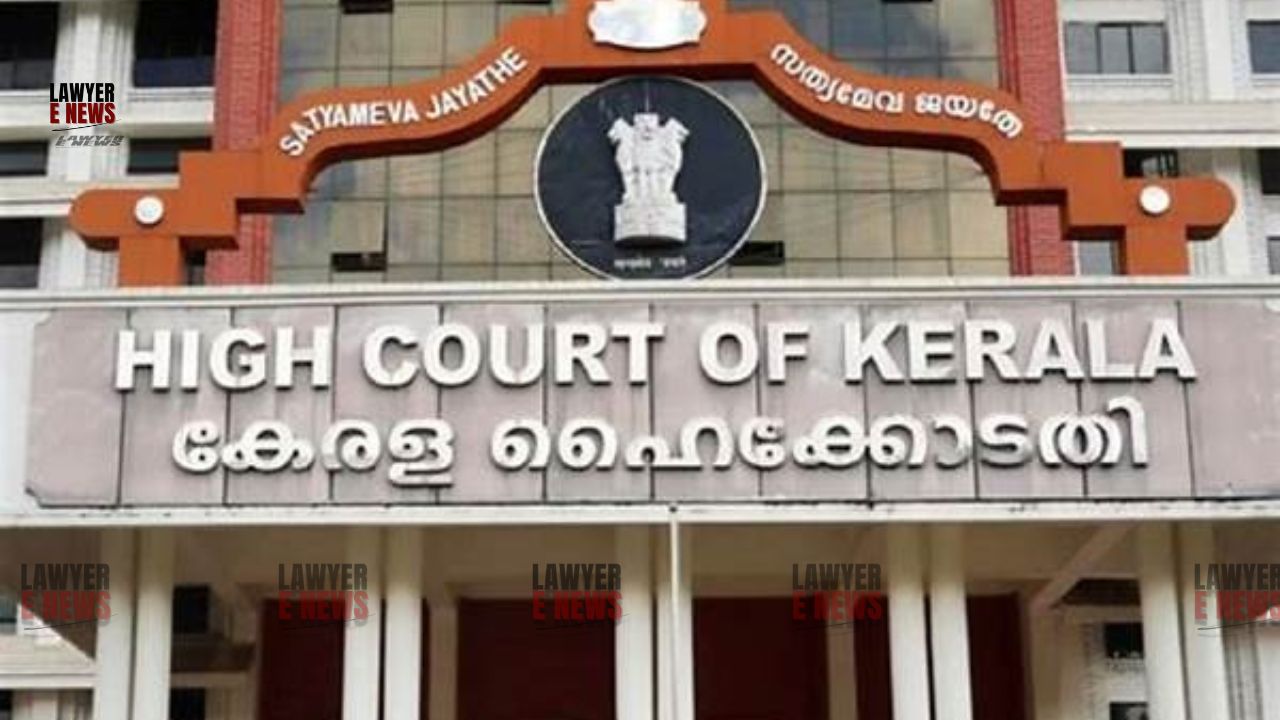
"In the absence of reliable evidence establishing the primary facts, it would not be permissible to draw such an inference merely on the basis of the respondent’s financial status or the suitability of the marriage proposal." Kerala High Court, in a judgment dated October 8, 2026, held that a spouse’s claim for the recovery of gold ornaments and money, purportedly given as parental share, cannot succeed on the strength of oral testimony alone when challenged by credible contrary evidence.
A division bench comprising Justice Sathish Ninan and Justice P. Krishna Kumar observed that when a claimant fails to provide documentation and their testimony is contradicted by photographic evidence of the marriage, the court cannot draw adverse inferences against the respondent based merely on their financial status or the nature of the marital proposal.
The litigation arose from two matrimonial appeals involving the same parties. In the first instance, the wife (appellant) sought the recovery of 52 sovereigns of gold and ₹29,00,000 from her husband, alleging misappropriation of her parental share and business funds. The Family Court dismissed the petition, citing a lack of evidence. In the second instance, the husband sought a decree of divorce on the grounds of cruelty, which was granted by the trial court. The wife challenged both the dismissal of her recovery suit and the grant of the divorce decree before the High Court.
The primary questions before the court were whether the appellant had sufficiently established the entrustment of gold ornaments and money to her husband to warrant a recovery decree, and whether the respondent-husband had sufficiently proven the allegations of cruelty required to entitle him to a decree of divorce.
Standard of Proof in Recovery of Stridhan
The court emphasized that while the passage of time may excuse a lack of original purchase bills, the claimant still bears the burden of proving the entrustment of assets. In this case, the appellant’s claim of possessing 52 sovereigns of gold was directly contested by her own admission regarding a wedding photograph, marked as Ext.B1, which depicted her wearing significantly less jewelry.
Evidence Must Support Claims
The bench noted that the appellant failed to examine any witnesses who attended the wedding to corroborate her claims of gold entrustment. Furthermore, regarding the alleged transfer of ₹29,00,000, the bank records produced by the respondent (Ext.X1) showed only minor transactions, contradicting the appellant’s assertions of large-scale financial transfers.
"No Inference Based On Financial Status"
The court rejected the argument that because the husband belonged to an affluent family, it was inherently probable that a substantial dowry or parental share was handed over. The judges held that matrimonial recovery claims require proof of the specific transaction, not merely a reliance on the "financial position" of the parties to presume the transfer of wealth.
Prolonged Separation As Cruelty
Regarding the divorce appeal, the court found the testimony of the husband regarding instances of physical and mental cruelty to be reliable. The court underscored that the parties had been living apart for over a decade. Referencing precedents like Naveen Kohli v. Neelu Kohli and Samar Ghosh v. Jaya Ghosh, the bench reiterated that prolonged separation can, in itself, constitute cruelty.
"Prolonged separation, viewed in the context of the facts and circumstances of a particular case, may itself constitute cruelty to the spouse."
The bench noted that despite the separation, the wife had taken no legal steps to seek restitution of conjugal rights, indicating a lack of genuine intent to resume the marriage. Finding no merit in the challenges to the lower court’s findings on facts or the evidence of cruelty, the court dismissed both appeals, affirming the trial court's judgments.
Date of Decision: 08 October 2026