-
by sayum
10 October 2026 6:25 AM







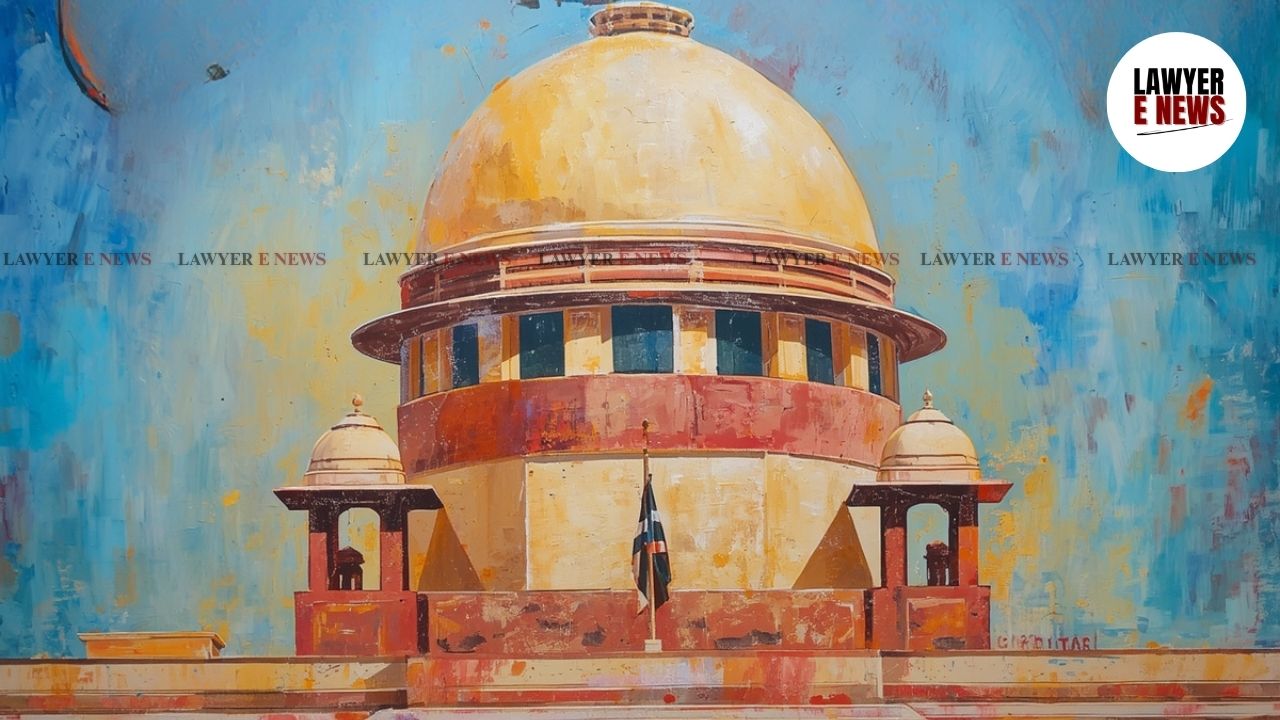
"The Reference Court has enhanced the compensation by an unusually large margin which, on the one hand, burdens the petitioner with a huge financial liability while, on the other, leaves the respondents in a state of uncertainty as to what compensation will finally attain finality." Supreme Court of India, in a significant order dated October 08, 2026, has mandated that development authorities must deposit the full amount of enhanced compensation awarded by a Reference Court with the High Court Registry while their appeals remain pending.
A bench comprising Justice Dipankar Datta and Justice Sheel Nagu observed that this approach is essential to balancing the competing interests of state entities facing massive financial burdens and landowners awaiting fair compensation for acquisitions dating back to 1987.
Balancing Financial Interests
The proceedings arose from the Shatabdi Nagar Housing Scheme, where acquisition began in 1987. After an initial determination by the Land Acquisition Officer in 1990, the Reference Court significantly enhanced compensation rates in 2024. The Meerut Development Authority challenged these awards before the Allahabad High Court under Section 54 of the Land Acquisition Act, 1894, leading to a series of interim stay orders that left the compensation amount in legal limbo.
Court Mandates Deposit To Ensure Parity
To avoid undue hardship while protecting the interests of both parties, the court directed the petitioner to deposit the entire enhanced sum awarded by the Reference Court into the High Court Registry within four weeks. To maintain parity with previous orders, the court ordered that 8.33% of this amount be released to the landowners, while the balance is to be invested in interest-bearing fixed deposits in a nationalised bank on an auto-renewal basis.
Securing The Disputed Amount
The court underscored that the release of the 8.33% portion is subject to final outcomes in the pending first appeals. Should the appeals succeed in favor of the development authority, the respondents are legally obligated to return the released sum. This mechanism ensures that the respondents receive a portion of the compensation while the principal amount remains preserved and earns interest, pending the final adjudication by the High Court.
Directing Expedited Disposal
The bench expressed regret over the lack of progress in the High Court despite earlier requests for priority hearings. Recognizing the pressure on judicial dockets, the court nonetheless requested the High Court to prioritize these appeals to resolve the lingering uncertainty. The judges noted that given the significant margin of enhancement and the prolonged nature of the dispute, it would be in the fitness of things if the High Court decides the batch of appeals preferably within six months.
"If, for valid reasons, the High Court is unable to dispose of the appeals within six months, we grant liberty to the respondents to seek release of such further sum the High Court may deem fit and proper to grant."
Ensuring Procedural Fairness
In the event that the High Court cannot adhere to the six-month timeline due to unavoidable constraints, the Supreme Court has granted the landowners liberty to seek the release of further sums from the High Court. This provision acts as a safety valve, ensuring that the landowners are not perpetually deprived of their rightful dues while the legal challenge remains ongoing. The Registrar General of the High Court has been directed to place this order before the Chief Justice for necessary administrative compliance.
Date of Decision: 08 October 2026