-
by sayum
10 October 2026 6:25 AM







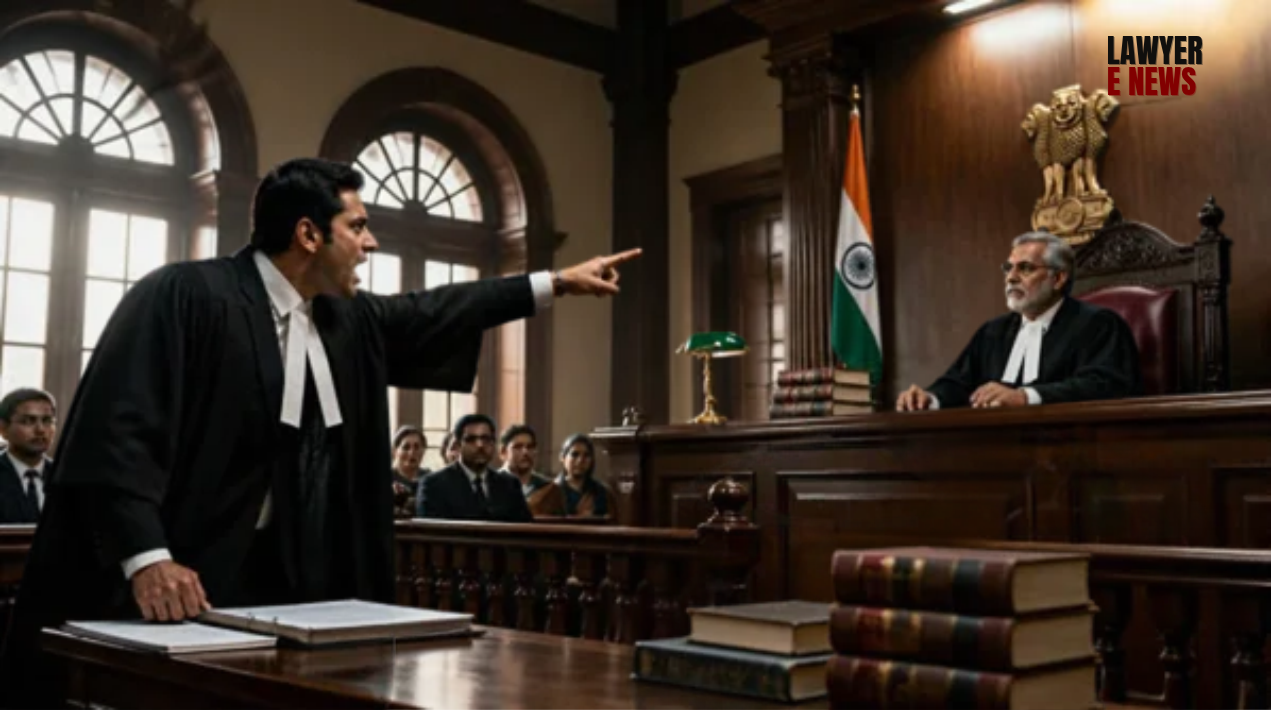
"The nature of the conduct of both these respondents before the Court particularly when the respondent No.2 who was holding the post of the President of the Bar Association and giving threats in the open Court to the Judicial Officer needs to be viewed very seriously." Bombay High Court, in a significant ruling dated 05 October 2026, held two advocates guilty of criminal contempt for browbeating, intimidating, and hurling scandalous allegations against a Judicial Magistrate to force a favourable order.
A division bench comprising Justice Urmila Joshi Phalke and Justice Raj D. Wakode observed that the nobility of the legal profession is to be ensured at all costs, noting that "any tendency to challenge the authority or majesty of justice, would be a criminal contempt."
The proceedings originated from a reference forwarded by a Civil Judge (Junior Division) and JMFC, Arni, concerning a Regular Criminal Case. The respondents, a father-son duo of advocates, allegedly used abusive language and threatened the Magistrate after he refused to cancel a non-bailable warrant against their client in the absence of the accused. The Magistrate reported that the advocates threatened to implicate him in false corruption cases if he did not comply with their demands.
The primary issue before the Court was whether the conduct of the advocates, specifically the act of threatening a judicial officer with corruption allegations to secure a favourable judicial order, constitutes criminal contempt under the Contempt of Courts Act, 1971. The Court was also tasked with determining the validity of the unconditional apology tendered by the contemnors during the proceedings.
Court’s Observations on Contemptuous Conduct
The Court observed that legal professionals are expected to maintain the decorum of the Court, and any attempt to terrorize or browbeat a judge undermines the administration of justice. The Bench emphasized that the judiciary must remain immune from such hostile pressure.
Threats to Judicial Officers as Contempt
The Court held that making wild, unsubstantiated allegations of corruption against a judge to influence an order is a serious impediment to the due administration of justice. The Bench remarked that such conduct constitutes a "scurrilous attack" that has the inevitable effect of undermining public confidence in the judiciary.
"No lawyer or litigant can be permitted to browbeat the court or malign the presiding officer with a view to get a favourable order," the Court noted.
Court Refuses to Accept 'Paper Apology'
The Bench categorically rejected the unconditional apology tendered by the respondents, noting that it was not offered at the earliest opportunity. The Court held that an apology is not a "weapon of defence" or a "universal panacea" to purge guilt, especially when it is offered only after the court initiates strict action and frames charges.
"Apology is an act of contrition. Unless apology is offered at the earliest opportunity and in good grace, the apology is shorn of penitence and hence it is liable to be rejected," the Court emphasized.
Disciplinary Action against Advocates
The Court ruled that while it would refrain from sentencing the contemnors to imprisonment, the gravity of the conduct necessitated financial penalties and disciplinary intervention. The Court imposed a fine of Rs. 2,000 each and additional costs of Rs. 50,000 each, to be deposited into the Public Welfare Account.
Court Directs Bar Council Intervention
Crucially, the Court referred the entire matter to the Disciplinary Committee of the Bar Council of Maharashtra and Goa, directing it to initiate appropriate disciplinary action against the advocates for their professional misconduct.
Date of Decision: 05 October 2026