-
by sayum
10 October 2026 6:25 AM







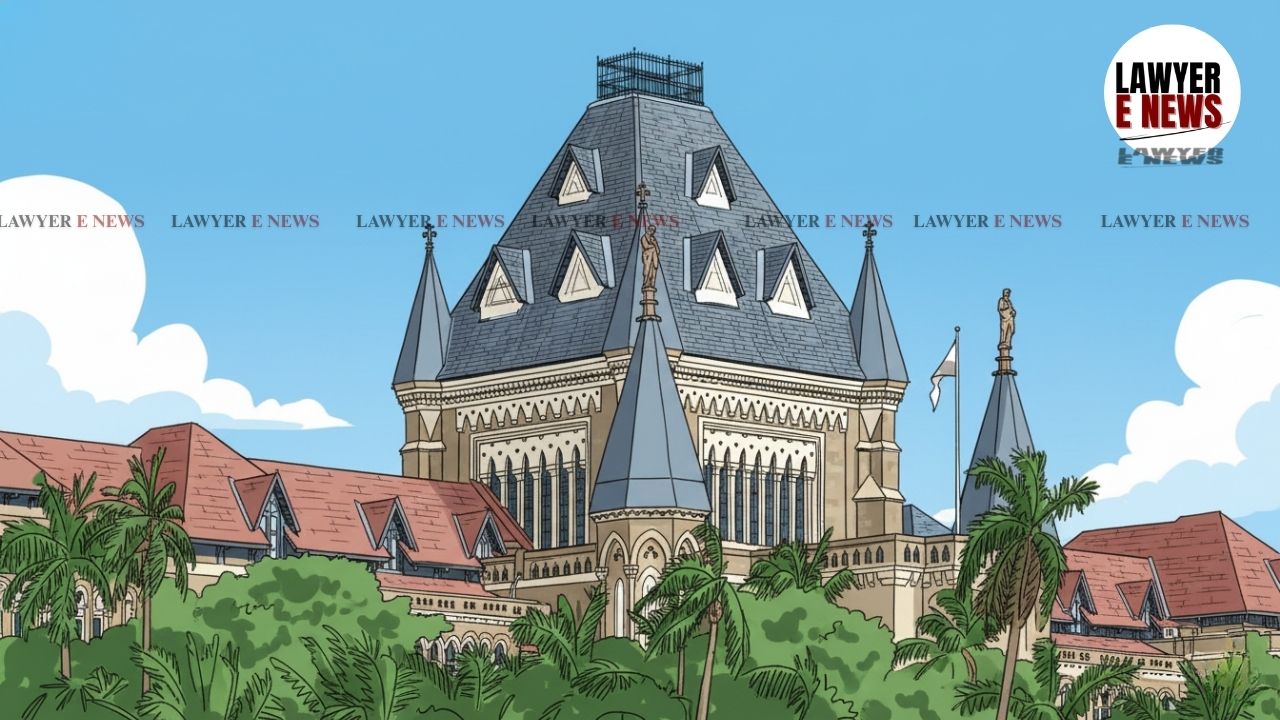
"In the result, the Interim Application is allowed and the Suit is dismissed because of the vital jurisdictional fact not having been found to be in existence, posing a bar in law to proceed with trial." Bombay High Court, in a significant ruling, held that a Parsi Matrimonial Suit is liable to be dismissed at the threshold under Order VII Rule 11 of the CPC if the court lacks territorial jurisdiction due to the absence of a valid marriage solemnisation within its limits.
A bench of Justice Somasekhar Sundaresan observed that where the jurisdictional fact—the solemnisation of a Parsi marriage—is found to be absent, the suit is barred by law.
The dispute arose in a Parsi Matrimonial Suit filed by the wife seeking dissolution of marriage and permanent alimony. The husband moved an interim application seeking rejection of the plaint, contending that the couple were married in a civil ceremony in Perth, Australia, and that a subsequent event in Mumbai was merely a blessing ceremony, not a valid marriage under the Parsi Marriage and Divorce Act, 1936.
The primary questions before the court were whether the event conducted in Mumbai constituted a valid Parsi marriage ceremony as defined under Section 3 of the PMDA, and whether the suit was barred by the principle of res judicata in light of prior matrimonial proceedings in Australia. The court was further tasked with determining the applicability of the Code of Civil Procedure to Parsi matrimonial proceedings.
Court Reconciles Sections 19 And 46 Of PMDA
The court emphasized that while Section 19 of the PMDA provides exceptions to the court being aided by a jury, it does not forbid such aid when a crucial question of fact must be resolved. The court noted that by consent of the parties, the preliminary question of the nature of the Mumbai event was referred to the jury.
Delegates Unanimously Reject Marriage Ceremony Claim
The jury, after reviewing video evidence provided by the wife, unanimously concluded that the event in question was a 'Tandoorasti' or blessing ceremony, and not an 'Ashirvad' ceremony, which is a fundamental statutory requirement for a valid Parsi marriage. The court remarked that it would be inappropriate to sit in judgment over the community’s unanimous finding on its own religious ritual in the absence of perversity.
Court Rejects Application Of Res Judicata
The bench rejected the husband’s contention of res judicata, noting that the Australian court had explicitly noticed the Indian proceedings but had chosen to keep them out of its own zone of consideration. The court held that since the foreign judgment did not adjudicate upon the merits of the Indian assets or the status of the alleged Indian marriage, the principle of res judicata was not attracted to the facts of the present case.
No Bar To Invoking Order VII Rule 11 CPC
Addressing the wife’s argument that the CPC does not apply to Parsi matrimonial cases, the court clarified that Section 45 of the PMDA makes the CPC applicable as far as possible. Whether the initiating instrument is labeled a 'plaint' or a 'petition' is immaterial, as the court must prevent the wastage of judicial resources on proceedings that are barred in law.
Parties Barred From Approbating And Reprobating
The court held that having consented to a trial of a preliminary issue and having fully participated in it, the parties are now estopped from contending that the exercise constituted an impermissible 'mini-trial'. The court emphasized that the jurisdictional fact was dispositive and that the absence of a solemnised marriage in India left the court without jurisdiction.
"Section 3 read with Section 29 of the PMDA, therefore, denies this Court jurisdiction. The parties reside in Perth, and the sole connecting factor was the solemnisation ceremony said to have been conducted in Mumbai. If the November 2010 Event is not a solemnisation ceremony, then that connecting jurisdictional fact is missing."
The court concluded that the suit was barred under Order VII Rule 11(d) of the CPC, as the jurisdictional fact of a valid Parsi marriage ceremony in Mumbai was not established. Consequently, the interim application was allowed and the suit was dismissed.
Date of Decision: 23 September 2026