-
by sayum
25 August 2026 4:32 AM







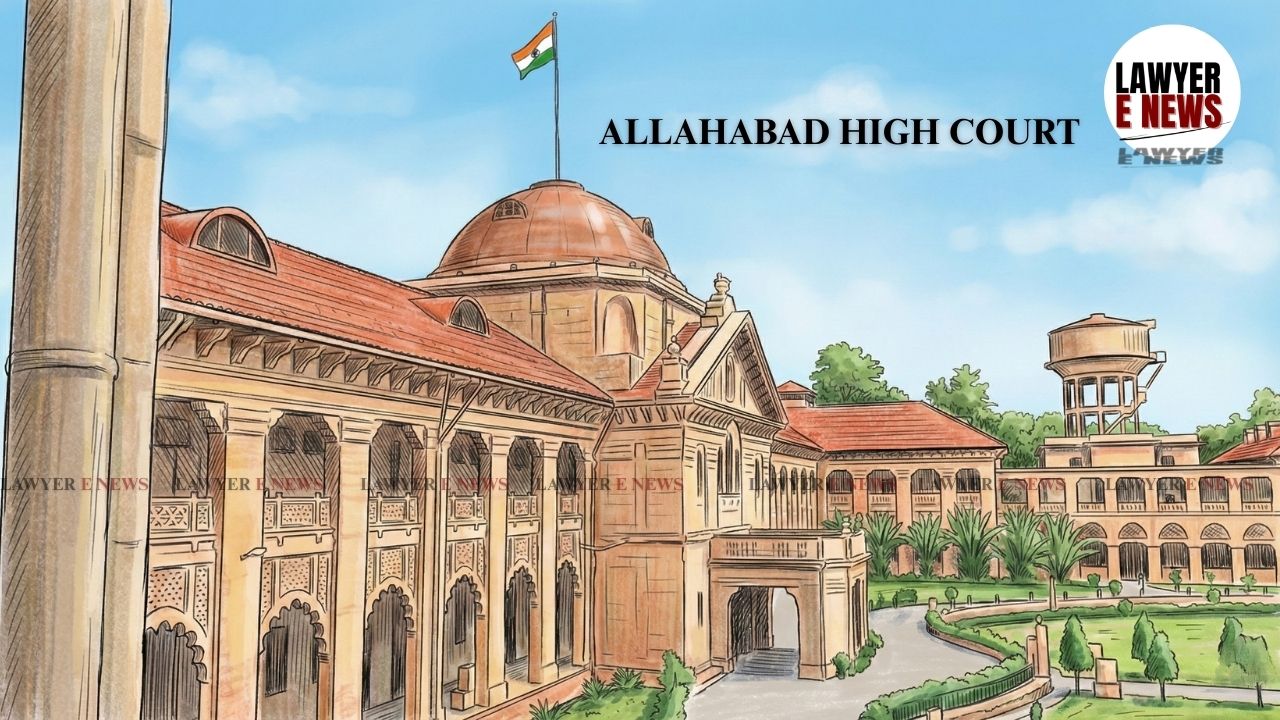
“When Article 227 jurisdiction exists, Article 226 must not be used to bypass statutory remedies”— In a significant decision reaffirming judicial restraint in matters of factual adjudication by consumer forums, the Lucknow Bench of the Allahabad High Court dismissed a writ petition challenging refund orders passed by consumer commissions at multiple levels, including the National Consumer Disputes Redressal Commission (NCDRC).
A Division Bench comprising Justice Shekhar B. Saraf and Justice Prashant Kumar ruled that the High Court would not exercise its discretionary jurisdiction under Article 226 merely because the petitioner disagreed with findings rendered by consumer fora. The Bench made it clear that “supervisory jurisdiction under Article 227 is available, and writ jurisdiction under Article 226 must be sparingly exercised—only in cases of grave injustice, patent illegality, or breach of fundamental rights.”
“Concurrent findings on facts by three consumer fora cannot be disturbed unless shown to be perverse or without jurisdiction”
The case involved a challenge to the orders of the District, State and National Consumer Commissions, which had unanimously held the petitioner—a real estate developer in Lucknow—liable for refund with interest to multiple consumers after failing to deliver possession of plots booked under a housing scheme titled “Sahu City Phase-2”.
The petitioner had attributed its failure to complete the project to consolidation proceedings initiated under Section 4 of the U.P. Consolidation of Holdings Act, 1953, describing the situation as a “force majeure” event under Section 56 of the Indian Contract Act, 1872. However, all three consumer fora rejected this plea, holding that the petitioner was never in legal possession of the land and had concealed the ongoing consolidation from buyers.
In its detailed judgment, the High Court observed:
“The issue of the petitioner’s possession and the knowledge of consolidation proceedings are purely factual, and cannot be re-examined in writ jurisdiction. These are not legal errors, but concurrent findings based on evidence.”
“Alternative remedy under Article 227 exists—Article 226 not meant to act as appellate forum”
The central legal issue before the Court was whether a writ under Article 226 was maintainable against orders of the National Consumer Commission, particularly when no substantial question of law was involved and alternate remedies under Article 227 or Section 67 of the Consumer Protection Act, 2019 existed.
After referring to a long line of Supreme Court precedents—including Whirlpool (1998), Harbanslal Sahnia (2003), Radha Krishan Industries (2021), Ibrat Faizan (2023), and Universal Sompo (2024)—the Court distilled the legal position:
“Where supervisory jurisdiction under Article 227 is available, invocation of Article 226 is ordinarily impermissible unless there is a violation of natural justice, lack of jurisdiction, or a challenge to the vires of the law.”
The Court also quoted the Supreme Court’s observation in Ibrat Faizan v. Omaxe Buildhome (P) Ltd.:
“National Commission is a Tribunal within the meaning of Article 227; therefore, the High Court has supervisory power but cannot act as an appellate court to re-appreciate factual conclusions.”
“Consolidation Proceedings Cannot Justify Non-performance; Refund Is Consumer’s Right”
The petitioner had claimed that the initiation of consolidation proceedings after the launch of the project in 2012 made it impossible to perform its obligations. It relied heavily on Section 56 of the Indian Contract Act, arguing frustration of contract due to supervening impossibility.
The District Commission found, however, that the petitioner was never in lawful possession of the land and had misled consumers regarding the status of the land. The State Commission and National Commission upheld this conclusion, finding no perversity or error of law.
The High Court agreed with these findings, stating:
“Petitioner has failed to show how consolidation proceedings absolve it of contractual duties when it was never in legal possession. Such pleas are factual and have been considered and rejected by all forums.”
High Court Emphasizes Self-Imposed Limitations on Writ Jurisdiction
Refusing to entertain the writ petition, the Bench reiterated the constitutional principle that Article 226 is not to be used to bypass available remedies or to act as a forum for second-guessing factual findings.
“Writ Court does not act as an appellate authority over findings of fact unless they are shown to be perverse, patently illegal, or without jurisdiction.”
It further noted that:
“The petitioner had already exhausted all statutory remedies under the Consumer Protection Act, 2019, including a revision converted into a second appeal before the National Commission. The National Commission rightly dismissed the second appeal for lack of substantial question of law.”
No Exceptional Circumstances Shown; Petition Dismissed
After a comprehensive legal analysis, the High Court held:
“This case does not fall under any of the recognised exceptions for invoking writ jurisdiction under Article 226. There is no violation of natural justice, no infringement of fundamental rights, and no patent illegality. The findings are reasoned and consistent.”
Accordingly, the writ petition was dismissed, with the Court directing that each party shall bear its own costs.
Date of Decision: 2nd December 2025