
-
by sayum
25 August 2026 12:32 PM







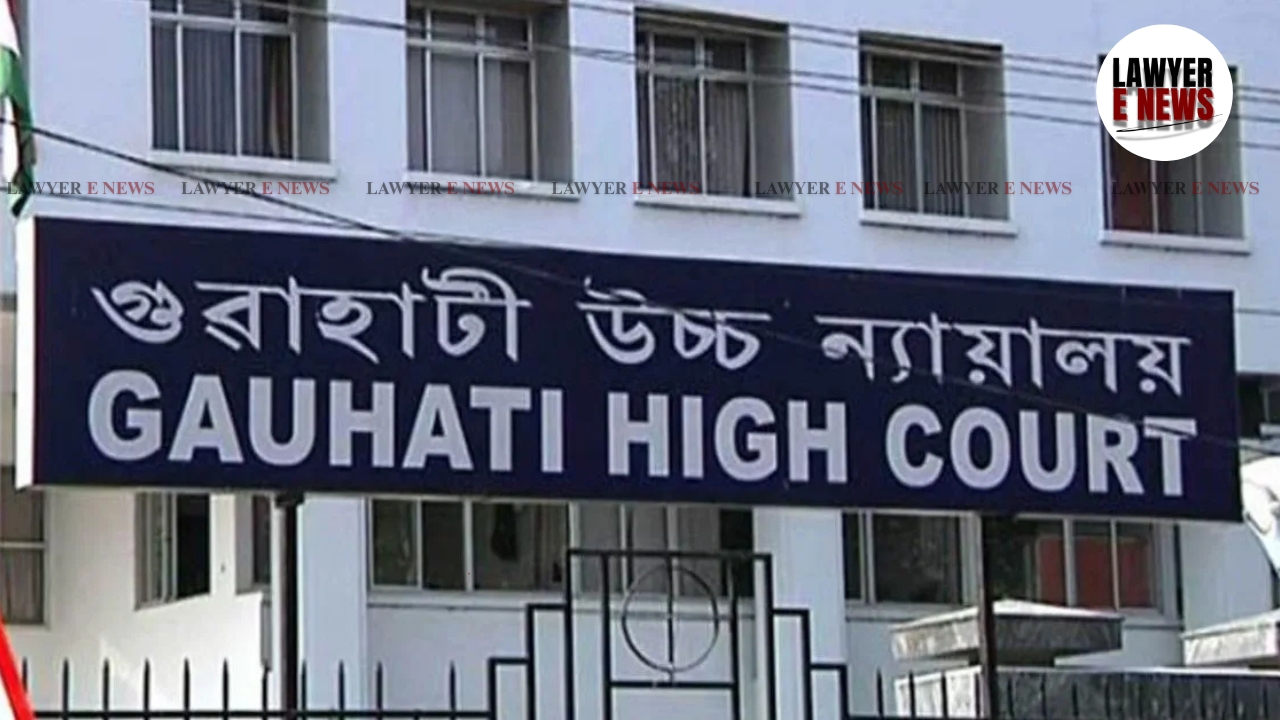
“Taken At Face Value, The Statement Does Not Attract The Ingredients Of The Penal Provisions”, In a reportable and significant decision Gauhati High Court firmly reiterated that criminal law cannot be invoked merely because a statement is controversial or objectionable. Justice Pranjal Das, exercising inherent powers under Section 528 of the Bharatiya Nagarik Suraksha Sanhita, 2023, quashed CID Cyber P.S. Case No. 01/2025 and the consequential Charge-sheet No. 01/2025 dated 08.09.2025, holding that the essential statutory ingredients of the alleged offences were not satisfied.
The case arose from a YouTube interview in which the petitioner referred to a place in Assam where, according to folklore, girls allegedly practice black magic and convert men into animals. An FIR was registered alleging that the remarks were derogatory to Assamese women and society, invoking Sections 196(1), 197(1), 353(2) of the Bharatiya Nyaya Sanhita, Section 67 of the Information Technology Act, and Section 4 of the Assam Witch Hunting (Prohibition, Prevention and Protection) Act, 2015. The investigation culminated in a charge-sheet, prompting the petitioner to seek quashing.
At the outset, the Court made it clear that even after submission of a charge-sheet, the High Court is not powerless. Relying on the principles laid down in State of Haryana vs. Bhajan Lal and Mamta Shailesh Chandra vs. State of Uttarakhand, the Court observed that it could examine the FIR, charge-sheet, and accompanying materials to determine whether any offence was disclosed. The inherent jurisdiction, the Court emphasized, exists “to prevent abuse of the process of any court or otherwise to secure the ends of justice.”
“Promotion Of Enmity Requires At Least Two Groups”: Section 196 BNS Not Made Out
A central plank of the prosecution was Section 196(1) BNS dealing with promotion of enmity between different groups. The Court scrutinized the statutory requirement and the settled law in Bilal Ahmed Kaloo vs. State of A.P., where the Supreme Court held that “it is necessary that at least two such groups or communities should be involved.”
Justice Das noted that the impugned statement did not refer to two distinct religious, racial, linguistic or regional communities nor did it promote disharmony between them. The Court categorically held that the statement “cannot be said to be one promoting enmity between two communities vis-à-vis the ingredients of Section-196.” Mere narration of an alleged village practice, however sensational, did not fulfill the statutory threshold.
The Court further found absence of mens rea, reiterating that intention to promote hatred or ill-will is a necessary ingredient.
No Prejudice To National Integration: Section 197 BNS Inapplicable
Turning to Section 197 BNS, which criminalizes imputations prejudicial to national integration, the Court found no allegation that any class of persons could not bear allegiance to the Constitution or should be denied their citizenship rights. There was no assertion affecting “sovereignty, unity and integrity of India.”
The Court held that the statement, even if controversial, did not attract the ingredients of Section 197, as it neither questioned constitutional allegiance nor advocated deprivation of rights.
“Controversial Remarks Do Not Necessarily Amount To Obscenity”: Section 67 IT Act
The prosecution had also invoked Section 67 of the Information Technology Act for publishing obscene material in electronic form. Rejecting this contention, the Court observed, “In the statement, the petitioner has made some controversial remarks, but the same does not necessarily amount to obscenity.”
The reference to alleged tantric practices and sexual conduct, in the narrative context of the interview, was held insufficient to meet the legal standard of obscenity under Section 67.
“Essential Element Of Harm To Society Missing”: Assam Witch Hunting Act Not Attracted
The State also relied on Section 4 of the Assam Witch Hunting Act. Examining Section 2(g), which defines “witch,” the Court emphasized that the offence requires identifying or stigmatizing a person as having the power to harm society at large.
Justice Das observed, “One of the important ingredients… is that an impression is given that such person called a ‘witch’ has the power to harm anyone in the society at large… Such an element is missing.”
The petitioner’s statement neither identified any individual as a witch nor attributed power to harm society. Therefore, the core ingredient of the offence was absent.
“No Justification For Registration Or Charge-Sheet”: Proceedings Quashed
After analyzing the impugned remarks against each penal provision, the Court concluded that “the statement of the petitioner taken on its face value and its entirety do not attract the ingredients of the said penal provisions.”
Holding that there was “no justification for registering the case” and consequently no basis for filing the charge-sheet, the High Court allowed the criminal petition and quashed the entire proceedings, including Sessions Case No. 180/2025.
The ruling stands as a strong reaffirmation that criminal prosecution cannot be sustained on mere outrage or controversy unless the clear statutory ingredients of the offence are established.
Date of Decision: 09/02/2026





