
-
by sayum
25 August 2026 12:32 PM







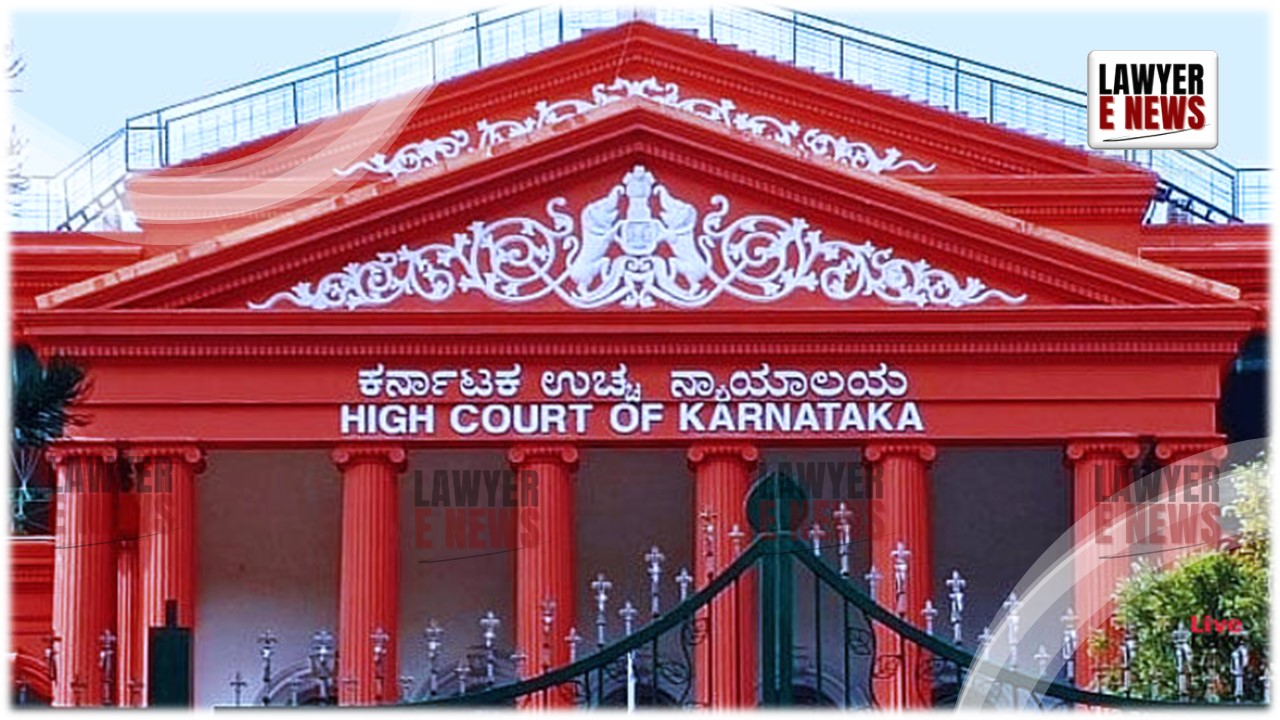
“Question as to Who Was the Custodian of the Said Documents at the Relevant Point of Time Is a Matter of Record”, Karnataka High Court allowed a petition seeking anticipatory bail under Section 438 of the Code of Criminal Procedure, 1973 read with Section 482 of the Bharatiya Nagrika Suraksha Sanhita, 2023.
Justice Shivashankar Amarannavar granted pre-arrest bail to the petitioner, a Deputy Tahsildar, in Crime No.379/2025 registered by Anekal Police for alleged offences under Sections 316(4), 336(3), 318(4), 336(2), 340(2) read with Section 3(5) of the Bharatiya Nyaya Sanhita, 2023 and Section 192(A) of the Karnataka Land Revenue Act, 1964.
The Court held that since the offences were not punishable with death or life imprisonment, the petitioner had no criminal antecedents, and similarly placed co-accused had already been granted anticipatory bail, custodial interrogation was not warranted at this stage.
Allegations of Forged Revenue Records and Missing Documents
The FIR, registered on 28.11.2025, alleged that between 14.10.2025 and 28.11.2025 certain land records went missing from the Tahsildar’s office and forged documents were created to assist land grabbers.
The petitioner, arrayed as accused No.5 and serving as Deputy Tahsildar at Anekal, was accused of facilitating the alleged manipulation of records. The prosecution contended that the accused persons had helped land grabbers by creating and forging documents and causing disappearance of official records.
The petitioner denied any involvement, asserting that at the relevant time he was not working at Anekal and was not the custodian of the documents in question.
Whether Anticipatory Bail Should Be Granted in a Land Grabbing and Forgery Case
The petition invoked Section 438 Cr.P.C. (pre-arrest bail) and Section 482 BNSS. The key questions before the Court were:
“Whether custodial interrogation was necessary in a case involving allegations of missing revenue records and forged documents?”
“Whether parity with co-accused who have already been granted anticipatory bail entitles the petitioner to similar relief?”
“Whether the gravity of offences punishable up to seven years justifies denial of anticipatory bail?”
Parity and Nature of Offences
The Court relied heavily on its earlier order dated 19.01.2026 in Criminal Petition No.17369/2025 and connected matters, wherein anticipatory bail had been granted to accused Nos.1, 2, 4, 7, 13 and 15.
Extracting its earlier reasoning, the Court noted:
“The allegation in the complaint pertains to the missing of certain documents and the creation of documents. The question as to who was the custodian of the said documents at the relevant point of time is a matter of record.”
The Court emphasized that the offences alleged were not punishable with death or imprisonment for life. The petitioner had no criminal antecedents and had undertaken to cooperate with the investigation.
Justice Amarannavar observed that the petitioner, being similarly placed as the co-accused who had already secured anticipatory bail, was entitled to relief on the ground of parity in the absence of distinguishing circumstances.
Custodial Interrogation Not Necessary at This Stage
Rejecting the State’s contention that investigation was in progress and offences carried punishment up to seven years, the Court held that the gravity alone was insufficient to deny pre-arrest bail.
The Court underscored that:
“The petitioner is ready to cooperate with the Investigating Officer in investigation and abide by any conditions to be imposed by this Court.”
In the absence of criminal antecedents and considering the nature of allegations relating to record custody—a matter to be established through documentary evidence—the Court concluded that custodial interrogation was not warranted.
Conditions Imposed to Safeguard Investigation
While granting anticipatory bail, the Court imposed stringent conditions to protect the prosecution’s interests.
The petitioner was directed to voluntarily appear before the Investigating Officer within 15 days and execute a bond of ₹1,00,000/- with one surety. He was mandated to cooperate with investigation, appear whenever called, refrain from influencing witnesses or tampering with evidence, and report before the Investigating Officer on the first and third Sunday of every month for two months or until filing of the final report.
The Court found these safeguards sufficient to ensure a fair investigation while protecting the petitioner’s liberty.
Reinforcing the Parity Principle in Pre-Arrest Bail
The Karnataka High Court’s decision reiterates that anticipatory bail cannot be denied merely because allegations involve public office or documentary irregularities. Where offences are not punishable with death or life imprisonment, the accused has no criminal antecedents, and similarly placed co-accused have already secured relief, the principle of parity must be respected.
By balancing investigative interests with personal liberty, the Court reaffirmed that pre-arrest bail jurisprudence under Section 438 Cr.P.C. continues to safeguard individuals against unnecessary custodial detention.
Date of Decision: 12/02/2026





