-
by sayum
25 August 2026 12:32 PM







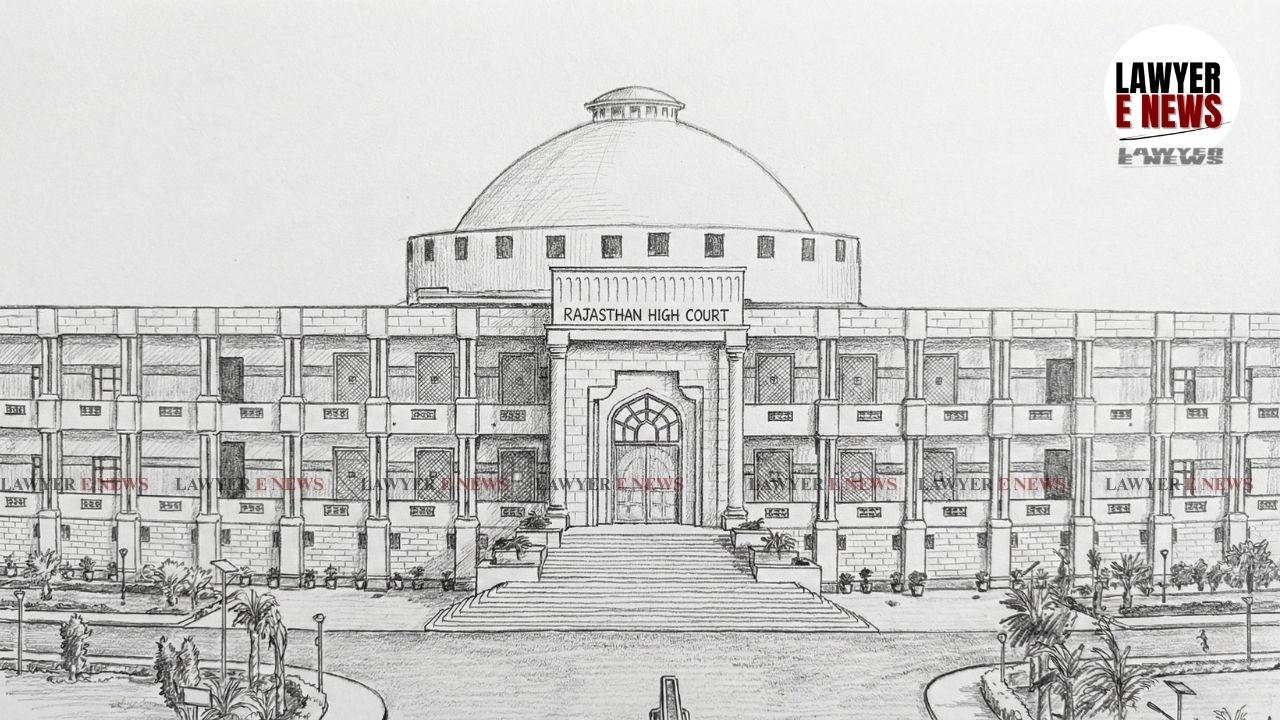
"Support Young Advocates Today To Build A Better And Trusted Justice System For The Future", In a remarkable welfare-oriented order, the Rajasthan High Court on 11 February 2026 condoned a delay of 450 days in filing a motor accident compensation appeal, but coupled the relief with a progressive institutional direction for creation of a “Junior Advocates Welfare Fund for purchasing Law Books.”
Justice Anoop Kumar Dhand, while allowing the application under Section 5 of the Limitation Act, 1963, imposed a cost of Rs. 11,000/- to be deposited in the newly directed welfare fund and simultaneously issued comprehensive directions to support young and first-generation advocates across the State.
The Court held that although the explanation for delay was not satisfactory, the appeal involved important questions relating to adequacy of compensation under the Motor Vehicles Act, 1988, warranting condonation in the interest of justice.
The appellants–claimants had filed an appeal challenging the judgment dated 10.01.2017 passed by the Motor Accident Claims Tribunal, Dausa, seeking enhancement of compensation awarded to them.
However, the appeal was filed with a delay of 450 days. An application under Section 5 of the Limitation Act was moved, stating that the appellants were unable to contact their counsel and were unaware of the Tribunal’s judgment.
Counsel for the appellants submitted that the compensation awarded was inadequate and that important questions of law and fact were involved, necessitating consideration of the appeal on merits.
Court’s Observation On Delay And Condonation
Justice Dhand observed that the explanation offered for such an inordinate delay was not entirely convincing. The Court recorded:
“This Court is not satisfied with the reasons/explanation given for the inordinate delay of 450 days but looking to the fact that important questions of law and facts are involved in this appeal, the application stands allowed subject to deposition of cost of Rs. 11,000/- in the ‘Junior Advocates Welfare Fund for purchasing Law Books’.”
Thus, while exercising discretion under Section 5 of the Limitation Act, the Court balanced procedural discipline with substantive justice.
The appeal was directed to be restored upon production of receipt showing deposit of the cost amount.
Welfare Vision For Young Advocates – Court’s Institutional Concern
What makes the order significant is the Court’s extensive observations on the struggles faced by young lawyers.
Justice Dhand emphatically observed:
“Helping Young Advocates is not a favor. There is a need for a better justice system.”
The Court noted that first-generation and young advocates often face financial hardship, lack of mentorship, inadequate seating facilities, and inability to purchase essential law books. It recognized that many young lawyers work long hours with minimal income and limited resources.
The Court remarked:
“A strong legal system needs strong Young Advocates. If they get proper support in the beginning, they can become honest and skilled professionals.”
It further observed that financial insecurity forces some talented young advocates to leave the profession and that small institutional support could make a significant difference in their professional development.
The Court stressed that welfare measures for junior advocates are not charity but “a necessity for institutional growth.”
Creation Of Junior Advocates Welfare Fund
In a detailed set of directions, the Court ordered the President and Secretary of the Rajasthan High Court Bar Association, Jaipur, to create a separate bank account titled “Junior Advocates Welfare Fund for purchasing Law Books” in the SBI High Court Branch, Jaipur.
The fund is intended to provide one-time financial assistance of Rs. 5,000/- to eligible junior advocates who:
Are below 28 years of age
Have practiced for at least one year but not more than five years
The disbursement is to be made on a first-come-first-serve basis from a list prepared by the Bar Association. The Court directed that compliance be reported before it.
Directions For Statewide Scheme – “The Rajasthan Advocates (Aid to Purchase Law Books) Scheme”
Going beyond the individual case, the Court directed the State Government, Bar Council of Rajasthan, Bar Council of India, and Bar Associations across the State to frame a structured welfare scheme titled:
“The Rajasthan Advocates (Aid to Purchase Law Books) Scheme.”
The proposed scheme is to include:
Constitution of a Purchase Committee at district and local levels
One-time aid of Rs. 5,000/- to eligible junior advocates
Mandatory submission of purchase receipts within one month
Recovery mechanism with 12% interest in case of misuse
Inspection of library maintained by beneficiary advocates
Provision for voluntary annual contributions from designated senior advocates
The Court mandated that all funds deposited pursuant to court orders, voluntary contributions, or governmental support must be utilized exclusively for welfare of young advocates.
Copies of the order were directed to be sent to the Chief Secretary, Principal Law Secretary, Bar Council of India, Bar Council of Rajasthan, and concerned Bar Associations for necessary action.
The Rajasthan High Court condoned the 450-day delay in filing the motor accident appeal subject to deposit of Rs. 11,000/- in the newly created welfare fund. The appeal is to be restored upon compliance.
More significantly, the judgment marks a progressive step towards institutional support for junior advocates. By linking procedural relief with systemic reform, the Court underscored that strengthening young lawyers is integral to strengthening the justice delivery system itself.
As the Court eloquently observed:
“Support Young Advocates today to build a better and trusted justice system for the future.”
Date of Decision: 11 February 2026