
-
by sayum
25 August 2026 12:32 PM







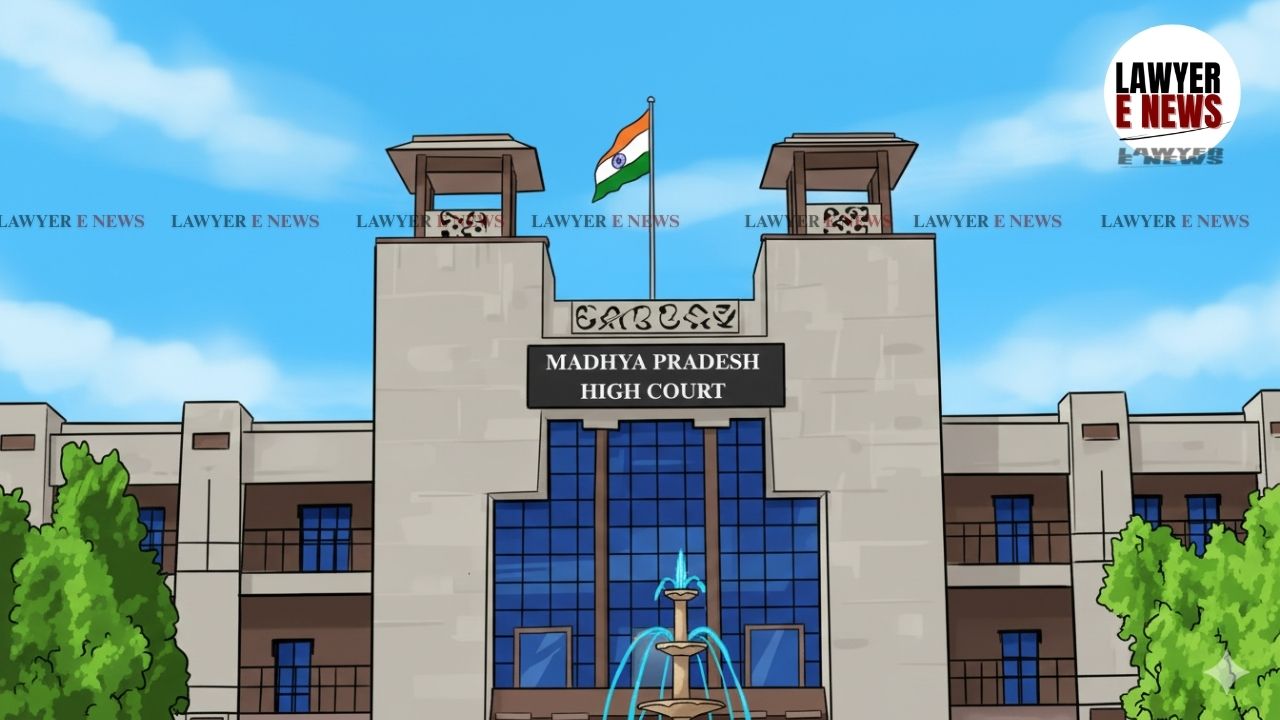
“Justice Hurried Is Justice Buried”, In a significant reaffirmation of the accused’s right to test scientific evidence, the Madhya Pradesh High set aside the trial court’s refusal to summon and examine a forensic expert whose DNA report formed part of the prosecution case.
Hon’ble Justice Avanindra Kumar Singh held that although Section 293 Cr.P.C. permits a Government Scientific Expert’s report to be read in evidence without formal proof, the provision does not extinguish the court’s discretion to summon and examine the expert when the accused disputes the report. The Court emphasized that “when DNA report is objected and accused wants to examine the expert witness… the application cannot be rejected on technical grounds.”
The revision was allowed and the matter remitted to the trial court for recording expert evidence.
Defence Evidence Denied in the Name of Expeditious Disposal
The applicant had moved applications under Sections 91 and 233 Cr.P.C., and later under Sections 256 and 94 of the Bharatiya Nagarik Suraksha Sanhita, 2023, seeking to summon and examine the forensic expert and other defence witnesses. The trial court dismissed the applications, holding that the FSL report was admissible under Section 293 Cr.P.C. and that the case was among the “oldest 100 cases” requiring disposal within six months.
The High Court noted that no specific direction in the applicant’s case mandated hurried disposal, and that general administrative targets could not override the right to fair defence.
“Admissibility Is Not Immunity”: Scope of Section 293 Cr.P.C.
Reproducing Section 293 Cr.P.C., the Court highlighted sub-section (2), which expressly provides that “the Court may, if it thinks fit, summon and examine any such expert.”
Justice Singh clarified that the statutory admissibility of a forensic report does not mean that its contents are beyond challenge. Where the accused disputes the DNA findings and seeks to cross-examine the expert, denial of such opportunity affects the fairness of trial.
The Court referred to the Division Bench decision in In Reference v. Anokhilal, where objection to a DNA report resulted in remand for examination of the expert and fresh consideration of evidence.
The High Court observed that “when accused do not object on the DNA report then DNA report can be accepted… but when it is objected… the application cannot be rejected on technical grounds like why application was not filed earlier or document can be accepted under Section 293.”
Supreme Court on DNA Evidence: “Mere Exhibiting a Document Would Not Prove Its Contents”
The Court relied heavily on the three-Judge Bench decision in Rahul v. State of Madhya Pradesh, (2023) 1 SCC 83, where the Supreme Court cautioned that “mere exhibiting a document, would not prove its contents.”
In that case, the Supreme Court found the DNA evidence vulnerable due to doubts regarding sample collection, sealing, and chain of custody. It observed that courts must examine whether scientific techniques were “reliably applied” and whether foundational facts were properly established.
Justice Singh echoed this caution, implying that mechanical reliance on DNA reports without permitting adversarial testing would undermine criminal jurisprudence.
Trial Judge Not a “Passive Umpire”: Section 165 Evidence Act Recalled
The High Court invoked Section 165 of the Indian Evidence Act and referred to State of Rajasthan v. Ani alias Hanif and Ram Chander v. State of Haryana, reiterating that a trial judge is not expected to remain mute during trial.
Quoting the Supreme Court’s observations, the judgment recalled that a judge must not act merely as a “spectator or a mere recording machine” but must actively participate to elicit the truth.
This principle, the Court implied, becomes even more significant in cases involving scientific evidence, where scrutiny of methodology and foundational facts is crucial.
“Justice Delayed Is Justice Denied, But Justice Hurried Is Justice Buried”
Addressing the trial court’s reliance on administrative directions for speedy disposal, the High Court delivered a pointed reminder:
“Hon’ble Supreme Court or Hon’ble High Court generally when directing the quick disposal of the cases never mean that trial has to be conducted in a hurried manner and not afford proper opportunity to any party.”
The Court memorably observed that while “justice delayed is justice denied,” it must be read conjointly with the equally vital principle that “justice hurried is justice buried.”
Thus, procedural efficiency cannot eclipse the constitutional mandate of a fair trial.
Setting aside the impugned orders dated 28.08.2024 and 03.09.2024, the High Court directed the trial court to summon and examine the forensic expert and other witnesses as prayed for, record their statements in accordance with law, and thereafter proceed to decide the case finally.
The judgment stands as a reaffirmation that scientific evidence, including DNA reports, cannot be insulated from scrutiny merely because it is statutorily admissible. By restoring the accused’s right to test expert evidence, the Madhya Pradesh High Court has reinforced that fairness in criminal trial is not a procedural luxury but a constitutional necessity.
Date of Decision: 13/02/2026





