-
by sayum
25 August 2026 12:32 PM







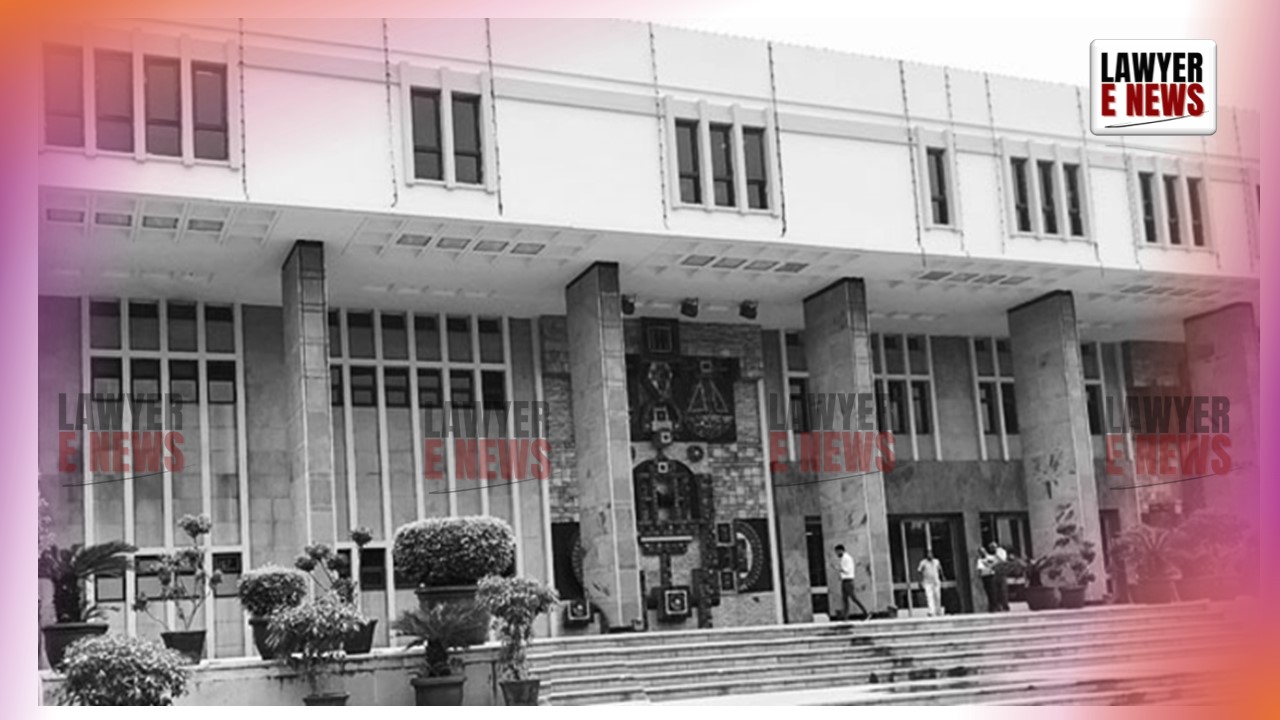
“Failure to Apply Section 19 of Limitation Act Resulted in Manifest Error”, In a significant judgment clarifying the computation of limitation in banking recovery suits, the Delhi High Court ruled in favour of Federal Bank Ltd., overturning a Commercial Court’s decision that had dismissed the bank’s suit for being time-barred.
Division Bench of Justice Anil Kshetarpal and Justice Amit Mahajan held that “each payment made before the expiry of limitation gives rise to a fresh period of limitation,” and observed that the lower court had “manifestly erred” by failing to apply Section 19 of the Limitation Act.
“The Commercial Court Erred in Treating Expiry of Sanction Period as the Cut-Off Without Considering Part-Payments”
The case arose from a suit filed by Federal Bank for recovery of ₹10,91,115 from the legal heirs of late Mr. B.M. Bajaj, the proprietor of M/s Zen Electricals, to whom a cash credit facility had been sanctioned in 2010 under the CGTMSE scheme. Despite classification of the account as a Non-Performing Asset (NPA) in February 2016, several part-payments were made by the borrower and his successors, the last being in September 2016.
However, the Commercial Court, while dismissing the suit on 13 February 2023, held that the loan became due upon the expiry of the initial sanction period of 30 months (i.e., on 20 August 2012), and since there was no document of renewal on record, the claim stood barred by 2015. The Court refused to give effect to the continuing part-payments or the proceedings earlier instituted before the DRT.
Overturning this view, the High Court held:
“Once part-payments within limitation are admitted or established from the record, the consequence under Section 19 of the Limitation Act follows as a matter of law... The finding that the suit was barred by limitation cannot, therefore, be sustained.”
Part-Payments Extend Limitation; DRT Proceedings Exclude Time
The High Court noted that several payments were made after 2012, including ₹4,00,000 in July 2014, ₹3,50,000 in August 2014, and ₹8,00,000 in June 2016. Since each of these payments was within a subsisting period of limitation, a fresh limitation period began from each date.
Importantly, the Court also held that the time spent prosecuting the same claim before the Debt Recovery Tribunal (DRT) from 2018 to 2020 must be excluded under Section 14 of the Limitation Act, since the DRT proceedings were bona fide and ultimately returned due to a change in pecuniary jurisdiction:
“The Appellant is entitled to the benefit of Section 14... There is nothing on record to indicate any lack of bona fides or diligence. The period from 23.05.2018 to 18.12.2020 is liable to be excluded while computing limitation.”
Consequently, the suit instituted on 6 September 2021 was held to be well within the limitation period.
Statement of Account Supported by Certificate Under Section 65B Remains Unchallenged – Rejection on Technical Grounds Unsustainable
The High Court also criticised the Commercial Court’s refusal to rely on the statement of account merely because the facility had not been “formally renewed”:
“Such continued debit and credit entries prima facie indicate that the account remained operational and that the parties continued to act upon the underlying contractual relationship.”
“In ex parte proceedings... the Commercial Court was not justified in discarding such primary documentary evidence on conjectural or hyper-technical grounds.”
The bank had submitted the statement of account along with a certificate under Section 65B of the Evidence Act, which remained unrebutted. The Court reiterated that such evidence is admissible and reliable in civil proceedings, especially when not challenged.
Legal Heirs Liable to Extent of Estate – Absence of Death Certificate Not Fatal in Ex Parte Suit
Rejecting another ground cited by the Commercial Court—namely, the absence of the borrower’s death certificate and proof of inheritance—the High Court clarified that in the absence of denial or appearance by the legal heirs (who were served but remained ex parte), the Court should have proceeded based on the unchallenged record:
“The non-filing of the death certificate and the absence of specific details regarding devolution of estate could not have constituted valid grounds for dismissal... These are matters that can be examined at the stage of execution.”
It reiterated that legal heirs can be held liable to the extent of the estate they inherit, and there is no requirement at the suit stage for a plaintiff to establish the exact extent of inheritance unless contested.
Change in Authorized Bank Officer Not a Defect – Corporate Entities Can Act Through Different Officials
Addressing the Commercial Court’s finding that the suit was instituted by one official while evidence was tendered by another, the High Court held that such representation does not affect the validity of proceedings if both were duly authorised:
“It is well settled that in the case of corporate entities and banks, different officials may represent the institution at different stages... the change in representation does not, by itself, invalidate the proceedings.”
The Court found no infirmity in the authorization placed on record, holding that the affidavit of evidence sufficiently identified the representative’s authority.
Commercial Court’s Approach Found “Unduly Technical and Restrictive” – Decree Restored in Favour of Bank
In a stinging critique of the trial court's methodology, the Division Bench found that:
“The cumulative effect of the aforesaid errors has resulted in dismissal of a claim which was otherwise supported by documentary evidence and remained unrebutted.”
Allowing the appeal, the High Court decreed the suit for ₹10,91,115 along with pendente lite and future interest at 13.25% per annum with monthly rests, as per contractual terms.
The liability of the legal heirs, however, was explicitly limited “only to the extent of estate inherited by them and not to their personal assets.”
Date of Decision: 06 February 2026