-
by sayum
24 August 2026 3:22 PM







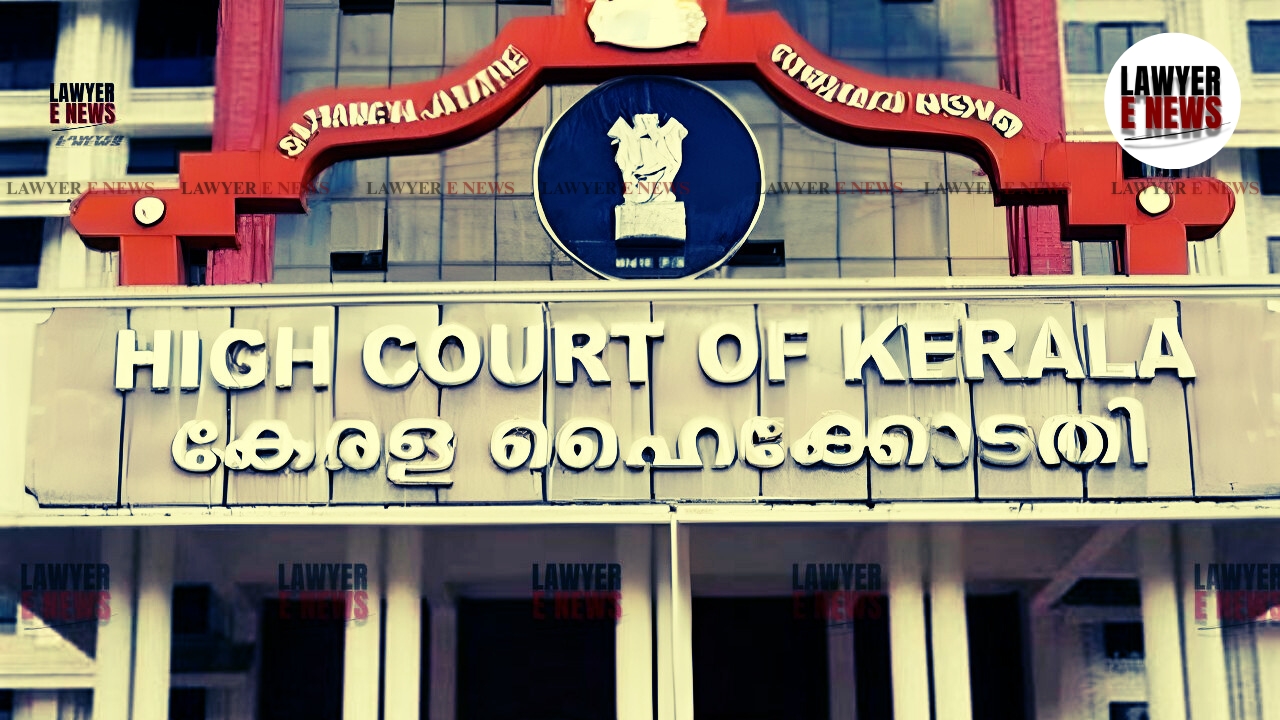
“Entertaining a writ petition in such circumstances would permit the statutory mechanism established by the concerned enactment to be bypassed” — In a significant reaffirmation of judicial restraint in writ jurisdiction, the Kerala High Court set aside the order of a Single Judge who had directed restoration of a consumer complaint dismissed for non-prosecution by the State Consumer Disputes Redressal Commission, Thiruvananthapuram.
A Division Bench comprising Justice Sushrut Arvind Dharmadhikari and Justice P. V. Balakrishnan held that the learned Single Judge erred in entertaining the writ petition under Article 226 when an effective statutory remedy of revision under Section 58(1)(b) of the Consumer Protection Act, 2019 was clearly available to the complainants before the National Consumer Disputes Redressal Commission (NCDRC).
“Dismissal for Non-Prosecution Is Not Final — But Remedy Lies in National Commission, Not in Writ Court”
The genesis of the dispute lies in the dismissal of Complaint No. 9/2021 by the State Commission on 21.03.2024 for non-prosecution, which led the original complainants (respondents in this appeal) to invoke writ jurisdiction before the High Court. The Single Judge, by judgment dated 12.06.2025, had quashed the dismissal and directed the State Commission to restore the complaint to its file and decide it on merits, holding that under Sections 38(2)(c) and 49 of the Consumer Protection Act, a consumer complaint cannot be dismissed for mere absence of the complainant.
The Division Bench, however, disagreed with this approach, observing that even if the Commission erred in dismissing the complaint, the aggrieved parties should have pursued the revision remedy before the National Commission under Section 58(1)(b), which expressly provides for interference where the State Commission has acted without or in excess of jurisdiction.
“Admittedly, even if the order passed by the State Commission may have been in exercise of jurisdiction not vested in it by law, Section 58(1)(b) clearly confers on the National Commission the power to examine the issue of jurisdiction,” the Bench noted.
“Writ Petition Was Not Maintainable – Statutory Framework Cannot Be Bypassed”
Placing reliance on the Supreme Court's decision in Rikhab Chand Jain v. Union of India, 2025 SCC OnLine SC 2510, the High Court underlined that judicial review under Article 226 is not meant to circumvent existing statutory remedies, especially when the statutory scheme itself provides a comprehensive appellate and revisional mechanism.
“The principle, plainly, is that where a remedy is available to a party before the High Court in another jurisdiction, the writ jurisdiction under Article 226 should not normally be invoked,” the Division Bench quoted from the Apex Court decision.
It was also pointed out that a Division Bench of the Kerala High Court, in Regional Cancer Centre, Thiruvananthapuram v. Kerala State Consumer Disputes Redressal Commission, had already clarified that writ petitions are not maintainable against orders of consumer commissions, especially when an effective remedy under the Consumer Protection Act exists.
The Court thus held:
“In such a situation, the learned Single Judge ought not to have entertained the writ petition. The respondents have an alternative efficacious remedy under Section 58(1)(b) of the Consumer Protection Act to approach the National Commission for redressal of their grievance.”
Consumer Law and Procedural Clarity: No Appeal Lies Against Dismissal for Default, But Revision Does
One of the key legal questions was whether the dismissal for non-prosecution is appealable. The respondents had argued that no appeal lies under Section 51 of the Act against an order of dismissal for non-prosecution. However, the Court clarified that even in such a situation, Section 58(1)(b) provides an adequate revisional remedy:
“Even if the dismissal was for non-prosecution, revision before National Commission could have addressed alleged jurisdictional irregularity,” the Court emphasized, citing the legislative intent behind granting wide supervisory powers to the National Commission.
This interpretation clarifies a grey area in consumer litigation: though dismissal for default may not be appealable under Section 51, it is still amenable to revisional scrutiny under Section 58(1)(b)—thus excluding the necessity of invoking Article 226.
Single Judge’s Order Set Aside – Liberty to Approach National Commission with Time Protection
Ultimately, the Division Bench allowed the writ appeal, quashing the learned Single Judge’s order. However, in a balancing gesture, it granted liberty to the respondents to approach the National Commission within 30 days, and crucially, directed that the time spent in the High Court proceedings (both writ petition and writ appeal) be excluded from the computation of limitation under Section 58(1)(b):
“The period spent before this Court in prosecuting the writ petition as well as the writ appeal shall not be taken into account by the National Commission while considering any application for condonation of delay,” the Bench ordered.
A Message to Litigants and Practitioners: Procedural Discipline Must Be Respected
This judgment reinforces a clear procedural discipline in consumer litigation and writ jurisprudence:
From the perspective of advocates and consumer law practitioners, this decision provides much-needed clarity on the limits of writ jurisdiction in consumer disputes and re-emphasizes that judicial review is not a substitute for statutory forums.
Date of Judgment: 25 November 2025