-
by sayum
26 October 2026 4:04 PM








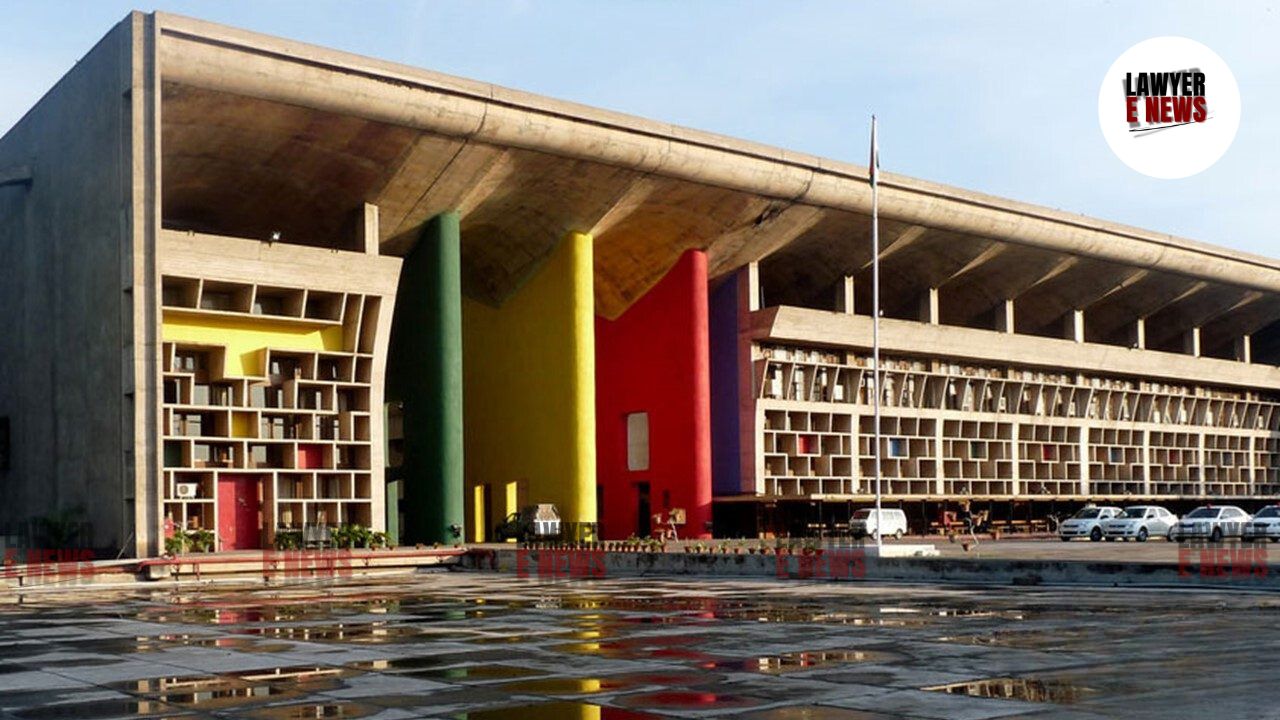
"In the absence of any cogent explanation, the delay cannot be treated as a mere procedural irregularity and a litigant who has remained indolent and allowed his claim to become stale cannot as a matter of right, seek interference of this Court." Punjab & Haryana High Court, in a ruling dated 10 September 2026, held that an employee who remains silent for years and approaches the Court only after superannuation cannot invoke extraordinary writ jurisdiction under Article 226 of the Constitution of India to challenge disciplinary proceedings.
Dismissing the petition, Justice Namit Kumar observed that such "belated invocation" of jurisdiction, absent any satisfactory explanation for the prolonged inactivity, defeats the principles of equitable relief.
The petitioner, a former employee of the Punjab State Power Corporation Limited, challenged a 2019 appellate order that had modified his punishment from demotion to the stoppage of one annual grade increment. Although the appellate order was passed while a previous writ petition was pending—which the petitioner chose not to amend—the petitioner waited until July 2026 to file the current challenge, nearly seven years after the appellate order and long after his retirement in September 2025.
The primary question before the court was whether a petition challenging disciplinary orders is maintainable when filed after an inordinate delay of seven years and post-superannuation, despite the petitioner having had prior opportunities to agitate the grievance.
Doctrine of Laches
The Court emphasized that delay and laches remain critical factors in the exercise of discretionary power under Article 226. Referring to the Supreme Court’s judgment in Yunus (Baboobhai) A Hamid Padvekar v. State of Maharashtra, the Bench reiterated that the High Court does not ordinarily assist the "tardy and the indolent." The Court highlighted that the doctrine of laches is not merely a technical rule but a substantial equitable principle designed to prevent the reopening of stale claims that cause prejudice to the opposite party.
Bold pull-quote: "The High Court does not ordinarily permit a belated resort to the extraordinary remedy because it is likely to cause confusion and public inconvenience and bring in its trail new injustices."
Absence of Justification
The petitioner failed to provide a cogent explanation for his seven-year silence. The Court noted that even after his earlier writ petition was dismissed as infructuous in 2023 with liberty to challenge the appellate order, the petitioner remained inactive for another three years. By failing to act despite receiving the appellate order in 2019, the petitioner demonstrated a lack of vigilance, rendering his claim "stale and dead."
Bold pull-quote: "Such an unexplained and prolonged delay renders the petitioner's claim liable to be rejected on the ground of delay and latches."
Judicial Precedents on Stale Claims
The Court drew extensively from established jurisprudence, including Ram Kumar v. State of Haryana and Chairman, U.P. Jal Nigam v. Jaswant Singh. These precedents establish that employees who acquiesce to disciplinary outcomes and accept retiral benefits cannot later wake up to challenge them simply because they seek to gain impetus from other legal developments or remain dissatisfied with their service record post-retirement. The court affirmed that discretionary relief is exclusively for those who remain vigilant of their rights.
Finding the petition to be a "misadventure" and an attempt to resurrect a stale claim, the Court dismissed the writ petition. Furthermore, acknowledging the burden on judicial time caused by such belated filings, the Court imposed costs of Rs. 25,000 upon the petitioner, payable to the High Court Lawyers Welfare Fund, with directions for recovery as arrears of land revenue in the event of non-compliance.
Date of Decision: 10 September 2026