-
by sayum
25 October 2026 2:15 PM







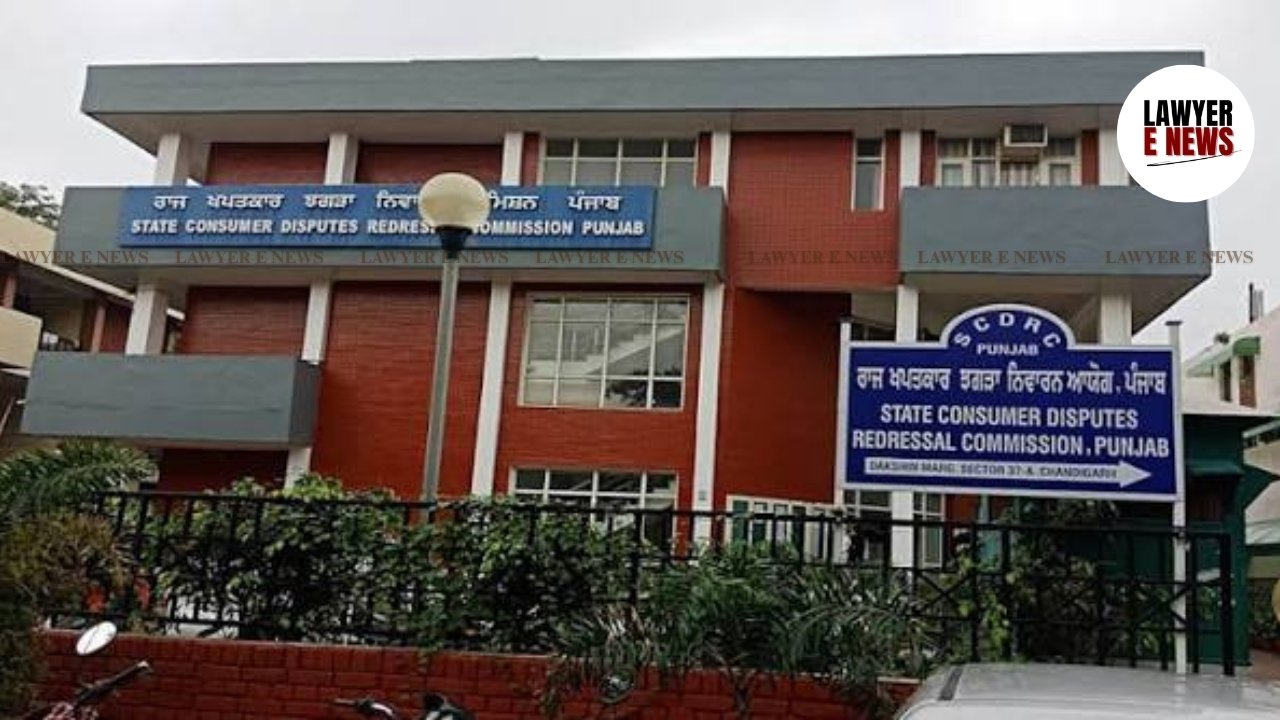
"The extensions given by the RERA for registration of the project has no correlation with the delay in construction of flats as no documentary evidence has been placed on record as to why the OPs were unable to carry on the construction work due to any alleged force majeure condition." State Consumer Disputes Redressal Commission, Punjab, in a significant ruling, held that a real estate developer cannot invoke the 'Force Majeure' clause to justify delayed possession if the Builder-Buyer Agreement was executed after the conclusion of the COVID-19 pandemic-related lockdowns.
A bench comprising Hon’ble Mrs. Justice Daya Chaudhary (President), Ms. Simarjot Kaur, and Mr. Vishav Kant Garg observed that builders cannot unilaterally withhold possession or demand additional charges without securing a valid Completion and Occupation Certificate as mandated by the Punjab Apartment and Property Regulation Act (PAPRA).
The complainant, Anupama Mahajan, booked a residential unit in the project "The Lake" by Omaxe New Chandigarh Developers Private Limited, paying a total of Rs. 66,71,823.81. Although the possession was contractually promised by July 31, 2023, the developers failed to deliver the unit or obtain the necessary Occupation Certificate. The complainant alleged that she was forced to continue living in rented accommodation and suffered financial losses, including tax liabilities, due to the builder's failure to adhere to the delivery schedule.
The Commission was called upon to determine whether the developer committed "deficiency in service" and "unfair trade practice" by delaying possession. Further, it examined whether the Force Majeure clause could be invoked to waive interest on delayed possession, whether the complaint was barred by an arbitration clause, and whether the company's directors could be held personally liable.
Jurisdiction and Consumer Status
The Commission rejected the developer’s contention that the complainant was not a 'consumer' or that the dispute was subject to mandatory arbitration or RERA-exclusive adjudication. Relying on the Supreme Court's mandate in Experion Developers Pvt. Ltd. v. Sushma Ashoka Shiroor, the bench reaffirmed that the Consumer Protection Act, 2019, provides concurrent remedies that operate independently of the RERA Act. The court clarified that an arbitration clause in a buyer's agreement cannot oust the jurisdiction of Consumer Fora.
Builder’s Liability for Delay
The Commission emphasized that the onus of proving the status of construction and the validity of the Force Majeure claim rests entirely upon the developer. Finding that the agreement was executed in March 2022—well after the peak of the pandemic—the bench held that the developer failed to provide any evidence justifying the delay.
"The extensions given by the RERA for registration of the project has no correlation with the delay in construction of flats as no documentary evidence has been placed on record as to why the OPs were unable to carry on the construction work," the Commission observed.
Statutory Mandate for Occupation Certificates
The bench underscored that under Section 14 of the PAPRA, a developer is legally obligated to obtain Completion and Occupation Certificates before offering possession. Quoting Clause 3.12(i) of the Punjab Government’s notification, the court reiterated that no person can be forced to occupy a building that has not been certified as fit for use by the local authority.
Liability of Company Directors
Regarding the misjoinder of parties, the Commission rejected the application to delete the names of the Company’s Directors and CEO. Citing its previous ruling in Dr. Renuka Sharma v. M/s Omaxe Chandigarh Extension, the bench held that officers in such pivotal positions are directly involved in decision-making and are jointly and severally liable for the company's acts of deficiency in service.
Quantum of Compensation
Finding the developer guilty of deficiency in service, the Commission directed the delivery of physical possession within 45 days. It awarded interest at 9% per annum as compensation for the delayed period, noting that this rate aligns with recent precedents set by the National Commission. The bench further directed the developer to pay Rs. 1,00,000 for mental agony and Rs. 50,000 as litigation costs.
Date of Decision: 22 September 2026