-
by sayum
25 October 2026 7:42 AM







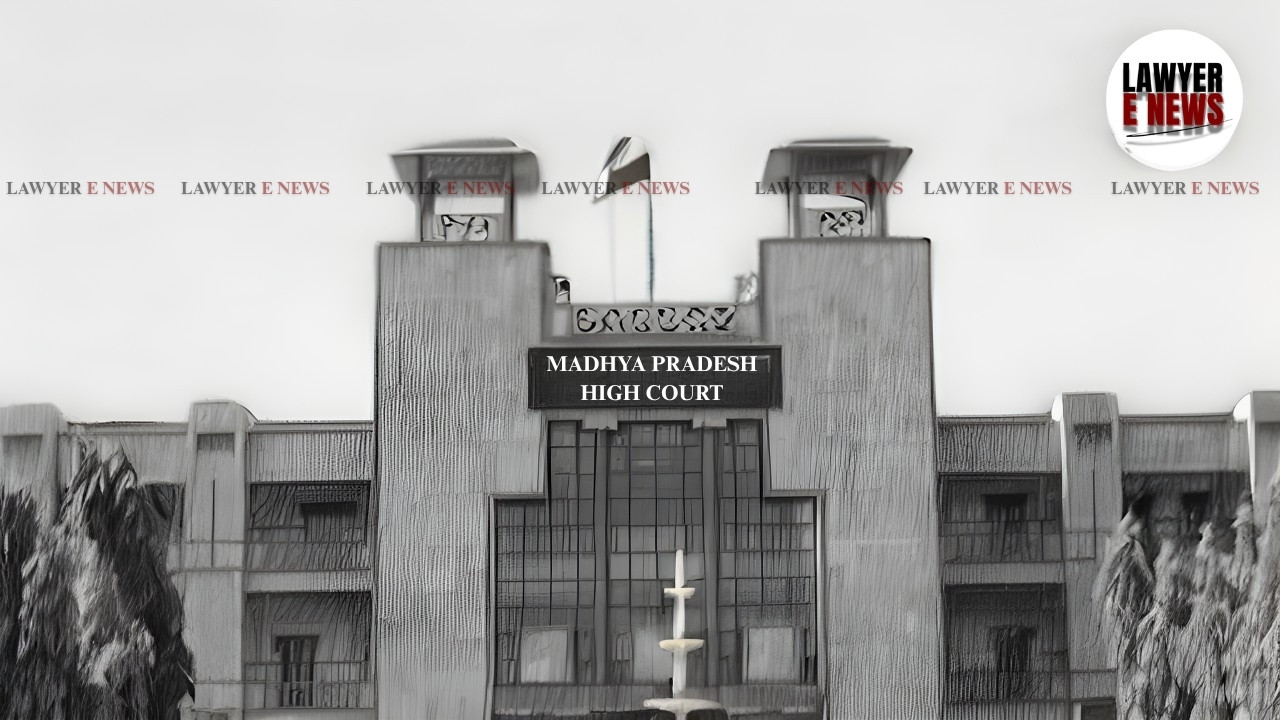
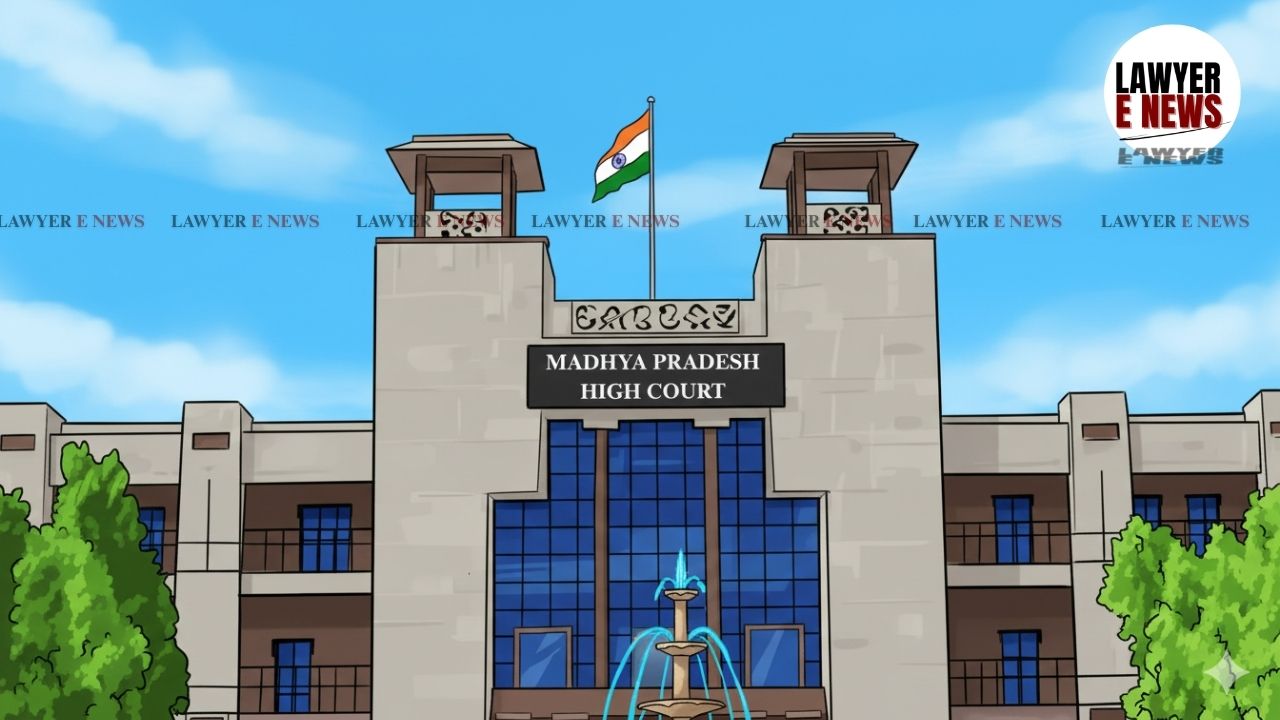
"The liability of the Insurance Company will depend upon the terms and conditions of the insurance policy and only by mentioning the policy as Comprehensive / Package Policy in itself will not cover the unlimited risk of the passenger in a vehicle." Madhya Pradesh High Court, in a significant ruling on motor accident compensation, held that an insurance company cannot be saddled with unlimited liability towards passengers in a private vehicle merely because the policy is labeled as a "Comprehensive / Package Policy", unless an additional higher premium was specifically paid to cover unlimited risk.
A single bench of Justice Vinay Saraf observed that the insurer's liability is strictly circumscribed by the premium paid and the explicit contractual terms of the policy schedule, affirming the Claims Tribunal's order restricting the insurance company's exposure to ₹1,00,000.
The proceedings arose from a fatal road accident on February 20, 2012, wherein deceased Ravindra Shah, travelling with the President of M.P. State Mining Corporation Limited from Indore to Bhopal, died on the spot after their car overturned due to rash and negligent driving. The legal heirs filed a claim under Section 166 of the Motor Vehicles Act, 1988, following which the Motor Accident Claims Tribunal, Indore awarded ₹28,86,616 as compensation but limited the insurer's liability to ₹1,00,000, holding the vehicle owner and driver liable for the remaining amount. Aggrieved by this limitation, the vehicle owner filed an appeal seeking total indemnification by the insurer, while the claimants appealed for unlimited insurer liability along with enhancement of compensation.
The primary questions before the High Court were whether an insurer under a Comprehensive/Package Policy is under an automatic obligation to satisfy the entire compensation award towards vehicle occupants irrespective of the premium schedule, and whether the quantum of compensation awarded by the Tribunal required enhancement under conventional heads and future prospects.
Terms Of Policy Govern Insurer's Exposure Towards Occupants
The Court meticulously examined the legal principles governing third-party risks and comprehensive policies under the Motor Vehicles Act, 1988. Justice Saraf observed that the scope of coverage is fundamentally rooted in the contract of insurance and the corresponding premium collected by the insurance company. The Court noted that in the absence of a specific contractual undertaking backed by higher premium, the insurer cannot be compelled to bear unlimited liability beyond the policy terms.
"In the case in hand, the Insurance Company collected the premium of Rs. 200/- for the risk of four passengers in the vehicle and the liability was covered up to Rs. 1,00,000/- per passenger only."
Absence Of Higher Premium Precludes Unlimited Indemnification
Addressing the contentions of the vehicle owner, the Court analyzed the schedule of premium in the insurance policy, which explicitly recorded "PA to Unnamed Passengers Number 4, Amount 100000 Per Person - 200.00". The bench underlined that the owner had paid an additional premium of only ₹200 to cover the risk of four passengers up to ₹1,00,000 each. Relying on the landmark Supreme Court ruling in New India Assurance Co. Ltd. v. C.M. Jaya and Others, the Court reiterated that while an insured can pay higher premium to cover higher risk, the insurer remains bound only up to the statutory or contractual limit where no higher liability is purchased.
The High Court also distinguished the IRDA circulars dated November 16, 2009 and December 3, 2009, and the Supreme Court's decision in National Insurance Company Limited v. Balakrishnan and Another. The bench observed that while a package policy covers occupants, the extent and monetary ceiling of such coverage must still be determined by scanning the precise terms and schedule of the policy itself.
"If the terms and conditions of the policy provides unlimited liability of the Insurance Company, then only the Insurance Company will be liable for payment of the entire compensation, otherwise the liability of the Insurance Company will be limited up to the terms of the policy."
"The owner had not paid the higher premium for covering unlimited risk and in the absence of payment of higher premium, the Insurance Company cannot be held liable for payment of entire compensation amount to the claimants."
Compensation Enhanced In Accordance With Pranay Sethi Precedent
Turning to the claimants' plea for enhancement, the Court noted that the deceased was 51 years old and working as an Assistant Editor with Outlook Publication Pvt. Ltd., drawing a net monthly salary of ₹31,382. Although the claimants contended that the deceased earned additional income as a professor, journalist, and anchor, the bench found no documentary evidence supporting such additional earnings prior to the accident.
Applying the Constitution Bench dictum in National Insurance Co. Ltd. v. Pranay Sethi & Ors., the Court held that 15% future prospects ought to have been added to the income of the deceased. The High Court further awarded ₹1,60,000 towards loss of consortium at ₹40,000 for each of the four claimants, ₹15,000 for loss of estate, and ₹15,000 towards funeral expenses, thereby enhancing the total compensation by ₹8,76,217 to a total sum of ₹37,62,833.
The High Court accordingly dismissed the appeal filed by the vehicle owner while partly allowing the claimants' appeal by enhancing the compensation to ₹37,62,833 with 6% interest per annum. The Court affirmed that United India Insurance Company's liability remains capped at ₹1,00,000, leaving the remaining enhanced sum to be satisfied by the owner and driver of the offending vehicle.
Date of Decision: 19 August 2026