-
by sayum
25 October 2026 3:59 PM







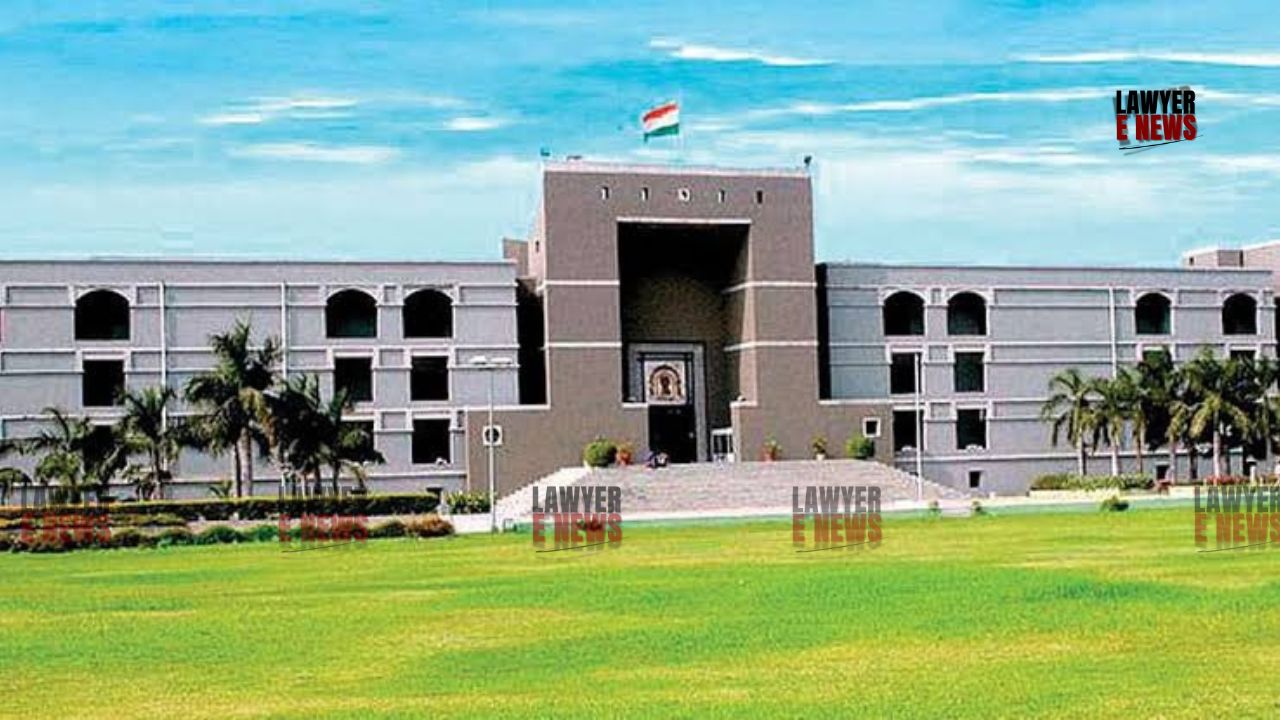
"If the allegation of misconduct constitutes the foundation of the action taken, the ultimate decision taken by the competent authority can be nullified on the ground of violation of the rules of natural justice." Gujarat High Court, in a ruling, held that the discharge of a probationer on grounds of alleged misconduct, without conducting an inquiry or issuing a show-cause notice, is legally unsustainable as it renders the discharge order stigmatic and punitive.
A bench of Justice Maulik J. Shelat affirmed that while a probationer has no vested right to a post, the constitutional protection against arbitrary state action necessitates compliance with the principles of natural justice when the termination is predicated on specific allegations of misconduct.
The respondent, an unarmed constable, was discharged from service during his probation period following a scuffle at a training center. The authorities issued the discharge order explicitly citing this incident of "misconduct" as the reason for his removal, without initiating any departmental inquiry or providing the employee an opportunity to defend himself. Challenging this as illegal and unconstitutional, the plaintiff filed a civil suit, which was initially dismissed by the trial court but subsequently allowed by the Appellate Court, leading to the current second appeal by the State authorities.
The primary question before the court was whether the appellate court was justified in overturning the trial court’s dismissal of the suit. Additionally, the court examined whether the civil court possessed the requisite jurisdiction to adjudicate upon the validity of a service termination order and grant the consequential relief of reinstatement.
Nature of Stigmatic Discharge
The court emphasized that while a probationer’s service can generally be terminated without inquiry if the discharge is "simpliciter," the position changes drastically if the order is "stigmatic." If the authority relies upon specific allegations of misconduct to terminate the probationer, such an order effectively serves as a penalty. The court clarified that in such instances, the state is mandated to follow the principles of natural justice by issuing a show-cause notice and conducting an inquiry, regardless of the employee's probationary status.
Reliance on Established Precedent
The bench heavily relied on the Supreme Court’s decision in SBI v. Palak Modi, noting that the foundation of the action against the employee was his alleged misconduct. By referencing the recommendation of the head of the training center within the discharge order, the employer turned an otherwise routine assessment of suitability into a punitive action. Because the state could not produce any evidence showing that the respondent was given a fair opportunity to respond to these allegations, the court found the order to be in gross violation of the law.
"The reason of discharge was not unsuitability of the plaintiff... but the aforesaid reasons assigned while passing an order of discharge. If such would be the case, the principles of natural justice ought to have been observed by the defendant No.1."
Scope of Judicial Review in Second Appeal
Regarding the state’s contention that the civil court lacked jurisdiction, the court noted that the defendants failed to demonstrate that any specialized tribunal existed to exclusively resolve such service disputes, thereby confirming the civil court's jurisdiction. Furthermore, the court reiterated that under Section 100 of the CPC, the High Court’s scope is limited to substantial questions of law. Relying on Russi Fisheries (P) Ltd. v. Bhavna Seth and Jaichand v. Sahnulal, the court emphasized that it cannot reappreciate evidence or disturb findings of fact unless they are shown to be perverse or contrary to settled law.
The court held that since the findings of the Appellate Court were supported by the evidence and aligned with the constitutional requirement of fair procedure, no interference was warranted. The contention that the respondent had reached the age of 54 and should not be reinstated was rejected, as the court prioritized the legality of the initial discharge order over the passage of time. Consequently, the High Court dismissed the second appeal, confirming the Appellate Court's order for reinstatement with continuity of service.
Date of Decision: 23 September 2026