
-
by sayum
23 October 2026 6:29 PM







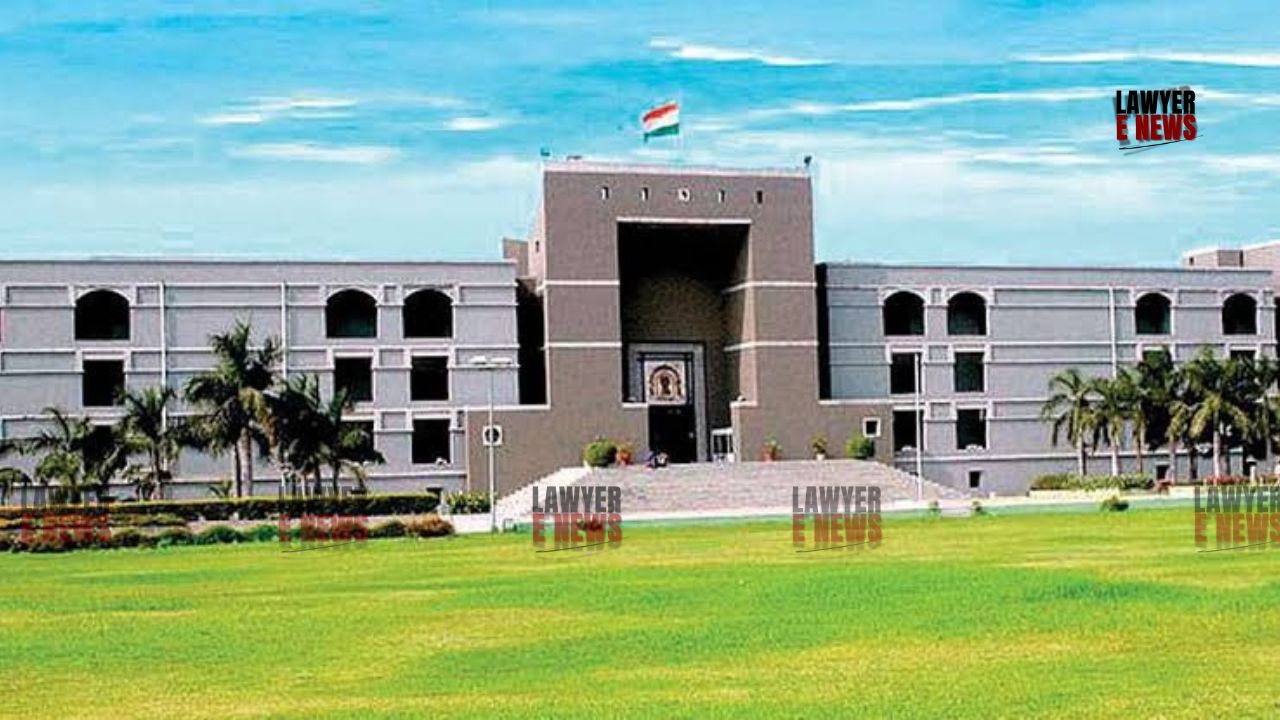
"A Judicial Officer should not associate himself with practicing advocates and has to maintain a distance from the advocates to prevent any impression of impropriety." Gujarat High Court dismissed a writ petition filed by a former Judicial Magistrate First Class challenging his removal from service, holding that a judicial officer's proximity to a practicing advocate and the acquisition of undisclosed assets constitutes conduct unbecoming of the office.
A bench of Justice N.S. Sanjay Gowda and Justice J.L. Odedra emphasized that judicial integrity requires strict adherence to conduct rules and the maintenance of a professional distance from the Bar.
The petitioner was suspended in 2008 following a vigilance inquiry into allegations of corrupt practices and misconduct during his tenure at Surat. A subsequent charge-sheet levied twelve charges against him, primarily concerning the use of "benami" mobile phones to communicate with litigants, failure to report the purchase and sale of movable properties, and procedural irregularities in handling cases under Section 138 of the NI Act. Following a departmental inquiry, a committee of two judges recommended dismissal, which was subsequently affirmed by the Full Court and the State Government.
The court was primarily tasked with determining whether the departmental findings regarding the petitioner’s misconduct were based on sufficient evidence and if the penalty of dismissal was proportionate to the proved charges. Additionally, the court addressed the extent of judicial interference under Article 226 of the Constitution of India concerning findings of fact in departmental proceedings.
The bench underscored that the High Court’s scope of interference in departmental matters is limited. It reiterated that it will not act as an appellate body to re-appreciate evidence or disturb factual findings recorded by an inquiry officer, unless the punishment is so disproportionate that it shocks the judicial conscience.
High Threshold For Judicial Conduct
Regarding the primary allegation of improper association with a practicing advocate, the court rejected the petitioner's defense that there was no proof of illegal gratification. It held that the mere act of a judge accepting a mobile phone and SIM card from a practicing lawyer at his station of posting is an act of the highest impropriety. The court noted that the sheer volume of 186 calls made to the advocate between June 2007 and March 2008 demonstrated a level of familiarity that fundamentally compromises the appearance of judicial neutrality.
Duty To Disclose Assets And Liabilities
The court further analyzed the violations of the Gujarat Civil Services (Conduct) Rules, 1971. The petitioner had failed to report multiple transactions involving the purchase and sale of motor vehicles and a personal bank loan. The court dismissed the argument that claiming a petrol allowance constituted constructive notice to the High Court. It ruled that statutory requirements for the disclosure of movable property and financial liabilities are mandatory and must be scrupulously followed by judicial officers to ensure transparency and accountability.
"This was not an isolated oversight or a slip on part of the judicial officer but consistent disregard to the statutory requirement."
Distinguishing Precedents
The court distinguished the petitioner's reliance on M.V. Bijlani v. Union of India, noting that while departmental proceedings are not criminal trials, the charges in this case—specifically the non-reporting of assets and loans—were essentially admitted by the petitioner. Furthermore, the court held that the protection afforded to honest judicial officers, as discussed in Yoginath D. Bagde v. State of Maharashtra, does not extend to officers whose conduct demonstrates a lack of integrity.
While the court acknowledged that a judge should not typically be disciplined for the mere act of passing an erroneous judicial order or choosing a specific procedure, it found that the other established charges were sufficient to warrant dismissal. The court concluded that the cumulative weight of the proved misconduct evidenced a lack of the high degree of integrity expected of a member of the judiciary. Consequently, the petition was dismissed, and the order of dismissal from service was upheld.
Date of Decision: 25 September 2026