-
by sayum
10 August 2026 1:57 PM







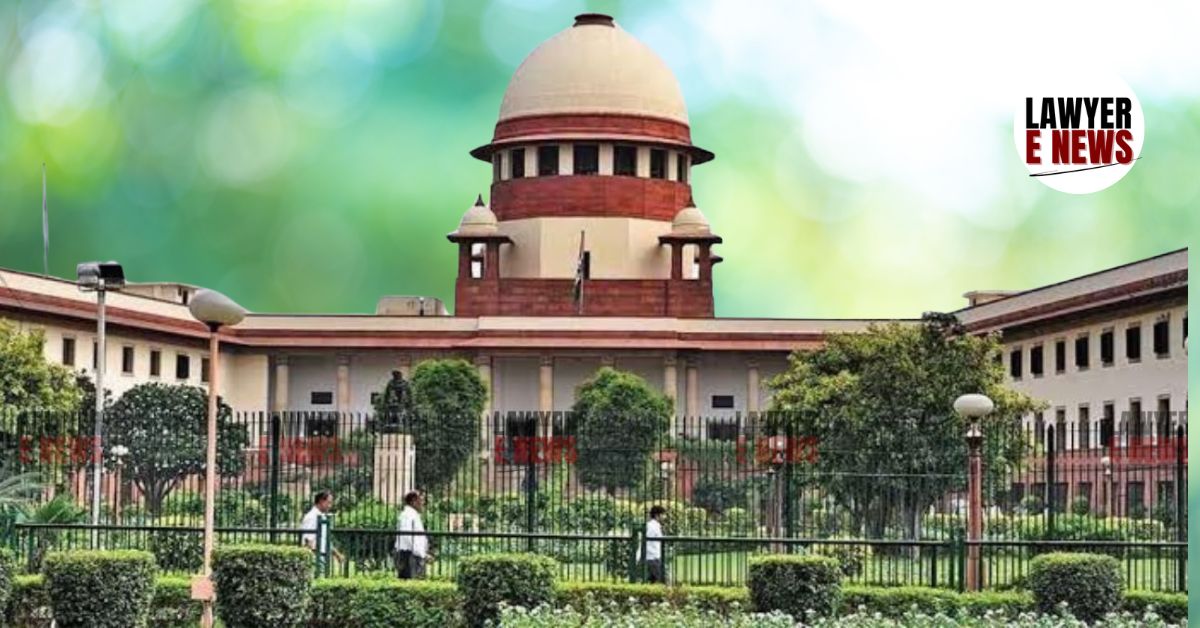
Prejudice Hidden in Confidential Reports Is the Most Dangerous Kind”: - In a strongly worded judgment Supreme Court of India corrected what it called a masked injustice in the career of Brigadier Sandeep Chaudhary, a decorated army officer who was denied promotion to the rank of Major General. Setting aside the partial relief earlier granted by the Armed Forces Tribunal, the Court held that when prejudice is concealed under the cover of procedural confidentiality, the justice system must intervene.
“The intent to affect lower figurative ratings was intentionally masked from the knowledge of the officer,” held the Bench of Justices Abhay S. Oka, Ahsanuddin Amanullah, and Augustine George Masih, as it ordered complete expunction of adverse entries from the officer’s Annual Confidential Reports (ACRs) and directed fresh consideration for promotion.
Brigadier Sandeep Chaudhary was commissioned in 1991 and served with distinction in both operational and technical roles. His record included twelve commendations, including two Vishisht Seva Medals (VSMs). Despite this, he was denied empanelment for promotion to Major General in 2021, following two ACRs written during his command tenure from December 2017 to June 2019.
He alleged that his reporting officer (the fourth respondent) harboured bias and had subtly undermined his record. The Armed Forces Tribunal (AFT), in its order dated April 26, 2023, accepted this argument partially, expunging entries only from the ACR for the year 2018–2019, while leaving the earlier ACR untouched.
The Supreme Court found this distinction illogical and unsustainable.
The central question before the Court was whether an ACR that appears neutral on the surface, but contains concealed bias in portions not disclosed to the officer, can stand scrutiny. The Court answered with clarity and force.
“In the portion of the ACR that is not disclosed to the applicant, the report has distinctively indicated the intent to affect lower figurative ratings intentionally,” observed the Court, emphasizing that confidentiality cannot be used as a tool to insulate malice.
It noted that in the ACR visible to the officer, the ratings were consistent and high, but in the undisclosed portions, the same officer had deliberately awarded low grades, effectively impacting promotion prospects.
“Same Bias, Same Officer – Why Different Outcomes for Identical ACRs?”
The Court strongly criticized the Tribunal’s selective interference with only one of the two ACRs:
“The Tribunal found fault with the same Initiating Officer’s conduct in one ACR but not in the other. This inconsistency is illogical when the same bias is at play.”
The Court declared that both ACRs were tainted by the same malafide intent, and thus must be treated identically.
“The first ACR cannot be treated differently from the second ACR,” the Court concluded
“Performance Assessment Cannot Be a Cloak for Hidden Retribution”
The Court was particularly troubled by the methodical manner in which the officer’s merit was eroded. It observed:
“The fourth respondent had intelligently brought down merit in the first ACR by awarding 8s instead of 9s, even while giving an overall box grading of 9. This subtle manipulation ensured the officer’s comparative standing declined.”
This pattern, the Court held, undermines the integrity of the Army’s appraisal system, which must be beyond suspicion, especially in a force where hierarchy and discipline are vital.
The Supreme Court modified the Tribunal’s order, directing that all figurative ratings in the ACRs from December 2017 to June 2019 be expunged, and the officer’s case be reconsidered for promotion to Major General. If he has retired, his case is to be considered for notional promotion and monetary benefits, within three months.
This decision is more than just a service matter—it is a signal to all authorities that no layer of confidentiality can protect injustice, and that the rule of fairness must shine even within the most hierarchical systems.
“Justice is not done when excellence is praised to the face and undermined behind the back,” the Court’s ruling implicitly conveys.
Date of Decision: May 14, 2025