-
by sayum
10 October 2026 8:11 AM








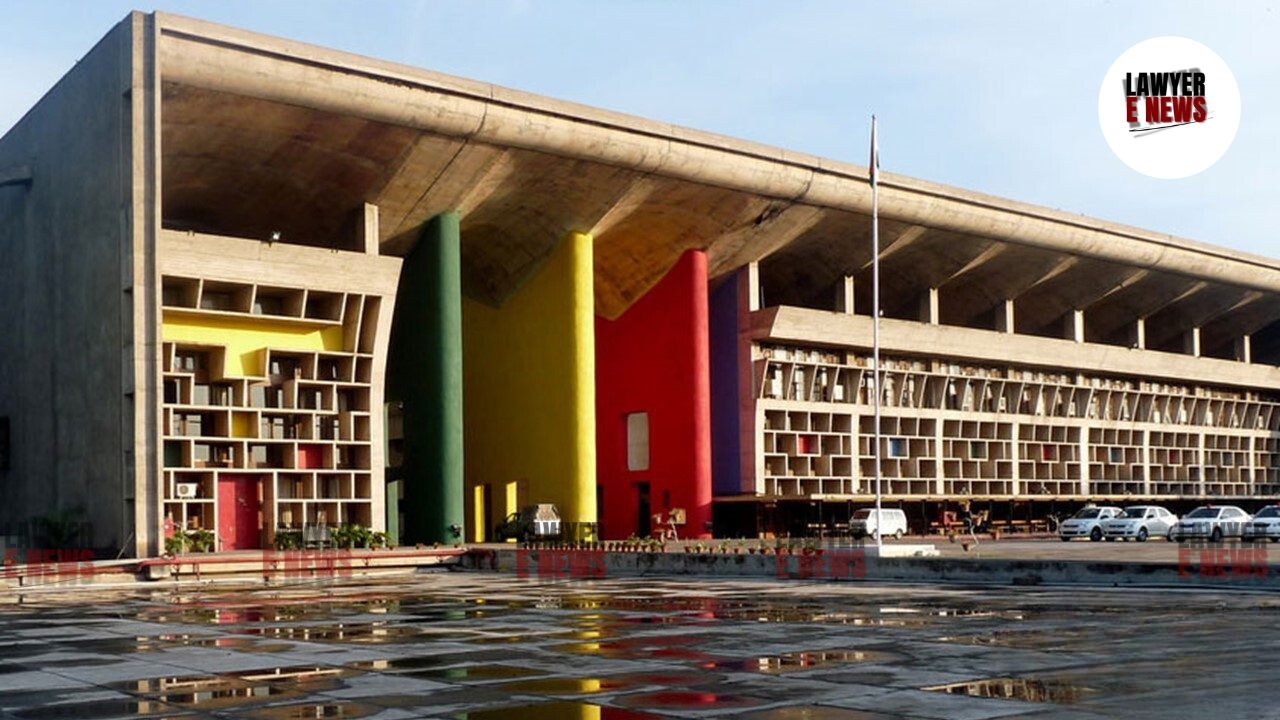
"All amendments are to be allowed which are necessary for determining the real question in controversy provided it does not cause injustice or prejudice to the other side," Punjab and Haryana High Court, in a significant ruling dated July , 2026, held that a prayer for amendment of pleadings under Order VI Rule 17 of the CPC should be allowed liberally if it is essential for the effective adjudication of the controversy.
A bench of Justice Vikram Aggarwal observed that even if the nature of the suit changes, amendments must be permitted if they stem from facts disclosed by the defendant in the written statement to avoid multiplicity of litigation.
The petitioner, Meenu Malhotra, had instituted a suit for permanent prohibitory injunction against the respondent, Jasbir Singh, to restrain him from interfering in her peaceful possession of a plot in Chandigarh. The respondent, in his written statement, raised a new defense claiming that 3/4th of the property had been transferred to him via a gift deed and that a previous sale deed had been set aside in earlier litigation. Faced with these new facts, the petitioner filed an application under Order VI Rule 17 CPC to amend her plaint to challenge the validity of those documents.
The primary question before the court was whether the trial court committed a manifest error by dismissing the petitioner’s amendment application on the grounds of delay and change in the nature of the suit. The court also examined whether an amendment is necessary for the just decision of a case when it arises directly from averments made in the defendant’s written statement.
Court Highlights Mandatory Nature Of Order VI Rule 17 CPC
The High Court emphasized that the latter part of Order VI Rule 17 of the CPC uses the word “shall,” making it mandatory for courts to allow amendments that are necessary for determining the real question in controversy. The court noted that the primary objective of this provision is to ensure that the actual dispute between the parties is adjudicated properly without being bogged down by technicalities.
The bench referred to the Supreme Court’s decision in Life Insurance Corporation of India Vs. Sanjeev Builders Private Limited & Anr. (2022), which established that the court should avoid a hyper-technical approach while dealing with amendment prayers. The court observed that such prayers should ordinarily be allowed unless they introduce a time-barred claim or result in irreparable prejudice to the opposite party.
"In dealing with a prayer for amendment of pleadings, the court should avoid a hyper-technical approach, and is ordinarily required to be liberal especially where the opposite party can be compensated by costs."
Delay Alone Not A Valid Ground To Disallow Amendment
Justice Aggarwal found that the trial court erred in observing that the application was filed at a belated stage. The High Court pointed out that the suit was filed in May 2016, the written statement was filed on May 16, 2016, and the amendment application was moved promptly on May 30, 2016. It was the respondent who delayed filing a reply until 2019.
The court held that even if there is an arguable delay, it is not a sufficient ground to deny the amendment if the amendment is required for the effective adjudication of the matter. The bench noted that any question regarding the limitation of the new claims could be decided at the final stage of the trial by framing a specific issue.
Amendments Based On Facts Disclosed In Written Statement Are Justifiable
The High Court observed that while the amendments sought were extensive and changed the nature of the suit from a simple injunction to a challenge against deeds and decrees, this change was necessitated by facts introduced by the defendant. The petitioner could not have challenged the gift deed or previous decrees earlier as they were not within her knowledge prior to the filing of the written statement.
Citing the Coordinate Bench decision in Smt. Prem Lata Vs. Baljeet and others (2024), the court agreed that when a document like a will or a gift deed is introduced in a written statement, the plaintiff must be allowed to challenge its validity. Failing to allow such an amendment would result in the court being unable to give a finding on the stand taken in the written statement.
"The nature of the suit had changed. However, it had changed, on account of the facts which had emanated from the written statement and not on account of some facts introduced by the petitioner-plaintiff."
Multiplicity Of Litigation Must Be Avoided
The court concluded that allowing the amendment was essential to prevent a multiplicity of proceedings. It held that requiring the petitioner to file a separate suit to challenge the documents disclosed in the written statement would lead to unnecessary litigation. The bench reiterated that the court is required to be liberal in its approach when an amendment is sought before the commencement of the trial.
The High Court set aside the trial court's order dated October 4, 2019, and allowed the petitioner’s application for amendment. Given that the revision had remained pending since 2019, the trial court was requested to make earnest efforts to decide the suit expeditiously.
The High Court allowed the revision petition, holding that the trial court's refusal to permit the amendment was unsustainable. The ruling reaffirms that amendments essential for determining the core controversy must be permitted, particularly when they are a response to new facts pleaded by the defendant, to ensure comprehensive justice between the parties.
Date of Decision: 01 July 2026