-
by sayum
10 August 2026 1:57 PM







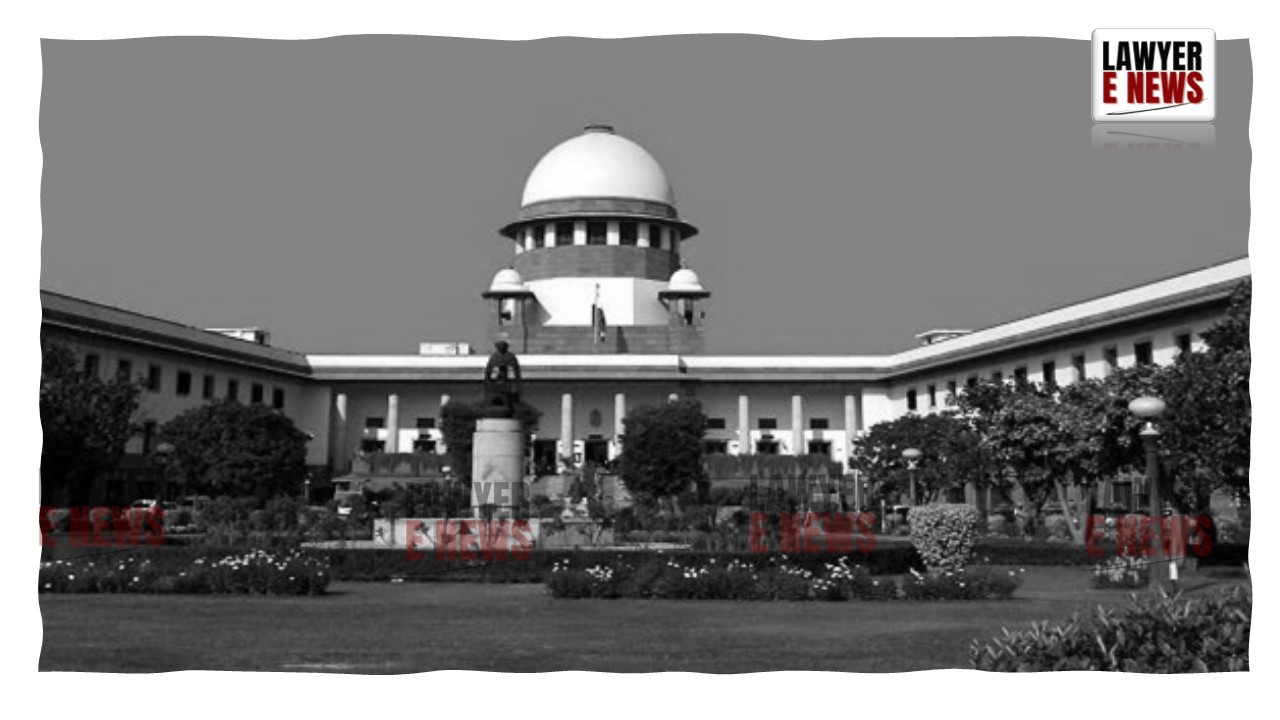
“Forest land is not Government stock-in-trade to be bartered away at will... This land belongs to the people and the planet” – Supreme Court of India quashing the illegal allotment of 11.89 hectares of Reserved Forest land in Kondhwa Budruk, Pune. The land had been fraudulently transferred to private individuals and ultimately to a builder’s cooperative housing society under the guise of rehabilitating a backward class family.
The Court held the entire allotment, subsequent sale, and environmental clearance to be “void ab initio”, and ruled that the collusion between politicians, bureaucrats, and builders constituted a grave violation of environmental laws, public trust, and constitutional duties. The judgment sets a new precedent in forest jurisprudence and governmental accountability.
“A Forest by Notification Cannot Be Erased by Fabrication”: Supreme Court Rejects Doctrine of Desuetude in Defence of 1879 Forest Notification
The Supreme Court dismissed the argument that the forest land had lost its legal character due to non-use, observing, “We fail to appreciate such a submission. The subject land has continuously been recorded as ‘Reserved Forest’ in the Forest Records.”
The Court found that a Gazette Notification dated 9 March 1944, relied upon by the builder to deny the forest status, was a forged document. The CID investigation confirmed that the document was fabricated to mislead authorities and justify the construction of Raheja Richmond Park, a luxury project developed by Richie Rich Co-operative Housing Society (RRCHS).
The Court reiterated, “It is amply clear from the record that the said land was notified as early as in 1879 as Reserved Forest and which reservation continues to be so till date.”
“No Forest Land Can Be Gifted Without Centre’s Permission—Not Even a Blade of Grass”: Supreme Court Nullifies Allotment Without Central Government Approval
Interpreting Section 2 of the Forest (Conservation) Act, 1980, the bench unequivocally held: “For permitting any non-forest activity within the area of any ‘forest’, it was necessary to have prior approval of the Central Government.”
The judgment dismantled the State of Maharashtra’s reliance on the Supreme Court’s earlier ruling in Banshi Ram Modi by invoking Ambica Quarry Works and observing that “the obligation to society must predominate over the obligation to the individuals.”
The bench emphasized that all administrative actions and allotments made after 12 December 1996, the date of the Court’s earlier forest-protection directives, were required to comply strictly with Central Government clearance.
The Court warned that any contrary interpretation “would undermine the very purpose of the Forest (Conservation) Act, 1980, which is to prevent deforestation and ecological imbalance.”
“Chavan Family Was Only a Front—This Was a Land Grab Masquerading as Resettlement”: Court Reveals the Builder-Bureaucrat Conspiracy
Describing the episode as a “classic example of collusion between Politicians, Bureaucrats and Builders”, the Court unmasked how the Chavan Family, purportedly resettled due to past land acquisition, was used as a conduit to grab forest land.
The judgment quoted the builder’s own affidavit:
“The owners... executed the Development Agreement dated 25.7.1992 and Supplementary Agreement dated 23.6.1995... and possession was delivered to me.”
These transactions predated the actual government allotment of land to the Chavan Family in August 1998, exposing the premeditated fraud. Within a day of the government order, civil suits were filed, affidavits exchanged, and compromises recorded—all pointing to a scripted legal charade designed to sanitize a blatantly illegal transaction.
The Court concluded, “In the light of these glaring facts, can it be said that RRCHS is a bona fide purchaser? The records amply speak for themselves.”
“Public Trust Doctrine Is Not a Ritual—It’s a Constitutional Duty”: Court Condemns State Officials for Surrendering Forest to Builders
In scathing remarks, the Court ruled:
“We have no hesitation in holding that the then Minister for Revenue and the then Divisional Commissioner, Pune have acted totally in breach of public trust to illegally cause gain to private individuals at the cost of sacrificing precious Forest Land.”
uoting from M.C. Mehta v. Kamal Nath, the Court affirmed that the public trust doctrine mandates the State to hold natural resources like forests in trust for the benefit of current and future generations.
The actions of Maharashtra’s Revenue Department, which bypassed the Forest Department’s repeated objections, were termed “a gross abdication of constitutional responsibility”.
“You Can’t Claim Compensation for Your Own Crime”: Supreme Court Denies Alternate Land to RRCHS
The Court dismissed RRCHS’s plea for alternate land compensation, declaring:
“The RRCHS through Mr. Aniruddha P. Deshpande had, with open eyes, entered into illegal transactions… it will amount to granting a premium to RRCHS for the illegalities committed by them.”
The Court distinguished this case from its earlier order in I.A. No. 2771 of 2009, where alternate land was granted to litigants whose land had been wrongfully occupied by the State. Here, however, the builder knowingly entered into pre-allotment development agreements and illegally took possession, thus forfeiting any claim to equitable relief.
“This Forest Cannot Be a Casualty of Greed”: Supreme Court Orders Nationwide Remedial Action
Acknowledging the broader implications of this case, the Court issued binding directions: “All forest lands under Revenue Departments across all States and Union Territories shall be handed over to the Forest Departments. Where land has been converted for non-forest use, cost must be recovered from beneficiaries and used for afforestation.”
The Court further directed Chief Secretaries of States and Administrators of Union Territories to constitute Special Investigation Teams to detect and reverse illegal transfers of forest land.
In words resonating beyond the courtrooms, the judgment concluded:
“Forest land is not Government stock-in-trade to be bartered away at will. This land belongs to the people and the planet.”
This judgment does more than just undo one illegal land deal—it reaffirms the sanctity of India’s forest laws, the centrality of ecological protection in constitutional governance, and reasserts that public resources cannot be sacrificed on the altar of private gain. The Supreme Court has once again positioned itself as the vigilant guardian of India's environment, leaving no ambiguity:
“Nature cannot be lured or bought; she must be respected—and protected, especially from those in power.”
Date of Decision: 15 May 2025