-
by sayum
11 August 2026 2:00 PM







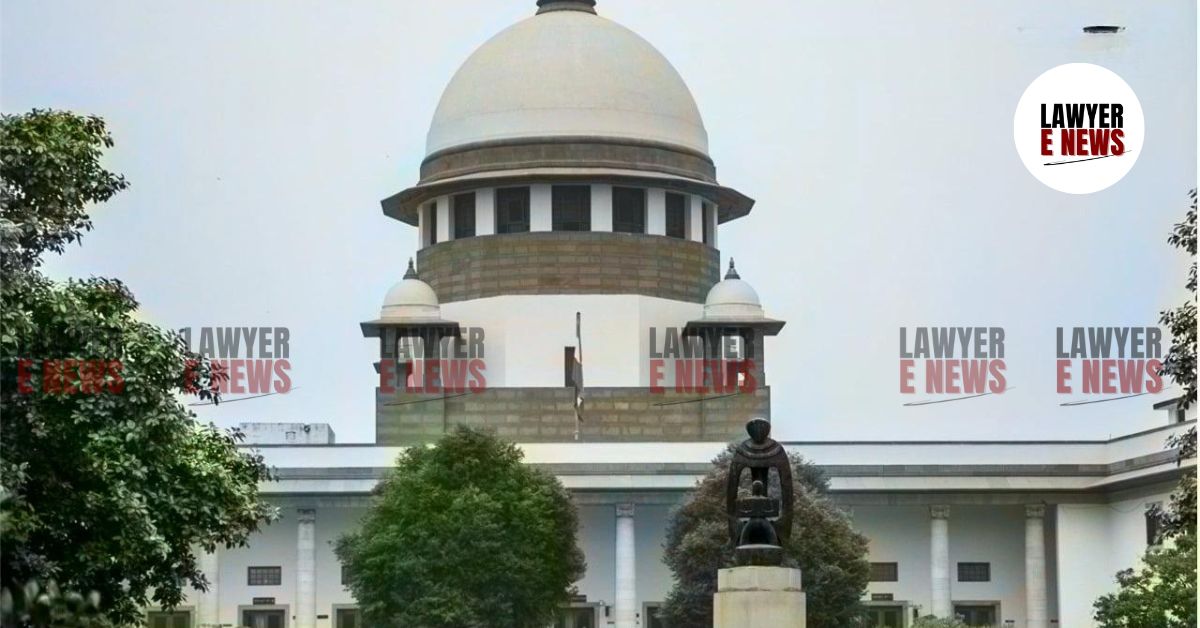
“Those Who Opt to Be Declared Surplus Must Accept Bottom of Recruitment Grade”— In a judgment Supreme Court of India upheld the decision to place surplus railway staff at the bottom of the recruitment grade seniority list following their transfer from Bhavnagar Division to the newly formed Ahmedabad Division.
Dismissing the appeals, the Bench comprising Justices Abhay S. Oka and Ujjal Bhuyan held: “Those who volunteered to be treated as surplus and opted for transfer cannot later claim seniority in the new division over others who were absorbed earlier.”
The appellants were former goods guards, senior passenger guards, and mail/express guards working in the Bhavnagar Division of the Western Railway. Due to the gauge conversion and reduction of traffic, several posts were surrendered between 2002 and 2004. The Bhavnagar administration gave affected employees the option to be transferred to other divisions, leading to their absorption in Ahmedabad, initially under the Baroda Division, later formally recognized as a new division on April 1, 2003.
By April 2003, the first batch of surplus goods guards joined Ahmedabad. Another batch, holding higher ranks, was posted in April 2004, upon formal surrender of additional posts. A dispute later arose regarding the fixation of seniority, particularly when a 2004 Railway Board Circular introduced Paragraph 313A in the Indian Railway Establishment Manual, mandating that surplus staff take seniority at the bottom of the recruitment grade.
The appellants argued that since they were voluntarily transferred and not involuntarily declared surplus, they should retain their cadre seniority or at least be placed at the bottom of their absorbed grade, not the recruitment grade.
The Court rejected this argument, affirming the view of the Central Administrative Tribunal and the Gujarat High Court, which had already ruled against the appellants.
Justice Oka noted: “Paragraph 313A of the Manual clearly provides that surplus employees are not entitled to the benefit of past service for the purpose of seniority in the new unit. They are to be treated as fresh entrants.”
Referring to the relevant Railway Board circular dated June 26, 2004, the Court observed that: “When large numbers of staff are rendered surplus and absorbed elsewhere, they are to be given seniority at the bottom of the recruitment grade to avoid disrupting the seniority of existing staff.”
The Court dismissed the contention that the circular was inapplicable due to timing, stating: “The draft seniority list was published only in November 2004. Therefore, the 2004 circular and the newly introduced paragraph 313A were clearly applicable.”
It further clarified: “Those who volunteered to be treated as surplus and were absorbed in another division did so with the understanding that they would accept the terms of redeployment. They cannot later question the consequences.”
The Court emphasized that both categories—those involuntarily declared surplus and those who volunteered—would be placed at the bottom of the recruitment grade, not the absorbed grade.
The Supreme Court firmly upheld the rule that surplus railway staff absorbed into a new division, either by option or administrative decision, must accept bottom seniority in the recruitment grade, especially where large-scale reshuffling and cadre protection of existing staff is involved.
The Bench concluded: “No case is made out to interfere with the concurrent findings of the Tribunal and High Court. Hence, appeals are dismissed.”
This ruling reinforces the Railway’s internal redeployment policies and serves as a precedent for inter-divisional seniority disputes involving surplus staff under cadre restructuring.
Date of Decision: May 1, 2025