-
by sayum
10 August 2026 8:42 AM







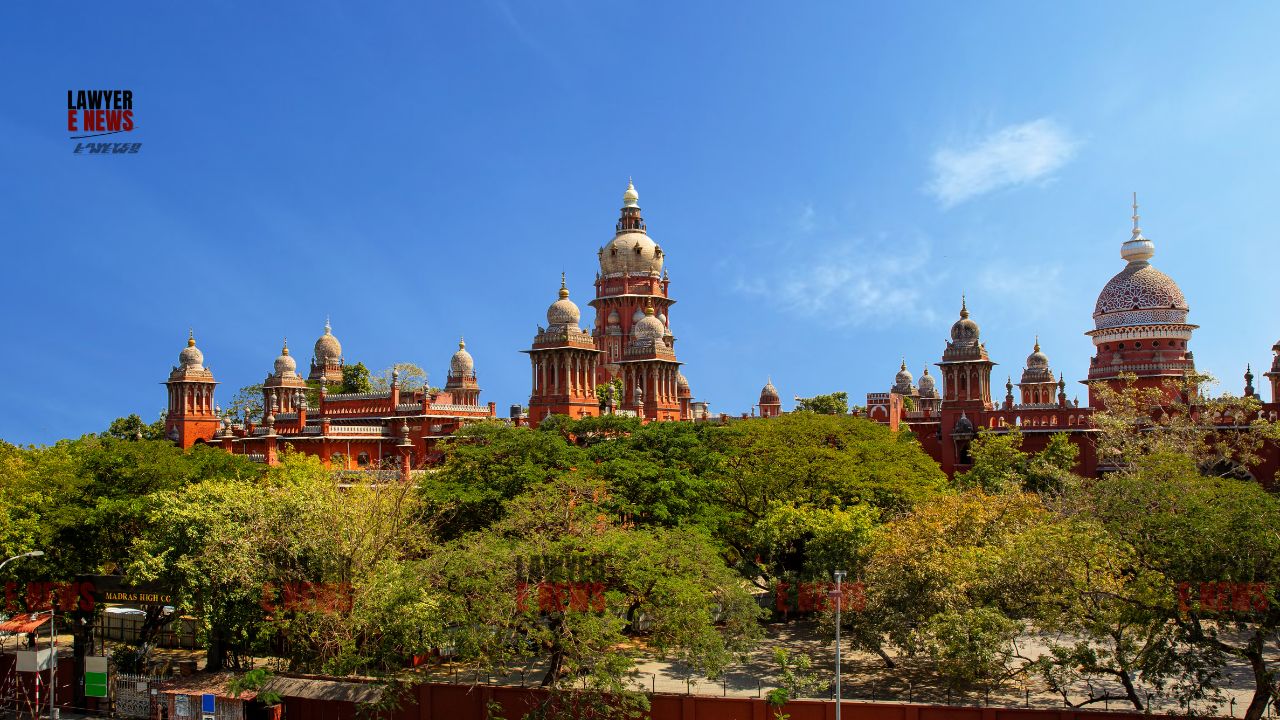
"A subsequent executive order, which did not exist when the suit was instituted and which forms no part of the plaint, cannot be imported into the plaint for the purpose of rejecting it," Madras High Court, in a significant ruling, held that a Government Order issued after the institution of a suit constitutes a subsequent event and a matter of defence that cannot be considered for the rejection of a plaint under Order VII Rule 11 of the Code of Civil Procedure (CPC).
A bench of Dr. Justice A.D. Maria Clete observed that the jurisdiction for rejection is limited to the averments contained within the four corners of the plaint as it stood on the date of its presentation.
The dispute arose when a life member of the South Indian Artistes Association (SIAA) challenged a resolution passed at the Society's 68th Annual General Body Meeting to extend the tenure of its Executive Committee by three years beyond the statutory limit of March 2025. While the suit was pending, the Government of Tamil Nadu issued G.O. (D) No. 311 under Section 54 of the Tamil Nadu Societies Registration Act, 1975, exempting the Society from the operation of Section 15(4) and permitting the existing office-bearers to continue until 2028. An application was subsequently filed by the fifth defendant seeking rejection of the plaint, arguing that the Government Order rendered the suit's foundation inoperative.
The primary questions before the court were whether a subsequent Government Order provides grounds for rejecting a plaint under Order VII Rule 11(a) or (d) CPC, and whether the power of "exemption" under Section 54 of the Tamil Nadu Societies Registration Act inherently includes the power to "extend" the tenure of an elected body.
Well-Settled Principles Governing Rejection Of A Plaint
The court began by reiterating the limited scope of enquiry under Order VII Rule 11 CPC, noting that the court must read the plaint as a whole in a meaningful manner without dissecting individual sentences. The bench emphasized that the court is not concerned with the truth of the allegations or the probable success of the plaintiff at this stage, but only with whether a triable cause of action is disclosed.
"The power of rejection is an exceptional power intended to terminate only those litigations that are demonstrably untenable on the face of the plaint. Where arguable questions of fact or law arise, the suit must necessarily proceed to trial."
Subsequent Events And The Scope Of Order VII Rule 11
Addressing the reliance placed by the defendants on the subsequent Government Order, the court held that Order VII Rule 11 obliges the court to examine the plaint as it stood at the time of filing. The bench observed that the cause of action pleaded by the plaintiff arose when the General Body allegedly resolved to retain office-bearers contrary to the Bye-laws, and this cause of action cannot retroactively disappear due to a later executive order.
"That cause of action cannot retroactively disappear merely because, several months later, the Government issued an executive order under Section 54. At best, the subsequent Government Order may furnish an additional defence to the defendants."
Distinction Between Power Of Exemption And Power Of Extension
A crucial portion of the judgment dealt with the interpretation of Section 54 of the Tamil Nadu Societies Registration Act. The court noted a fundamental distinction between exempting a person from a statutory restriction and positively conferring fresh legal authority upon an elected body to continue in office after its tenure has expired. The bench observed that Section 54 is couched entirely in terms of "exemption" and does not expressly authorise the Government to renew or extend the tenure of office-bearers.
"An exemption merely removes the operation of a statutory restriction. It does not, by itself, create a substantive right that the statute itself has not conferred. Whether such a consequence can be implied is a question requiring careful examination."
"Continuity of administration cannot become a vehicle for perpetuating an expired electoral mandate."
Democratic Principles And The Necessity Of Periodic Elections
The court highlighted that the legitimacy of an elected body flows from the continuing will of its electorate and expires once the prescribed tenure ends. It drew an analogy from the constitutional scheme and public administration, noting that when elections cannot be held, the vacuum is typically filled by neutral statutory administrators or Special Officers rather than allowing an outgoing committee to remain in office indefinitely.
"The legislative intent is clear that where democratic governance cannot be continued through a duly elected body, the vacuum is to be filled by a neutral statutory administrator, not by allowing an outgoing committee to remain in office indefinitely."
Civil Court Jurisdiction And Article 226 Remedies
The bench rejected the argument that the Civil Court's jurisdiction was ousted by the availability of a remedy under Article 226 of the Constitution. It held that the dispute was civil in nature, involving the enforcement of rights under a society’s bye-laws and governing statutes. The court clarified that the exclusion of civil jurisdiction is not to be readily inferred unless the statute expressly provides for it.
Plaint Discloses A Complete Cause Of Action
Concluding the analysis, the court found that the plaintiff’s averments regarding membership, statutory tenure, and the alleged illegal resolution unmistakably disclosed a cause of action. The court clarified that all observations regarding the legality of the resolution or the Government Order were confined to the limited enquiry under Order VII Rule 11 and would be decided on their merits during the trial.
In the result, the court dismissed the application for rejection of the plaint, allowing the suit to proceed to trial while giving the defendants liberty to raise their defences, including the effect of the subsequent Government Order, in their written statements.
Date of Decision: 01 July 2026