-
by sayum
10 August 2026 8:42 AM







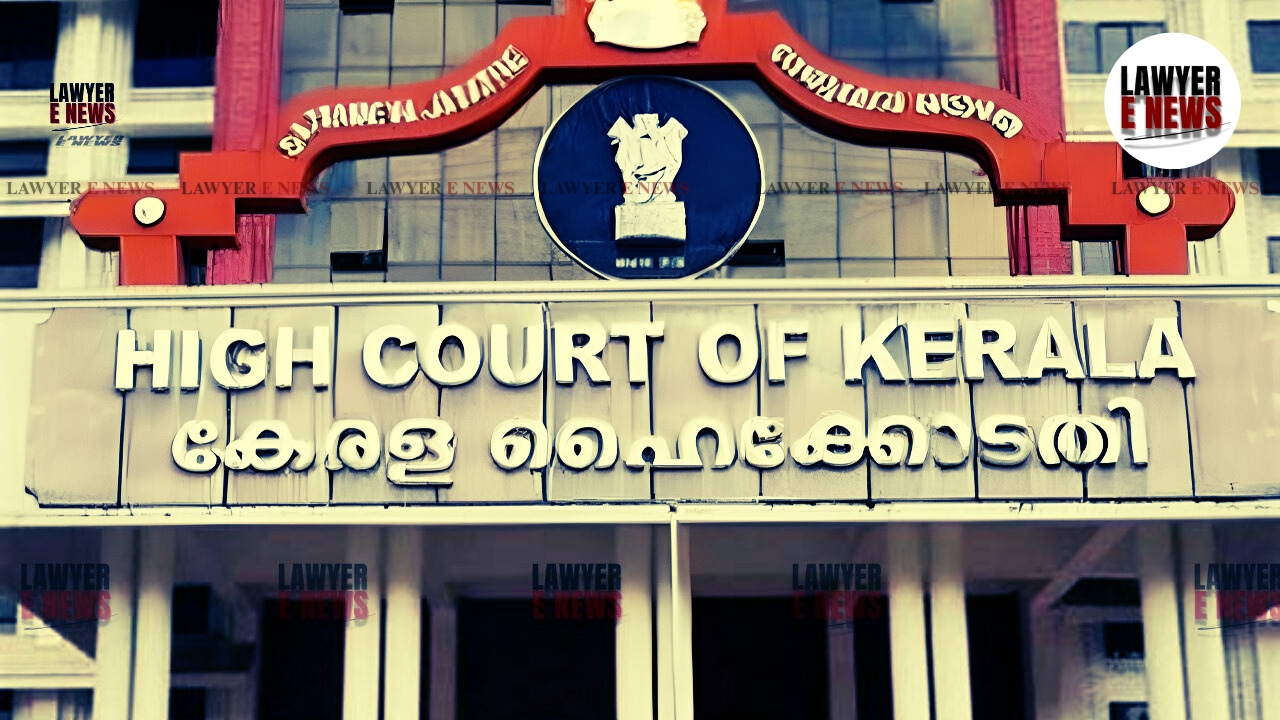
"The power to recommend compensation under Section 357A is a power coupled with a duty, and every criminal court is expected to consciously examine the question of victim compensation while rendering judgment, particularly in cases involving acid attacks. Failure to do so constitutes a serious omission." High Court of Kerala, in a significant ruling, underscored the mandatory duty of criminal courts to consider and recommend adequate compensation for victims, especially in brutal acid attack cases.
Allowing a petition by four acid attack victims, a bench of Justice Jobin Sebastian directed the District Legal Services Authority (DLSA), Kasaragod, to expeditiously determine and disburse compensation under Section 357A of the Code of Criminal Procedure (CrPC), emphasizing that pendency of an appeal cannot be a ground to deny relief.
The petitioners were victims of an acid attack in 2014, leading to the sole accused's conviction under Section 326A of the Indian Penal Code (IPC) by the Sessions Court, Kasaragod. While the accused was sentenced to 12 years rigorous imprisonment and a fine of Rs. 40,000 (partially disbursed as compensation under Section 357(1)(b) CrPC), the trial court failed to make a recommendation for additional compensation under Section 357A CrPC. The victims' subsequent petition to the Sessions Court for such a recommendation was dismissed, citing a pending appeal before the High Court.
The primary legal questions before the High Court were whether the trial court's omission to recommend compensation under Section 357A CrPC was erroneous, and if the High Court could exercise its inherent jurisdiction under Section 482 CrPC to rectify this omission despite the pendency of a criminal appeal.
Mandatory Duty To Consider Victim Compensation
The High Court emphasized that criminal courts are under a statutory obligation to consider the question of awarding adequate compensation to victims, particularly in grave offenses like acid attacks. Victim compensation aims to alleviate suffering and ensure victims are not forgotten within the criminal justice system.
Supreme Court Precedent on Compensation
Referring to the Supreme Court's decision in Ankush Shivaji Gaikwad v. State of Maharashtra (2013 KHC 4371), the High Court reiterated that Section 357 CrPC confers "a power coupled with a duty on the Courts to apply its mind to the question of awarding compensation in every criminal case." The very object of the provision, the Supreme Court had noted, would be defeated if courts ignore compensation altogether.
Kerala High Court Division Bench on Acid Attack Compensation
The bench also cited a Division Bench of the Kerala High Court in Xxxx v. State of Kerala (2025 KHC 1032), which explicitly held that "in cases involving acid attacks, it is the mandatory duty of the court to ensure that the victims are adequately compensated." Such courts are obliged to apply their mind to compensation and pass appropriate orders.
"May" in Section 357A CrPC Construed as Mandatory
The Court highlighted the object of Section 357A CrPC, which provides for a victim compensation scheme to ensure rehabilitation, especially when Section 357 compensation is inadequate or the offender cannot pay. The provision casts a corresponding duty on criminal courts to recommend compensation under the Victim Compensation Scheme. The Court stressed that the expression "may" in sub-section (3) of Section 357A CrPC must be construed as mandatory, considering the purpose of the provision.
Inadequacy of Fine as Compensation in Acid Attack Cases
The Court noted that the Rs. 40,000 fine awarded by the trial court under Section 357 CrPC was "manifestly inadequate to compensate the victims for the pain, suffering, permanent disfigurement, trauma, medical expenses, and the other lifelong consequences flowing from the acid attack." The compensation under Section 357A CrPC is independent of, and in addition to, any compensation under Section 357 CrPC, and the victims' entitlement cannot be curtailed merely because a fine was imposed or its recovery is uncertain.
Inherent Power to Remedy Omission Under Section 482 CrPC
The High Court acknowledged that a criminal appeal challenging the conviction was pending since 2015. However, it held that "the mere pendency of the appeal cannot be a ground to decline the relief sought in this petition," especially given the "peculiar facts and circumstances" and the "precarious circumstances" of the victims.
Securing Ends of Justice
The inherent jurisdiction of the High Court under Section 482 CrPC is intended to secure the ends of justice and prevent abuse of court process. The Court held that "where a statutory obligation has been omitted to be discharged, and such omission has the effect of depriving victims of the benefits of the Victim Compensation Scheme, this Court would be justified in exercising its inherent jurisdiction to remedy the omission." Granting relief in this case would not offend judicial propriety.
"The compensation envisaged under Section 357A of the Code is independent of, and in addition to, the compensation that may be awarded under Section 357 of the Code."
Consequently, the High Court allowed the Criminal Miscellaneous Case. It directed the District Legal Services Authority (DLSA), Kasaragod, to conduct an inquiry and determine the quantum of compensation payable to the victims (PWs 1 to 4) under Section 357A CrPC as expeditiously as possible, preferably within two months from the date of the order. The DLSA was further instructed to take all necessary steps to ensure the awarded compensation is disbursed without unnecessary delay, thereby rectifying a grave omission by the trial court and reaffirming victims' rights to comprehensive compensation.
Date of Decision: 28 July 2026