-
by sayum
10 August 2026 4:11 AM







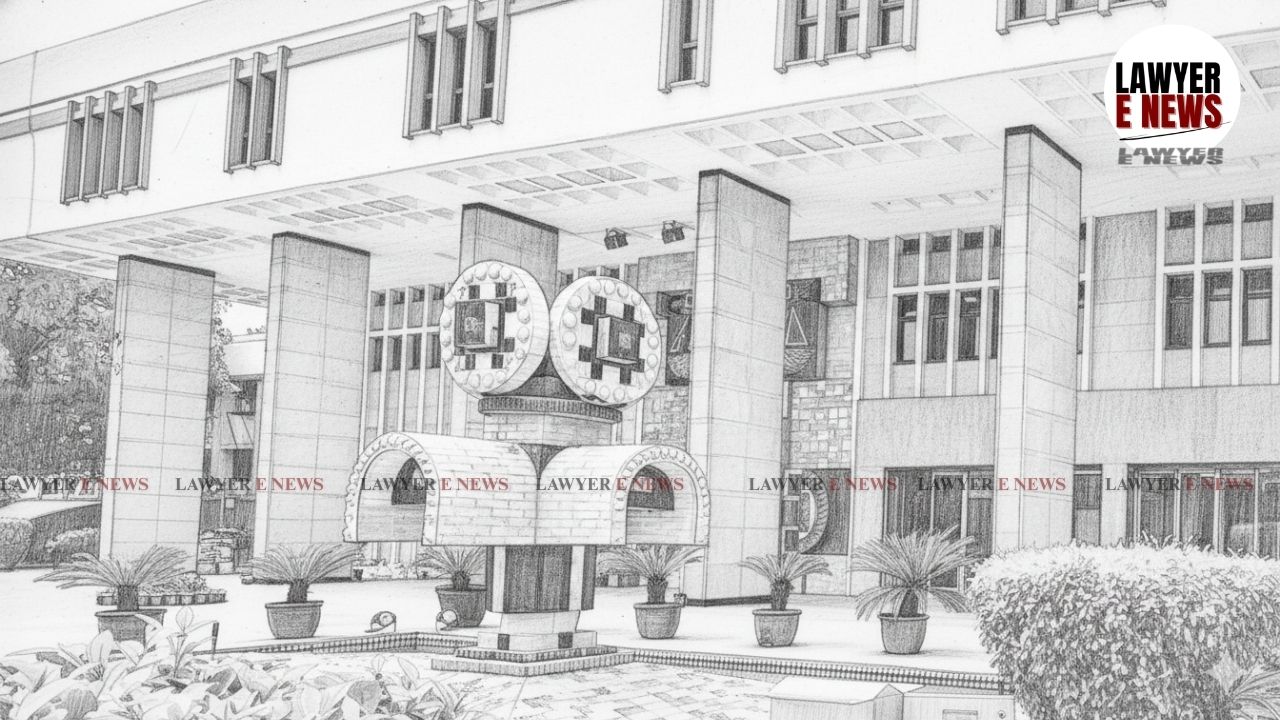
"Mere residence in the property or permissive occupation, even if longstanding, cannot mature into ownership in the absence of legally recognisable title." High Court of Delhi, in a significant property dispute ruling dated July 17, 2026, held that longstanding permissive occupation of a premises cannot mature into ownership rights against a registered titleholder.
A single-judge bench of Justice Amit Bansal observed that inter-departmental communications or mere expectations of obtaining leasehold rights from statutory authorities cannot override a registered perpetual lease deed and conveyance deed.
The appeal arose from a trial court decree granting a mandatory injunction, permanent injunction, and damages in favor of the respondent, directing the appellants to vacate the suit property situated in Pant Nagar, Jangpura. The respondent claimed sole ownership based on a perpetual lease deed and conveyance deed executed in 1992. The appellants, who were relatives of the respondent, resisted the suit by asserting proprietary rights over the premises based on long uninterrupted possession and pending applications for regularization under a 1984 government scheme.
The primary question before the High Court was whether applications seeking regularization and inter-departmental correspondence could confer title over a property. The Court was also called upon to determine whether the appellants' longstanding permissive possession could establish a better title against a registered conveyance deed.
Registered Title Documents Prevail Over Mere Applications
The Court observed that the respondent had successfully proved the original allotment records, the perpetual lease deed, and the conveyance deed in his favor. In contrast, the appellants failed to produce any allotment letter, mutation order, or document conferring proprietary rights. The bench noted that the entire defense rested upon applications submitted pursuant to a 1984 government notification and subsequent correspondence with the Slum and JJ Department.
The Court clarified that such departmental communications do not "demonstrate that any leasehold and/or ownership rights were ever granted in favour of the appellants or their predecessor in interest."
Correspondence Seeking Regularization Cannot Create Proprietary Rights
Emphasizing the legal sanctity of registered documents, the High Court held that the material relied upon by the appellants merely established an expectation of obtaining leasehold rights in the future. The bench asserted that correspondence exchanged during the administrative process of considering regularisation applications does not hold the evidentiary value of a formal transfer of title.
"An application seeking regularisation or correspondence exchanged during the process of consideration cannot, by itself, constitute a document of title or create proprietary rights in immovable property," the bench noted.
Longstanding Possession Does Not Equate To Ownership
The Court further examined the appellants' claim based on familial ties and long residence in the suit property. It rejected the notion that extended periods of occupation could independently generate ownership rights when a legally recognized title exists in the name of another person. The bench underscored that permissive occupation remains a mere license to use, regardless of its duration.
"The appellants’ case principally rests on long residence and familial relationship. Mere residence in the property or permissive occupation, even if longstanding, cannot mature into ownership in the absence of legally recognisable title," the Court emphatically stated.
Failure To Challenge Title Documents Proves Fatal
Noting the procedural history, the Court highlighted that the appellants never took any steps to seek the cancellation of the perpetual lease deed and conveyance deed executed in 1992. Despite alleging that the respondent had fraudulently procured the transfer of the properties behind their backs, the appellants admitted in cross-examination that they had never formally challenged these title documents in any competent court of law.
Concluding this point, the bench stated, "In the absence of any challenge to the validity of the aforesaid documents by the defendants, the defendants cannot question the rights of the plaintiff to the suit property."
Finding no error in the detailed factual and legal findings of the trial court, the High Court dismissed the appeal and upheld the decree of mandatory injunction and damages. The ruling comprehensively reaffirms the primacy of registered conveyances over unperfected claims of regularization or prolonged permissive possession.
Date of Decision: 17 July 2026