-
by sayum
10 August 2026 8:42 AM







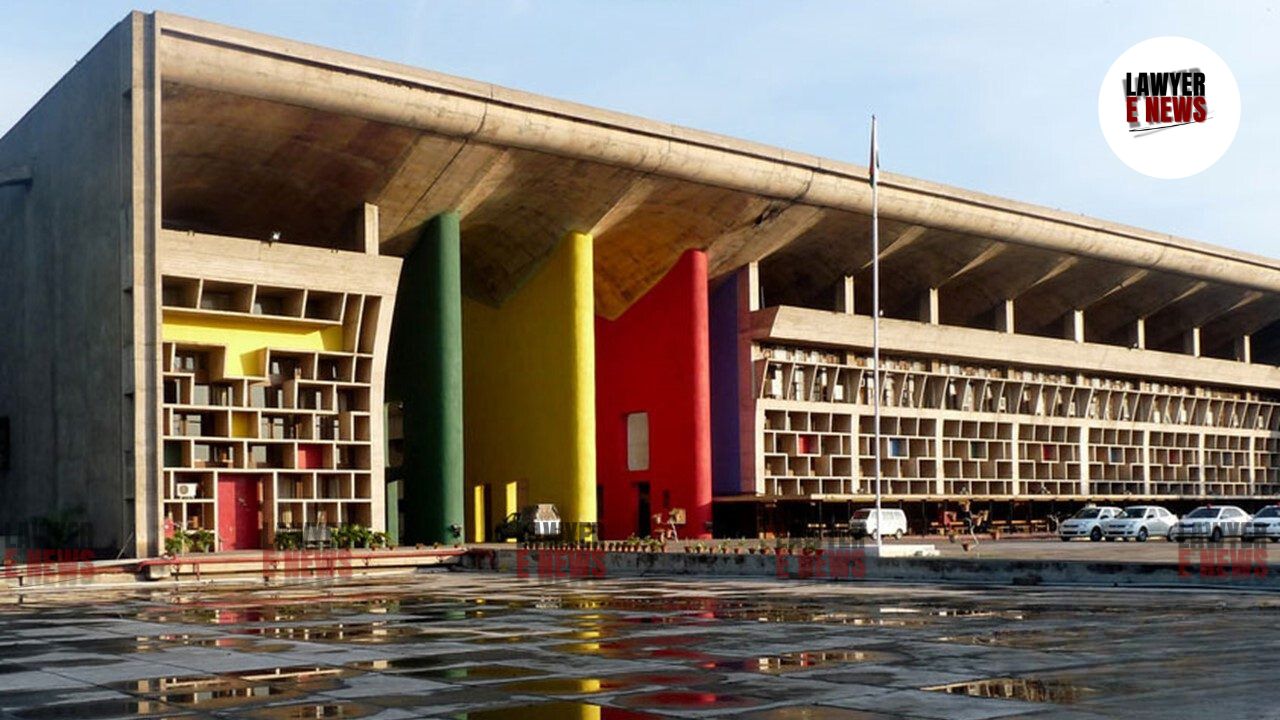
"A welfare State cannot balance its budget by silently taxing the erosion of its own employees' and pensioners' subsistence, that in substance, is what indefinite withholding of DA/DR amounts to, for every month of non-release, the cost of inflation is transferred from the exchequer to the kitchen of the employee and the pensioner." Punjab & Haryana High Court, in a significant ruling, dismissed appeals filed by the State of Punjab and the Punjab State Power Corporation Limited (PSPCL), unequivocally affirming that the government cannot indefinitely withhold Dearness Allowance (DA) and Dearness Relief (DR) to its employees and pensioners on the plea of financial crunch or through a discriminatory "Liquidation Plan."
A Division Bench comprising Acting Chief Justice Ashwani Kumar Mishra and Justice Rohit Kapoor directed immediate release of all pending DA/DR instalments on the Central Government pattern, along with 6% simple interest in case of default, within a fortnight.
The dispute arose from the 6th Punjab Pay Commission's (PPC) recommendation in 2021 to continue DA/DR on the Central Government pattern. Despite the Council of Ministers approving this recommendation, the State and PSPCL subsequently faced litigation for withholding and staggering DA/DR payments and arrears, leading to the formulation of a 'Liquidation Plan' in 2025. This plan proposed phased payments over several years, with pensioners below 75 years of age relegated to 42 instalments without interest. Several employees' and pensioners' associations challenged this plan and the indefinite withholding of DA/DR instalments before a Single Judge, whose decision to quash the plan and direct immediate payment was then challenged in these Letters Patent Appeals.
The primary questions before the Division Bench were whether the State and PSPCL had adopted the Central Government pattern for DA/DR and could then withhold/stagger payments; whether the 'Liquidation Plan' violated Article 14 of the Constitution; and if the Single Judge's decision suffered from jurisdictional or procedural infirmities.
Acceptance of Central Government Pattern and Withholding of DA/DR
The Division Bench observed that the 6th PPC's recommendation to continue DA/DR on the Central Government pattern was accepted by the Council of Ministers without reservation. The State's Department of Finance had also recommended acceptance of this pattern. While the elimination of time-lag was stated as an "endeavour," the acceptance of the pattern and rate was unconditional.
The Court noted that for five years, the executive consistently construed and implemented its decision as an adoption of the Central pattern. The various DA instructions issued by the Governor of Punjab explicitly referred to this pattern, including the freeze period from 01.01.2020 to 30.06.2021, which mirrored the Central Government's action.
No Discretion to Renege on Adopted Standard
Citing State of West Bengal v. Confederation of State Government Employees, West Bengal (2026 INSC 123), the High Court reiterated that once the State exercises its discretion by adopting a standard for DA, it cannot subsequently deny the benefits flowing from it. The financial autonomy of the State is exhausted in making the initial choice, not in reneging on it later.
"The State cannot be permitted to fulfill its constitutional obligations to one segment of a homogeneous class by effectively abandoning or indefinitely deferring the rights of another."
Quashing of the Liquidation Plan for Article 14 Violation
The Liquidation Plan dated 18.02.2025, which staggered payments over five financial years and introduced an age-tiered classification among pensioners (42 instalments for those below 75 years), was held to be patently violative of Article 14 of the Constitution. The Court emphasized that all pensioners form a single, homogeneous class for retirement benefits, as established in D.S. Nakara v. Union of India (1982 INSC 103) and reaffirmed in All Manipur Pensioners Association.
The Court found no reasonable justification or rational nexus for this classification, stating that the object of DA is to provide a hedge against inflation, which affects all retirees equally irrespective of age. Deferring payments for younger pensioners for nearly four years while inflation rises was deemed arbitrary and discriminatory. Furthermore, the plan extended to post-30.06.2021 arrears without any legal basis, beyond the scope of Rule 9 of the 2021 Rules, making it illegal.
Cabinet Decision and Article 166 of the Constitution
The argument that the Cabinet decision of 18.06.2021 was not formally expressed in the Governor's name under Article 166(1) of the Constitution was rejected. The Court distinguished Bachittar Singh v. State of Punjab (1962 INSC 88), noting that the Cabinet decision was communicated, publicly announced, translated into statutory Rules (2021 Rules in the Governor's name), and implemented for five years through policy instructions. Thus, it was not merely an internal file noting but a binding executive action. The provisions of Article 166 are directory, and non-compliance in form does not invalidate an executive action if it is demonstrably taken by the government.
No Prejudice from Non-Joinder or Lack of Roster Jurisdiction
The Bench dismissed the appellants' contentions regarding non-joinder/misjoinder of parties and PSPCL being unheard. PSPCL was a party in CWP No. 10301 of 2026 and its counsel was present. Moreover, PSPCL's consistent stance was to follow the State's instructions on DA/DR. Any procedural deficiency was deemed cured by the comprehensive hearing in the Letters Patent Appeals, applying the 'useless formality theory'.
Regarding the 'coram non judice' plea, the Court clarified that the Single Judge's roster included matters concerning Statutory Corporations and that directions against the State were a necessary consequence of adjudicating the employees' grievances. Roster allocation is an administrative arrangement, and any procedural irregularity was cured by the appellate adjudication. The 'in rem' operation of the judgment was also affirmed, ensuring benefits for all similarly situated employees and pensioners.
Effect of Previous Judgments on Judicial Discipline
The Court addressed the argument that previous orders, particularly a Division Bench order in Ajoy Kumar Sinha v. Balwant Singh and others (CACP No. 47 of 2024) and a Single Bench judgment in Surinder Singh v. State of Punjab (CWP No. 23651 of 2024), upheld the Liquidation Plan. The Division Bench clarified that the CACP order was in contempt proceedings and did not adjudicate the Plan's validity on merits. The Surinder Singh judgment was held to be sub silentio on the validity point, as it was never argued or examined. Thus, neither judgment barred the Single Judge from examining the Plan's constitutional validity. While acknowledging a co-ordinate Bench's declaration of per incuriam should ideally lead to a reference to a larger bench, the appellate bench re-examined the issue and found the Single Judge's reasoning on sub silentio to be sound in substance.
Judicial Review and Fiscal Policy
The High Court held that its directions did not transgress the limits of judicial review in fiscal policy. It emphasized that the Court was not formulating fiscal policy but enforcing the standard (Central pattern DA) that the State itself had chosen and applied. The indefinite deferment of admitted arrears uncompensated until 2028-29 was a violation of Article 14, which falls within the legitimate scope of judicial review. Non-implementation of an accepted Pay Commission recommendation is not a sheltered policy.
Financial Burden and Comparative Emoluments are Irrelevant
The State's plea of higher aggregate emoluments for Punjab employees and excessive financial burden was rejected. The Court stated that DA is a right, not a bounty, essential to protect the real value of pay/pension against inflation, giving practical effect to Article 21, 38, 39, and 43 of the Constitution of India. Financial constraint may be a factor in prospective policy, but it cannot justify denying accrued benefits under an already adopted standard.
The Court also critically noted that the State was spending large amounts on "freebies, doles, advertorial campaigns," which could not justify denying legitimate dues to its employees and pensioners.
PSPCL's Separate Legal Personality Does Not Insulate It
The argument that PSPCL, as a separate legal entity, was not bound by the State's instructions was found to be without merit. PSPCL is an instrumentality of the State under Article 12 and had consistently adopted the State Government's DA/DR instructions mutatis mutandis. The unchallenged DA notifications themselves strengthened the petitioners' case as they demonstrated the State's continuous adoption of the Central pattern.
"Acceptance of part payment of an admitted debt has never estopped a creditor from claiming the balance. There is no estoppel against the enforcement of a subsisting entitlement, and certainly none against the Constitution."
The Division Bench thus dismissed all appeals and affirmed the Single Judge's judgments.
The Punjab & Haryana High Court's ruling is a significant victory for government employees and pensioners in Punjab, reaffirming their right to timely Dearness Allowance and Dearness Relief payments in line with the Central Government pattern. By quashing the 'Liquidation Plan' and dismissing the State's pleas of financial constraints and procedural irregularities, the Court has underscored the constitutional mandate of equal treatment and dignity, compelling the government to honor its adopted commitments and ensure the financial well-being of its workforce.
Date of Decision: 03 August 2026